
A Technical Guide on How to Reset Smart Door Lock Systems
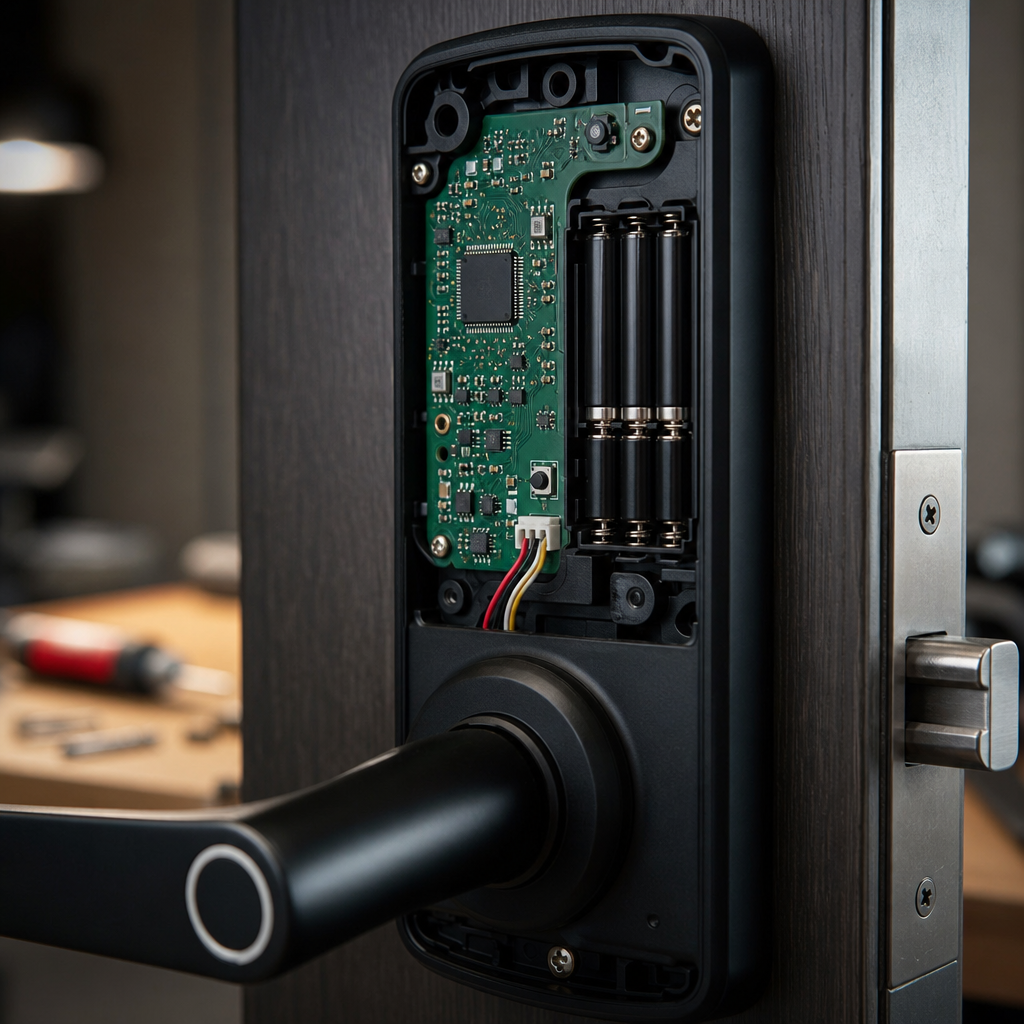
Electronic access control introduces undeniable convenience into modern property management architecture. Facility operators and homeowners frequently encounter unique situations requiring immediate technical intervention. Understanding how to reset smart door lock hardware is a fundamental structural skill. This specific process restores localized security integrity when digital environments become unstable or corrupted.
Digital access panels rely on a delicate balance of volatile and non-volatile memory arrays. These internal microscopic components govern user credentials, audit trails, and complex network configurations. A memory fault or a compromised credential demands a highly systematic clearance. Knowing the proper sequence prevents permanent firmware corruption during this procedure.
Modern intelligent hardware operates much like a miniaturized industrial computer attached to a physical door. The circuit board contains an active microprocessor alongside an encrypted storage module. These silicon chips maintain local databases containing hundreds of unique authorized access tokens.
The Mechanics Behind Digital Access Credential Storage
Hardware memory allocation typically separates core operating firmware from transient user data. This strict separation ensures the physical hardware remains functional even if user profiles corrupt. When you initiate a reset command, the motherboard selectively erases specific digital partitions.
We can classify internal storage mechanisms into three distinct architectural categories based on their function:
- Active biometric templates stored via complex algorithmic hashing arrays.
- Radio frequency identification tables mapping localized physical key cards.
- Temporary network protocol tokens maintaining active wireless gateway links.
The storage architecture heavily relies on Electrically Erasable Programmable Read-Only Memory, commonly known as EEPROM. This specific type of non-volatile storage retains byte-level data without requiring a continuous power supply. Understanding this component clarifies why simply removing the batteries fails to clear access logs.
The central processing unit communicates with the EEPROM via a localized internal bus architecture. When a user inputs a command on the exterior keypad, the CPU queries this block. If the encrypted hash matches, the processor sends a localized voltage spike to the mechanical clutch.
Primary Operational Triggers for Hardware Restoration
Users frequently misunderstand the specific symptoms indicating a necessary system flush. A simple depleted power cell does not warrant erasing the entire internal memory structure. System restoration should be strictly reserved for specific administrative challenges or technical deadlocks.
Property turnover remains the most common catalyst for demanding a total memory clearance. When a residential tenant or commercial leaseholder vacates a premises, security mandates a clean slate. Wiping the credential database ensures no lingering digital keys remain active in the background.
Network latency and wireless protocol mismatch represent another critical failure point. Devices communicating over mesh networks occasionally suffer from severe packet loss or gateway desynchronization. A localized hardware reset forces the transmission module to broadcast an entirely new handshake request.
Troubleshooting Ghost Credentials and Phantom Access Logs
Facility managers sometimes observe unexplained numeric entries within their daily audit trails. These phantom logs often result from incomplete data packet transmissions during credential deletion. A corrupted digital token might remain partially active within the device's volatile cache.
Executing a deep memory wipe effectively resolves these persistent phantom entries. The clearing procedure forces a complete rewrite of the localized access allocation table. This action neutralizes any orphaned cryptographic keys hidden deep within the background processes.
Addressing Firmware Loops and Processor Overload
Prolonged operation without maintenance reboots can cause severe microprocessor buffer overflow. The hardware might exhibit delayed responses when processing standard fingerprint scans. Users might notice the internal motor actuator hesitating before engaging the deadbolt mechanism.
This mechanical hesitation originates from software fatigue rather than physical gear degradation. The main control chip struggles to index a highly disorganized internal log file. Restoring factory defaults reorganizes this file structure, instantly returning the system to original operational speeds.
Differentiating Between Soft Reboots and Factory Default Operations
Technical manuals often utilize terminology that confuses standard facility operators and maintenance teams. It is crucial to distinguish between a simple power cycle and a total memory wipe. Misapplying these specific techniques can either fail to resolve the issue or unnecessarily delete valuable data.
A soft reboot simply interrupts the electrical current flowing from the primary battery pack. This action clears the temporary volatile memory without affecting any stored user credentials. It acts as an excellent quick remedy for frozen keypads or unresponsive communication modules.
Conversely, a factory reset initiates a hard-coded destruction script on the motherboard. This embedded script systematically overwrites the non-volatile memory sectors with entirely blank data. It returns the hardware state to the exact condition it left the manufacturing assembly line.
| Technical Parameter | Soft Reboot Execution | Factory Reset Execution |
|---|---|---|
| Primary Function | Clear temporary cache | Erase all user data |
| Credential Retention | 100% retained | Completely deleted |
| Network Configuration | Remains connected | Requires repairing |
| Execution Method | Battery terminal cycle | Physical motherboard button |
| Recommended Scenario | Unresponsive keypad | Property tenant turnover |
Executing the Power Cycle and Capacitor Discharge Method
Localized error codes often stem from trapped residual electrical charges within the logic board. Even after removing the main power cells, onboard capacitors retain sufficient operating voltage. This latent energy physically prevents the circuit board from achieving a true offline state.
To perform a thorough power cycle, you must manually drain these hidden capacitors. Remove the primary battery pack completely from the interior door escutcheon. While the power is physically disconnected, repeatedly press any active buttons on the exterior terminal.
Pressing these buttons forces the internal hardware to attempt an operational cycle. Because no main power exists, the system draws out the remaining localized capacitor voltage. Leave the device completely unpowered for several minutes before reinstalling the fresh cells.
The Standardized Sequence for Complete Memory Erasure
Executing a deep factory wipe requires direct physical access to the interior housing. Manufacturers intentionally design this sequence to be impossible from the exterior public keypad. This physical security requirement prevents unauthorized individuals from quietly hijacking the access terminal.
The physical reset switch usually resides directly beneath the interior battery cover. It might manifest as a recessed micro-switch requiring a specialized thin probing tool. Some architectural models feature a dedicated button adjacent to the manual mechanical thumb-turn mechanism.
The process typically involves a coordinated sequence of precise physical and electrical actions. You must press and hold the internal micro-switch while simultaneously restoring external battery power. The motherboard requires continuous button pressure as the initial logic boot sequence begins.
During this critical initialization phase, the device will emit specific auditory or visual signals. The LED indicator might flash rapidly in a specific sequence, such as alternating red and blue. A long continuous beep usually confirms the successful erasure of the EEPROM memory partition.
Calibrating the Actuator Post-Restoration
Once the data partitions are completely clean, the internal motor requires immediate mechanical calibration. The hardware no longer knows the physical orientation of the deadbolt relative to the frame. It must relearn the exact distance required to achieve a secure locking state.
Keep the door physically open during this initial mechanical learning phase. Input the default master code and command the internal mechanism to extend the bolt fully. The built-in sensors will measure the exact torque required to reach maximum structural extension.
This vital calibration sequence prevents the internal gears from grinding against the metal strike plate. If the system fails to learn the correct mechanical limits, the stepper motor will suffer premature failure. Accurate calibration ensures the longevity of the entire physical locking mechanism.
Managing Different Authentication Protocols During Restoration
Modern access control systems utilize complex multi-modal identification frameworks simultaneously. A single entry point might process biometric geometry, encrypted radio frequencies, and numeric pins. Each of these unique modalities interacts differently with the central processing unit during a flush.
When you learn how to reset smart door lock networks, consider the connected environmental ecosystem. Standalone units clear their logic boards instantly, but interconnected devices require synchronized network unpairing. You must sever the digital tether from the central management gateway before executing the physical motherboard sequence.
Purging Biometric Hashes and Geometry Data
Fingerprint and facial recognition modules store data as complex mathematical algorithms, not actual image files. Erasing this specific sector requires significantly more processing time than deleting a simple numeric code. The biometric coprocessor must overwrite the hashing tables completely to prevent forensic data recovery.
If a facility bypasses the proper deletion sequence, biometric templates might become severely corrupted. The scanner will register a physical touch but fail to map the ridge geometry correctly. A complete factory wipe forces the biometric sensor to recalibrate its baseline optical or capacitive readings.
Severing Application Programming Interface Tethers
Commercial access terminals often sync with remote property management platforms via an encrypted API. A localized hardware wipe does not automatically delete the corresponding digital twin stored in the cloud. The management software might continue attempting to ping the now-erased physical device indefinitely.
Facility administrators must log into the central web-based management console first. They must manually revoke the device authorization token directly from the software dashboard. Only after completing this digital severance should the field technician proceed with the physical motherboard reset.
Institutional Practices in Access Control Maintenance
Operating high-volume facilities requires a disciplined, structural approach to hardware lifecycle management. Randomly executing hard resets creates immense logistical nightmares for daily property operations. Technical teams must establish strict diagnostic flowcharts before authorizing a total local memory wipe.
For us, engineering intelligent room control systems for over 5,000 global hotels taught valuable architectural lessons. Operating a 10,000 m² automated manufacturing facility reinforced the critical need for absolute memory segregation. We design internal circuit boards where core property cryptographic codes remain insulated during standard user wipes.
This specific architectural philosophy protects the facility's baseline digital infrastructure from human error. A junior maintenance technician can clear a jammed numeric keypad without compromising the entire floor's network. Predictable hardware behavior under extreme operational stress is the defining characteristic of enterprise-grade security equipment.
Overcoming Common Technical Obstacles During Maintenance
Field technicians frequently encounter hardware that stubbornly refuses to acknowledge a reset command. This specific behavior usually stems from inadequate power delivery during the reboot sequence. The circuit board requires a precise voltage threshold to write blank data over the storage sectors.
Using partially depleted alkaline cells during a maintenance wipe will often cause a systemic failure. The sudden voltage drop at the exact moment of memory erasure forces the processor to halt. Always utilize a completely fresh, matched set of industrial-grade batteries before initiating the factory sequence.
Another common physical obstacle involves damaged micro-switches resulting from improper tool usage. Facility staff sometimes use sharp needles or excessive force when accessing the recessed diagnostic button. This brute force fractures the delicate solder joints connecting the switch to the printed circuit board.
Technicians should use a blunt, non-conductive tool designed specifically for electronic hardware maintenance. Apply steady, moderate pressure until you feel the distinct tactile click of the internal mechanism. Protecting these microscopic components ensures the hardware remains serviceable throughout its projected lifecycle.
Cryptographic Key Management and Certificate Revocation
Enterprise-grade systems utilize highly complex public key infrastructure to validate user credentials. The physical hardware stores a unique private certificate assigned during the initial property installation phase. A true factory wipe must completely obliterate this private key to guarantee structural security.
Once this private cryptographic key is destroyed, the hardware becomes mathematically unrecognizable to the gateway network. It reverts to an unprovisioned state, broadcasting only a generic manufacturer identification string. The facility manager must issue a completely new digital certificate to reintegrate the device securely.
This systematic destruction of cryptographic keys is vital for preventing man-in-the-middle replay attacks. If an outdated unit is decommissioned and sold, residual keys pose a severe property threat. Executing the exact protocol shields the original facility from delayed digital security intrusions.
Environmental Impacts on the Reset Circuitry
Coastal properties and high-humidity environments introduce unique chemical challenges to hardware maintenance. The microscopic reset switches on the printed circuit board are highly susceptible to silent galvanic corrosion. Moisture bypassing the exterior gaskets can slowly degrade the copper traces leading to the button.
If chemical corrosion compromises these traces, pressing the physical button will not complete the necessary circuit. The motherboard will completely fail to register the command, leaving the hardware permanently locked. Technicians must utilize specialized electronic contact cleaners to dissolve this oxidation before attempting the procedure.
In severe cases involving saltwater degradation, the traditional button sequence becomes entirely physically useless. Technical teams must bridge the corrupted traces manually using a conductive metal probe to force initiation. This niche engineering intervention salvages highly expensive hardware that would otherwise require a complete replacement.
Analyzing Power Delivery Requirements for Memory Erasure
The technical act of overwriting non-volatile memory demands a sudden surge in localized power consumption. The microprocessor must elevate the internal voltage to alter the physical state of the memory gates. This requirement creates a frustrating paradox when troubleshooting units plagued by chronic low-power alerts.
If the ambient voltage drops below a specific critical threshold during the overwrite sequence, the system panics. The processor will abort the wipe immediately to prevent a catastrophic corruption of the core firmware. This self-preservation mechanism leaves the physical device in a frustrating, semi-functional digital limbo state.
We highly recommend utilizing a dedicated hardwired power supply during diagnostic bench testing procedures. By completely bypassing the traditional battery sled, technicians ensure a stable, continuous flow of direct current. This absolute power stability guarantees the memory gates can fully transition back to their empty state.
Advanced Diagnostics: Interpreting LED Error Codes
Before initiating a catastrophic memory wipe, technicians must accurately interpret the visual diagnostic signals. Most advanced logic boards communicate internal fault states through a series of colored light-emitting diodes. Decoding these flashes prevents staff from executing a complex wipe for a simple mechanical jam.
A rapid red flashing sequence typically indicates a persistent low-voltage state within the primary circuit. An alternating red and green pattern often signals a corrupted communication bus between the exterior keypad and motherboard. Understanding these specific visual dialects directs the maintenance team toward the correct localized intervention.
Executing a hard reset while the physical system reports a mechanical obstruction is completely counterproductive. The logic board will simply re-encounter the physical barrier immediately after the reboot sequence concludes. Technicians must first manually clear the physical deadbolt path before addressing any suspected software corruption.
The Role of Watchdog Timers in Automated Recovery
Industrial circuit designs incorporate specialized internal hardware components known as watchdog timers. These autonomous circuits continuously monitor the main processor for signs of software freezing or infinite logic loops. If the processor fails to send a regular heartbeat signal, the timer takes independent action.
The watchdog timer forcibly interrupts the main power bus, executing an instant soft reboot automatically. This autonomous intervention resolves temporary buffer overflows without requiring any human interaction at the door. It represents a critical layer of invisible maintenance that keeps high-traffic access points continuously operational.
If the watchdog timer triggers continuously, it indicates a severe foundational firmware corruption issue. This repetitive autonomous rebooting loop severely drains the internal power cells within a matter of hours. At this critical stage, manual human intervention and a complete factory default restoration become absolutely mandatory.
Frequently Asked Questions About Access Control Troubleshooting
Operational anomalies often generate highly repetitive queries from property managers and junior technical staff. Clarifying these technical misunderstandings prevents unnecessary hardware interventions and prolonged facility security vulnerabilities.
Why does the mechanism emit continuous warning tones after a memory reset?
Continuous auditory warnings usually indicate a mechanical misalignment rather than a pure software failure. The internal torque sensors detect excessive physical resistance when attempting to engage the heavy deadbolt. You must manually realign the metal strike plate and execute the motor calibration sequence again.
Can I selectively delete a single user without wiping the entire internal database?
Advanced access control architectures strictly support targeted credential deletion through the master administrative profile. You can isolate a specific memory block indexing a lost keycard or a compromised numeric PIN. A complete system wipe is only mandatory when the master administrative credentials themselves are hopelessly lost.
How does a factory reset impact the established localized mesh network?
Returning a device to factory defaults completely severs its localized wireless routing tables instantly. The hardware will physically drop off the established mesh topology without sending a warning signal. You must place the central gateway into inclusion mode and re-broadcast the network security key.
Does clearing the memory affect the internal real-time environmental clock?
Discharging the internal capacitors and wiping the motherboard will completely reset the internal timekeeping module. Time-sensitive facility access schedules will fail to execute properly until the local clock is resynchronized. The device must ping the local network gateway to download the current network time protocol packets.
Future Trends in Autonomous Lock Maintenance
The requirement for manual hardware intervention represents a temporary phase in access industry evolution. Future architectural designs are rapidly moving toward autonomous, self-healing memory array systems. These advanced logic boards will independently identify corrupted data sectors and isolate them from the processing stream.
Next-generation access panels will utilize complex dual-partition firmware environments to ensure continuous daily operation. If the primary operating system experiences a critical fault, the secondary partition will assume control instantly. This robust redundancy will virtually eliminate the need for manual, on-site factory resets by human technicians.
Cloud-based virtualization will further abstract local hardware management from physical door constraints. The access terminal will function merely as a dumb relay, with all cryptographic processing occurring on secure remote servers. Wiping a local device will become exactly as simple as revoking a single digital certificate online.
Developing a Strategic Approach to Facility Security
Executing routine maintenance on entry panels requires profound mechanical precision and deep digital awareness. Facility operators must respect the delicate balance between high-torque physical actuators and encrypted software layers. Approaching these technical interventions with a systematic methodology preserves the longevity of the architectural hardware.
Routine power cycling should be officially incorporated into standard quarterly preventative maintenance schedules. Proactive capacitor discharging clears hidden software bottlenecks long before they manifest as critical operational failures. This preventative structural mindset reduces emergency technical callouts and ensures seamless user experiences at every point.
Mastering how to reset smart door lock configurations ensures your property remains highly secure during organizational transitions. A clean memory partition forms the absolute foundation of a robust and resilient access control architecture. Maintaining strict protocols around these operational procedures protects both the physical assets and the digital integrity of the entire facility.
SUBSCRIBE
INQUIRY