
Access Control Evolution: Smart Door Lock vs Traditional Systems
The physical threshold of any building represents a critical boundary. Securing this boundary has historically relied on mechanical complexity. We are now observing a fundamental shift in how property access is managed. Evaluating a smart door lock vs traditional deadbolt requires looking beyond simple hardware changes. It involves understanding a complete transition from physical keys to digital credentials.
Facility managers and homeowners alike face distinct challenges when upgrading infrastructure. The debate surrounding a smart door lock vs traditional mechanism usually centers on reliability. People worry about power failures, digital hacking, and hardware longevity. This analysis explores the mechanical realities and digital architectures behind both systems.
The Mechanical Foundations of Security
The pin tumbler mechanism has dominated physical security since its modern invention in 1848. This design relies on precise shear lines aligned by physical key cuts. A mechanical lock acts as a static guardian. It cannot distinguish between the legitimate owner and an unauthorized person holding a duplicated key.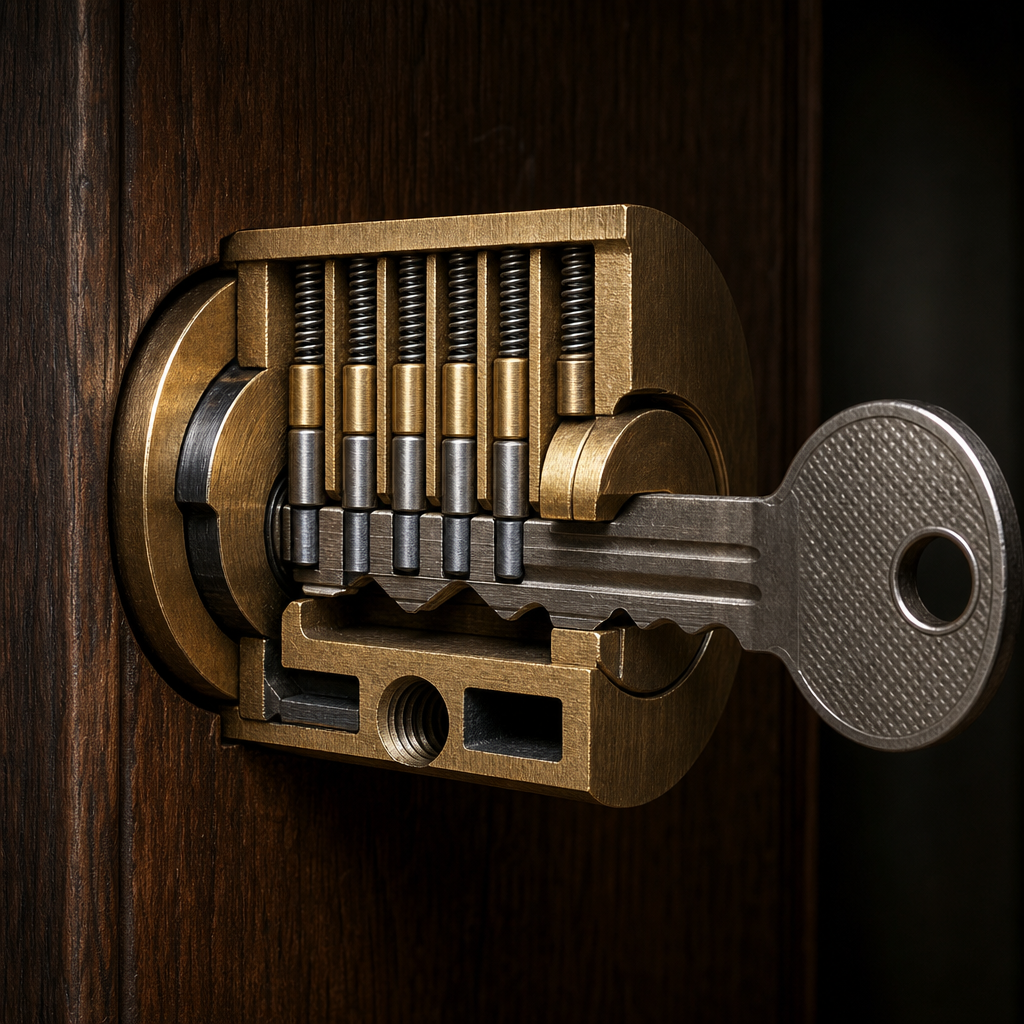
Traditional hardware provides a tangible sense of security. The locking cylinder operates entirely without external power. Moving parts like springs and pins interact directly with the physical torque applied by the user. This mechanical simplicity is both its greatest strength and its most significant limitation.
Key management remains the primary failure point for traditional setups. Lost keys compromise the entire security perimeter immediately. Restoring security requires a locksmith to physically replace or rekey the cylinder. In commercial settings, this creates a compounding maintenance cost over the lifespan of a building.
Architecture of Digital Access Authentication
Digital access systems replace mechanical key cuts with cryptographic verification. A microcontroller sits at the heart of the hardware. This processor evaluates input data against a stored database of authorized credentials. Once a credential is verified, a small motor engages the locking mechanism.
The transition to digital architecture introduces multi-modal authentication options. Users are no longer restricted to a single metal key. Access control hardware now processes various data streams simultaneously.
Modern authentication vectors typically include:
- Radio Frequency Identification (RFID) via encrypted key cards
- Biometric verification through fingerprint or facial recognition
- Near Field Communication (NFC) via smartphones
- Time-sensitive numerical PINs generated dynamically
This multi-modal approach eliminates the risk of a single point of failure. If a user forgets their key card, a PIN provides a reliable fallback. The underlying software logs every interaction, creating a permanent audit trail of building activity.
Smart Door Lock vs Traditional: Core Mechanism Comparison
Understanding the structural differences requires examining how each system handles basic operational tasks. The underlying physics of the deadbolt remain similar. However, the authorization trigger differs completely.
When evaluating a smart door lock vs traditional hardware, operational dynamics shift from mechanical precision to data management. The table below outlines the fundamental differences in daily operation and system architecture.
| Operational Vector | Traditional Lock Systems | Digital Access Systems |
|---|---|---|
| Authentication Source | Physical geometry of the key | Encrypted digital tokens or biometrics |
| Revocation Process | Physical rekeying of the cylinder | Instant deletion via software interface |
| Audit Capabilities | None available | Detailed timestamps of all access events |
| Power Dependency | Manual physical force | Battery power with mechanical override |
| Scalability | Extremely difficult | Highly efficient through cloud platforms |
Vulnerability Profiles in Different Lock Types
Every security system possesses specific vulnerabilities. Mechanical locks face threats entirely rooted in physical manipulation. Lockpicking relies on manipulating individual pins to bypass the shear line. Bump keys exploit kinetic energy to force the pins upward momentarily.
Digital locks introduce a completely different threat model. The physical cylinder is often hidden or protected, reducing traditional lockpicking risks. However, the wireless communication protocols introduce cyber vulnerabilities. Unencrypted Bluetooth signals can theoretically be intercepted during the authentication handshake.
Hardware manufacturers mitigate these risks through advanced encryption standards. AES-128 or AES-256 encryption secures the communication layer between the lock and the management software. Local storage of biometric data ensures sensitive information never leaves the physical hardware.
Power failure represents another common concern for digital hardware. A depleted battery prevents the internal motor from engaging. Quality digital locks resolve this through external emergency power terminals. Users can supply temporary power using a standard portable battery bank to gain entry.
Integration with Property Management Frameworks
Modern access control rarely operates in isolation. The lock serves as the initial trigger for a broader building automation sequence. This connectivity is entirely absent in mechanical systems.
For us, engineering intelligent access solutions requires looking at the entire building ecosystem. Operating a 10,000-square-meter automated manufacturing facility allows strict quality control over every component. We integrate biometrics, IoT connectivity, and cloud management directly into the hardware architecture.
This approach supports comprehensive guest room management systems. When a door unlocks, the system immediately recognizes the user's profile. The room can automatically adjust HVAC settings, open motorized curtains, and activate specific lighting scenes.
Such integration significantly reduces energy waste in commercial environments. An empty room immediately scales back climate control upon door closure. Mechanical locks cannot communicate occupancy status, leading to continuous energy consumption in vacant spaces.
Hardware Durability and Maintenance Cycles
The physical environment exerts constant stress on access hardware. Mechanical locks suffer from friction-induced wear over time. Brass pins grind against key blades during every insertion. Airborne dust and moisture eventually corrode the internal springs, causing the cylinder to seize.
Digital hardware faces different environmental challenges. Printed circuit boards are highly sensitive to moisture and extreme temperature fluctuations. To combat this, industrial-grade access hardware utilizes sealed resin casting to protect electronic components.
Manufacturing standards dictate rigorous environmental testing. Premium digital hardware achieves IP65 waterproof ratings to withstand heavy rain and dust intrusion. The mechanical chassis utilizes zinc alloy or stainless steel to prevent physical forced entry.
Battery lifecycle management dictates the maintenance schedule for digital systems. Efficient firmware design minimizes standby power consumption. Modern systems typically achieve up to an 18-month battery life under standard usage conditions. The system alerts facility managers long before the voltage drops to a critical level.
Operational Friction and User Experience
The daily interaction with a door lock defines the user experience. Fumbling for physical keys in low light creates unnecessary friction. Carrying a heavy ring of metal keys is an outdated practice for modern professionals.
Digital authentication removes this friction entirely. Biometric access allows users to unlock doors using their natural physical traits. Fingerprint scanners read dermal patterns in less than half a second. Facial recognition modules utilize infrared depth mapping to function flawlessly in total darkness.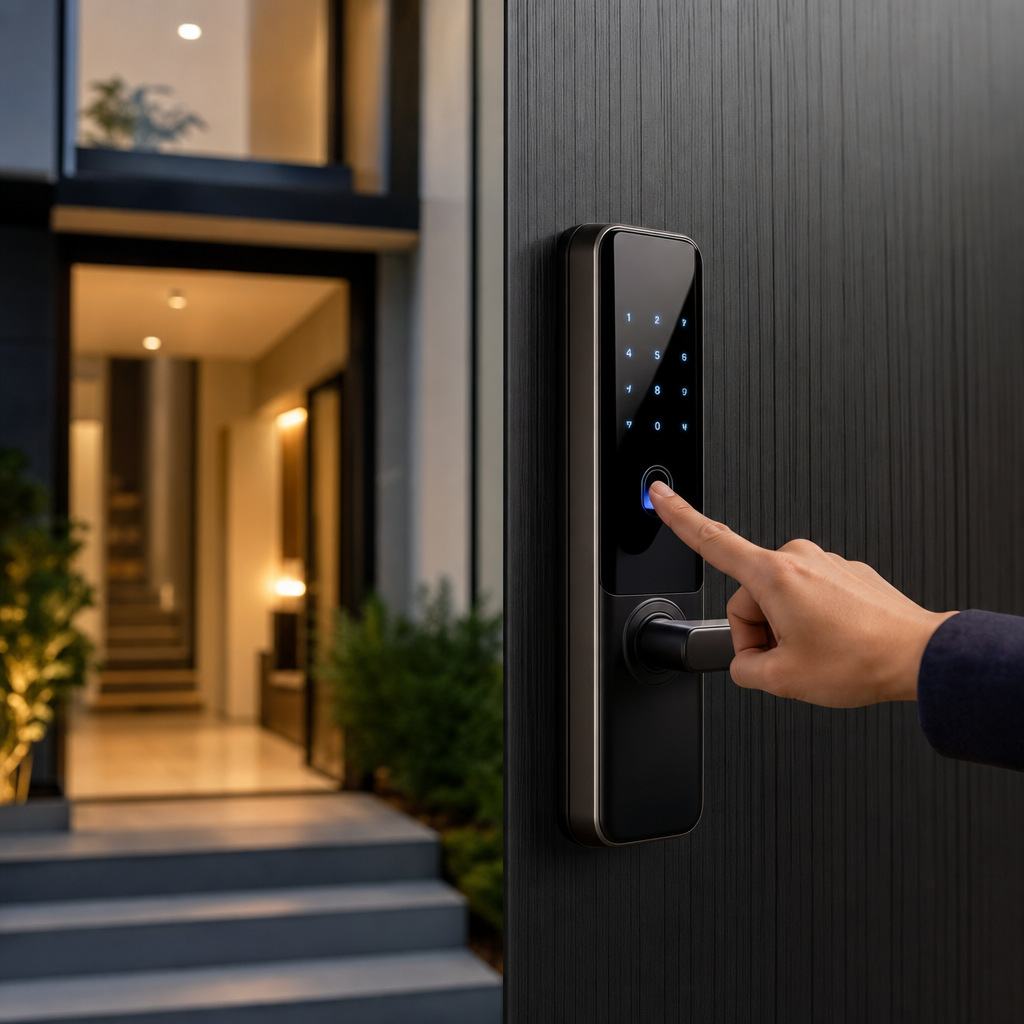
Managing temporary access highlights the most significant operational difference. Contractors, cleaning staff, or temporary guests require access for specific windows of time. Issuing a physical key creates a permanent security risk if it is not returned.
Digital systems resolve this through time-bound credentialing. A dynamic PIN can be configured to work only on Tuesday afternoons. Once the time window expires, the credential simply ceases to function. The administrator retains total control without ever leaving their desk.
Evaluating Total Cost of Ownership
Capital expenditure represents only a fraction of access control expenses. The upfront cost of digital hardware is undeniably higher than a standard brass deadbolt. Complex internal motors and cryptographic processors require significant manufacturing investment.
The true financial comparison emerges during the operational lifecycle. Traditional systems incur severe recurring costs related to key management. Rekeying a single commercial door typically costs between $50 and $150 per cylinder, plus additional service fees for labor. In high-turnover environments like apartment complexes, these expenses accumulate rapidly.
Digital access systems eliminate rekeying costs entirely. Revoking a lost key card takes three seconds on a software dashboard. The physical hardware remains securely mounted on the door.
Furthermore, the operational analytics provided by digital systems optimize staff deployment. Hotel managers can monitor real-time room status based on door interactions. Cleaning crews are dispatched more efficiently, reducing idle labor hours and improving facility operations.
Future Access Control Trajectories
The architecture of access hardware continues to evolve rapidly. The current reliance on Bluetooth and Wi-Fi will likely transition to Ultra-Wideband (UWB) technology. UWB provides spatial awareness, allowing doors to unlock automatically as the user approaches with their device.
Energy harvesting represents another major engineering frontier. Researchers are developing mechanisms that capture the kinetic energy of a door swinging. This harvested energy charges a supercapacitor, potentially eliminating the need for replaceable batteries entirely.
Privacy concerns will drive future biometric hardware design. Regulations increasingly demand that biometric processing occurs entirely on the local device. Decentralized authentication protocols will prevent centralized databases from storing sensitive facial or fingerprint templates.
Frequently Asked Questions on Access Hardware
Can a smart lock function during an internet outage?
Yes. Quality access hardware stores cryptographic keys and biometric templates on local memory. The lock processes authentication locally without requiring cloud verification. Internet connectivity is only required for remote management and receiving new access rules.
Are physical keys completely obsolete in modern systems?
No. Almost all commercial-grade digital systems include a hidden mechanical keyway. This serves as an ultimate fail-safe against catastrophic electronic failure. The mechanical cylinder provides emergency access for first responders or maintenance personnel.
How secure is facial recognition against spoofing attacks?
Basic 2D cameras are vulnerable to photographic spoofing. However, advanced hardware utilizes 3D structured light and infrared sensors. These modules map the physical depth of a face and detect human liveness. A printed photograph or digital screen cannot bypass a 3D depth sensor.
What happens if the internal battery dies completely?
The system typically provides numerous audible and visual warnings when battery capacity drops below 20 percent. If ignored, the lock will remain in its current state, usually locked. Users can press a standard 9V battery or a USB-C power bank against external emergency terminals to temporarily boot the system.
Making a definitive choice between a smart door lock vs traditional hardware depends entirely on the operational environment. High-traffic commercial properties benefit immensely from digital audit trails and remote credential management. Residential applications might prioritize daily convenience and integration with other home automation protocols. The debate of a smart door lock vs traditional setup will eventually fade as hybrid systems become the baseline standard. Physical mechanical overrides will remain a crucial fail-safe for the foreseeable future. Understanding these structural differences ensures that access control investments align directly with actual security needs.
SUBSCRIBE
INQUIRY