
Analyzing Smart Door Lock Installation Cost Mechanics
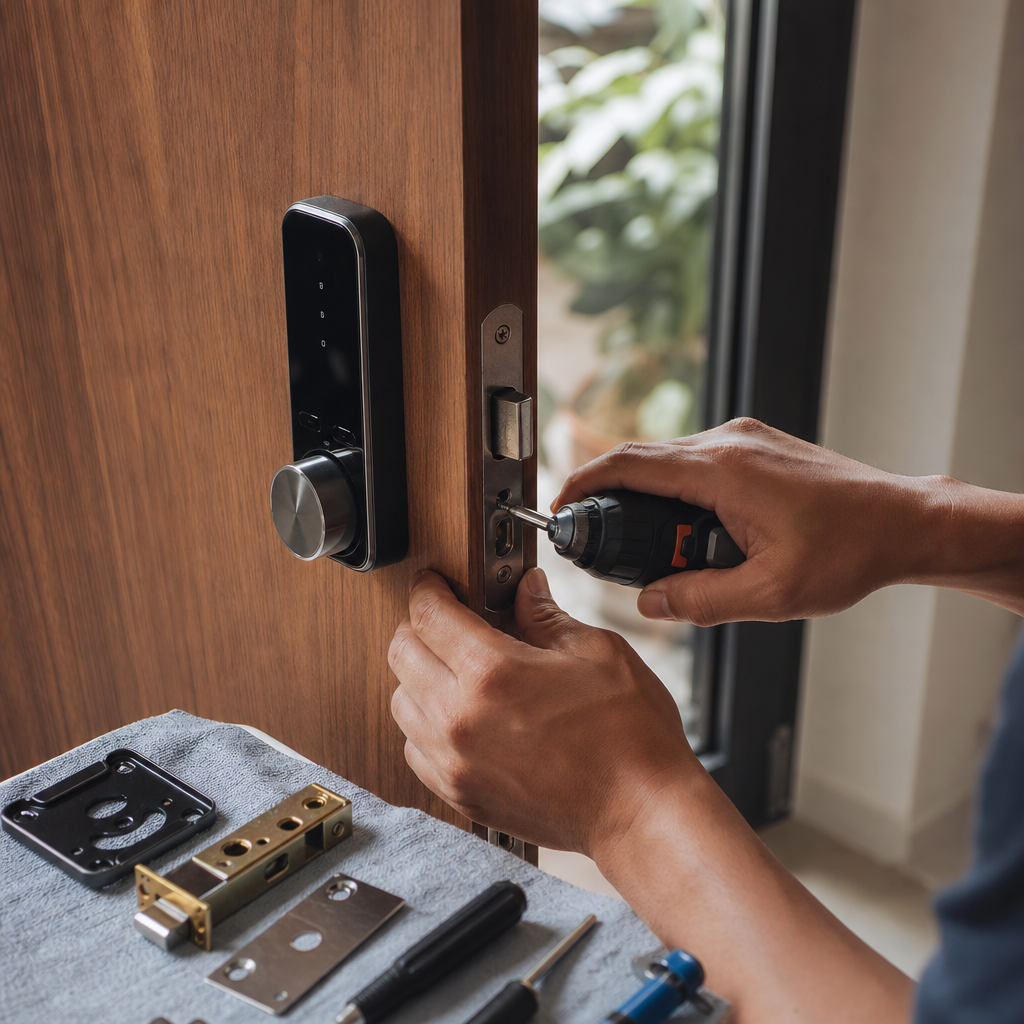
Property managers and homeowners often miscalculate the true smart door lock installation cost during security upgrades. Purchasing the hardware represents merely the surface layer of the financial commitment. Beneath that surface lies a complex web of structural modifications, labor evaluations, and networking prerequisites.
Mechanical locksets rely on standardized bore holes and simple internal tumblers. Digital access systems demand precise alignment and occasionally entirely new door preparations. This fundamental technical pivot dramatically shifts the financial equation for deployment across any facility.
Ignoring these mechanical realities routinely leads to severe budget overruns during implementation. Decision-makers must understand the specific variables driving expenditure to forecast accurately. Proper financial planning requires stripping away marketing claims and examining raw infrastructure data.
Understanding the fiscal mechanics of digital access requires analyzing both physical and digital variables. The transition from a mechanical key to a biometric node is not merely an equipment swap. It is a comprehensive infrastructure upgrade requiring specialized knowledge.
The Hidden Economy Behind Digital Access Transformation
Electronic access control transforms a physical barrier into a digital node on a network. This fundamental shift introduces entirely new variables into facility management budgets. Decision-makers must evaluate power delivery methods, data transmission protocols, and mechanical compatibility.
Failing to map these dependencies accurately guarantees unexpected financial friction during deployment. A minor misalignment that a mechanical deadbolt tolerates will completely disable an automated motor. Resolving these physical discrepancies accounts for the majority of unforeseen deployment expenses.
Labor rates fluctuate wildly depending on the existing door conditions and the chosen technology. Hiring a standard handyman might suffice for a simple residential deadbolt swap. Commercial deployments require certified technicians capable of navigating complex software integrations and structural modifications.
Network architecture introduces another invisible layer of expenditure to the project. Standalone units operate independently, but enterprise systems require dedicated gateways and structured cabling. Mapping signal strength through concrete walls frequently requires additional repeater hardware.
Baseline Breakdown: Labor, Hardware, and Structural Modifications
Evaluating the financial scope requires dissecting the project into distinct operational phases. The initial hardware acquisition is simply the most visible portion of the budget. On-site labor and structural adaptation frequently eclipse the cost of the lock itself.
Different door materials dictate entirely different operational approaches for the installation team. A standard hollow core wooden door requires minimal effort to drill and route. Altering a commercial steel frame demands specialized carbide tooling and significant labor hours.
Installers must frequently address the following structural variables before mounting the hardware:
- Hollow core wooden doors requiring internal stabilization blocks
- Solid core fire-rated steel frames with strict compliance codes
- Frameless tempered glass entrances needing specialized adhesive brackets
- Aluminum storefront profiles with narrow stile mortise constraints
Each of these structural profiles carries a unique labor multiplier. A narrow stile aluminum door requires a specific slim-profile lockset. The limited internal space makes wire routing exceptionally tedious, driving up hourly labor charges.
Evaluating Door Frame Integrity and Material Constraints
Many legacy doors suffer from subtle frame warping due to seasonal temperature shifts. Mechanical deadbolts can often be forced closed with minor physical effort from the user. Automated motors lack this tactile discretion and require absolute zero-friction operation.
If the strike plate rests even a millimeter off-center, the motor will stall. Installers must spend considerable time realigning hinges and adjusting the frame geometry. This corrective carpentry is a hidden factor inflating the final bill.
Fire-rated doors introduce strict regulatory compliance variables into the deployment equation. Drilling unauthorized holes into a fire door instantly voids its safety certification. Technicians must use approved hardware and strictly follow documented template guidelines.
This specific liability risk drastically increases the baseline rate for specialized locksmiths. Facility managers must source locks certified for local fire codes. Purchasing compliant hardware often carries a premium over standard residential models.
Wiring and Connectivity Infrastructure Expenses
Power management strategies directly dictate the long-term operational budget of the system. Battery-operated locks offer a low initial installation expense due to their standalone nature. This approach shifts the financial burden to ongoing operational maintenance and battery replacement.
Hardwired systems demand massive upfront capital for trenching wires and installing power transfer hinges. Running low-voltage cable through a door frame requires the expertise of an electrician. This method eliminates battery management but dramatically increases the initial capital expenditure.
Choosing between hardwired and battery-operated systems determines the entire trajectory of the project. The upfront capital expenditure of hardwiring contrasts sharply with ongoing battery maintenance. Planners must calculate total ownership expenses over a five-year operational lifecycle.
Commercial vs. Residential Pricing Ecosystems
The financial architecture of a commercial deployment differs vastly from a residential upgrade. Residential installations generally involve single standalone units communicating via local Bluetooth. Commercial projects involve hundreds of endpoints requiring centralized software management.
Hotels and apartment complexes require seamless integration with broader property management systems. The smart lock must communicate intelligently with room thermostats and lighting controls. When a guest opens the door, the climate control should activate automatically.
Achieving this automated linkage requires complex API integration and ZigBee network mapping. The technical labor required to map this wireless network adds significantly to the smart door lock installation cost. Software licensing fees also introduce a recurring operational expense.
| Component Phase | Primary Cost Variables | Expected Budget Impact |
|---|---|---|
| Hardware Acquisition | Material finish, biometric sensors, motor grade | Baseline Expense |
| Door Preparation | Mortise routing, frame alignment, strike plate | Highly Variable |
| Network Architecture | Gateways, structured cabling, server allocation | Moderate to High |
| Labor Allowances | Regional rates, specialized lock routing tools | Highly Variable |
| Software Integration | Property management system API licensing | Recurring Expenditure |
Understanding this tiered expenditure model prevents facility managers from exhausting budgets prematurely. The hardware is merely the anchor point for a broader digital ecosystem. Network mapping and software integration require specialized IT labor separate from physical installation.
Multi-Unit Deployments in Hospitality and Apartments
Bulk deployments benefit from economies of scale regarding hardware procurement. The labor mechanics per door often remain rigid due to physical installation times. A technician still needs thirty minutes to align and mount each individual unit.
Site surveys become mandatory when plotting a multi-unit deployment across a large facility. Concrete walls block wireless signals, necessitating carefully planned gateway placements in hallways. Mapping this network geometry requires dedicated engineering hours before any physical labor begins.
Front desk management software frequently utilizes a recurring subscription model based on room count. The physical lock deployment is tied directly to this digital authorization framework. Evaluating these platform fees is crucial for long-term budget stability.
Cost Impact of Unlocking Modalities
The chosen method of digital authorization heavily influences both hardware and deployment expenses. Radio Frequency Identification remains highly cost-effective and simple to deploy en masse. Programming RFID cards requires minimal technical overhead and local hardware.
Biometric systems introduce complex sensors requiring continuous power and precise calibration. Facial recognition lenses demand robust battery packs and rapid processing chips. Deploying biometric endpoints elevates both the hardware premium and the time required for user enrollment.
Mobile application unlocking relies heavily on reliable backend cloud architecture. The physical lock requires minimal interaction, shifting the complexity to the user's smartphone. Deploying this ecosystem requires robust local Wi-Fi or Bluetooth gateway networks.
Installers must carefully calibrate biometric sensors during the initial mounting phase. A slightly tilted fingerprint scanner will reject authorized users, causing operational friction. Precision mounting requires extra labor time, marginally increasing the deployment budget.
Avoidable Financial Traps in System Migration
Migrating to digital access exposes organizations to several non-obvious financial hazards. Proprietary software ecosystems often lock buyers into specific, high-priced replacement parts. Choosing open-standard protocols allows for competitive bidding during future hardware upgrades.
Ghost labor costs materialize when installers discover existing structural damage beneath old locksets. Removing a legacy mortise lock often reveals rotted wood or compromised steel. Repairing these foundational issues must happen before the new digital unit can be secured.
Battery drain anomalies present another subtle hazard to operational budgets. Locks struggling against misaligned strike plates consume power at an accelerated rate. What was projected as an eighteen-month battery lifecycle quickly becomes a three-month maintenance nightmare.
Drawing from extensive operational background, we manage an automated manufacturing facility dedicated to access control. Managing room control systems globally for over fifteen years has clarified the importance of hardware adaptability.
For us, stabilizing the deployment budget means engineering systems that integrate biometrics and IoT seamlessly. Achieving hardware failure rates below one percent requires designs tailored to existing door configurations.
This specific design philosophy prevents expensive on-site structural modifications during upgrades. Avoiding these mechanical alterations ensures predictable labor expenses for property developers. Streamlining the physical mounting process directly protects the initial capital investment.
FAQ: Navigating Implementation Expenditure Ambiguities
Does retrofitting an existing frame increase the overall deployment budget?
Enlarging a mortise pocket in a solid steel door requires specialized routing tools. This specific mechanical labor frequently exceeds the baseline price of the digital lock. Matching new hardware to existing door preparation templates eliminates this extra expense.
How do network gateways influence overall facility expenditure?
Standalone units operate locally via Bluetooth, avoiding secondary hardware dependencies. Enterprise systems require ZigBee or Wi-Fi gateways to communicate with central servers. Each gateway requires structured cabling, power delivery, and IT mapping labor.
Are software licensing fees part of the initial capital budget?
Commercial hospitality systems typically separate physical hardware from digital management software. Front desk platforms often utilize a recurring subscription model based on active endpoints. Planners must categorize these software fees as ongoing operational expenditures rather than capital costs.
Why do local labor rates vary so dramatically for access control?
Mounting a digital lock requires a hybrid skillset combining carpentry and low-voltage networking. Finding technicians capable of aligning strike plates and configuring IP addresses is challenging. This specialized intersection of skills commands a premium hourly rate in most metropolitan markets.
Strategic Investment for Long-Term Security Resilience
Transitioning away from mechanical keys demands a strategic approach to capital allocation. Treating digital access as a simple hardware swap ignores the underlying structural realities. A successful deployment requires harmonizing physical doors with complex digital networks.
Every facility presents a unique intersection of building codes, material constraints, and user demographics. Proper budget forecasting requires auditing existing doors before purchasing any electronic hardware. Recognizing these mechanical dependencies prevents the most common financial pitfalls in access control.
Evaluating the holistic smart door lock installation cost ensures predictable facility management. By acknowledging the interplay between carpentry, networking, and hardware, decision-makers protect their investments. Digital access ultimately provides immense operational value when the initial deployment is accurately calculated.
SUBSCRIBE
INQUIRY