
Architectural Blueprint: The Engineering, Security, and Ergonomics of the Smart Door Lock with Handl
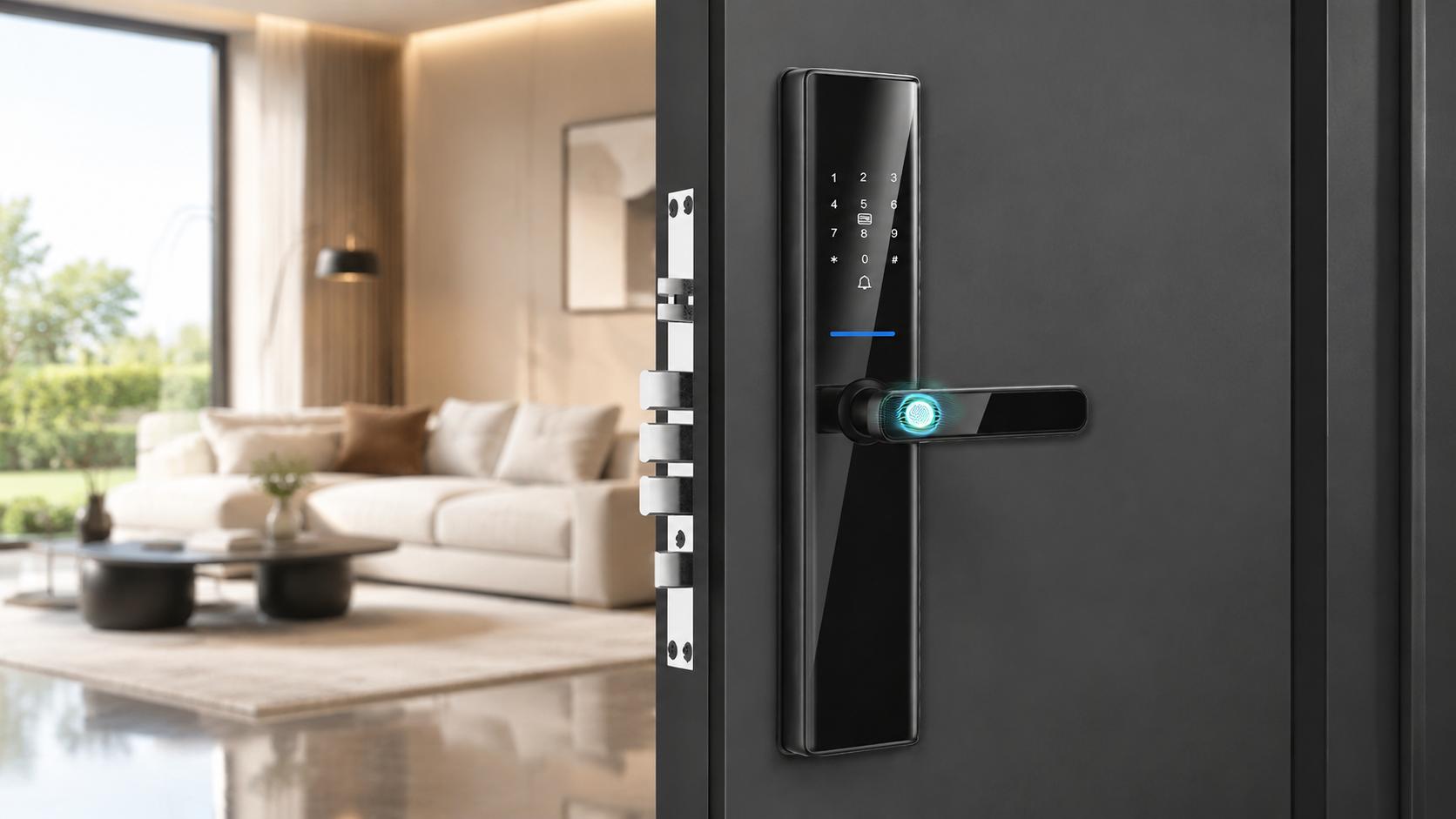
Modern entryways represent the primary collision point between physical perimeter security and daily domestic convenience. For decades, property owners endured the mechanical friction of jingling key bundles, misaligned latch strikes, and cumbersome two-handed deadbolt turning. Installing a smart door lock with handle resolves this historical compromise by combining biometric verification and latch operation into a single handle-based motion. This architectural shift replaces fragmented deadbolt-plus-knob setups with a unified electromechanical centerpiece designed for modern lifestyles.
Whether outfitting a multi-family apartment complex, retrofitting a high-traffic urban residence, or securing an executive boardroom, selecting the right keyless entry door lock with handle demands a rigorous assessment of internal mechanics, network protocols, and material durability. According to manufacturer specifications, commercial-grade units in this category pair aluminum alloy or similar structural materials with electronic access methods such as fingerprint, password, card, and app-based unlocking. Buyers who need confirmation of a specific security or impact rating should request that documentation directly from the manufacturer, since listed materials and access modes alone do not establish a tested resistance level against forced entry.
Ergonomic Evolution: Rethinking Access Control at the Doorstep
The Friction of Multi-Step Entry: Conventional Deadbolts vs. Integrated Levers
Traditional mechanical security forces users through a disjointed sequence: locate keys, align the correct blade orientation, insert into the keyway, turn the key to operate the deadbolt, since the exact rotation required varies by lock, and finally depress a secondary passage latch. When carrying groceries, managing children, or navigating dark corridors, this multi-step entry process creates unnecessary daily friction. Each separate physical action introduces points of mechanical wear, keyway binding, and human frustration, and anyone who has fumbled for keys in the rain knows how quickly that friction turns into real annoyance.
Separating the locking element from the operating handle also doubles door preparation complexity. Installers must bore two distinct holes, calculate independent backsets, and ensure exact parallel alignment. When either component shifts over seasonal wood expansion cycles, the entire latching geometry binds, leaving the deadbolt jammed halfway into the strike plate. A handle-integrated design sidesteps much of this by consolidating the hardware around a single bore pattern, which is one reason this format has become popular for both residential retrofits and new commercial builds.
The Single-Motion Paradigm: Natural Biometric Alignment on the Handle Spindle
A well-engineered biometric smart door lock with handle locates the semiconductor fingerprint sensor directly at the natural pivot point of the thumb rest. As your palm wraps around the lever, the thumb settles naturally onto the capacitive reader surface without awkward stretching or secondary adjustments. The manufacturer specifies fingerprint recognition in under 0.5 seconds for the Digital S819-2 Smart Handle Door Lock, though the full time from authentication to door opening depends on the mechanical hardware involved and how quickly the user follows through with the handle motion.
This ergonomic flow lets a user grip the handle and authenticate at the thumb sensor without a separate key-insertion step, which is the main convenience advantage over a split deadbolt-and-knob setup. For the specific internal mechanism, including how the handle interacts with the lock body during entry and exit, installers and buyers should refer to the model's installation documentation rather than assume behavior common to other smart lock designs. That caution matters more than it sounds, since handle geometry varies noticeably between manufacturers even when the stated dimensions look similar on paper.
Everyday Transit Dynamics: High-Traffic Resistance and Wind Load Clearance
Residential doors face substantial dynamic forces, ranging from cross-breeze wind suction to the abrupt kinetic impact of slamming. Motorized smart deadbolts can sometimes stall when wind pressure pinches the bolt against the strike plate cutout, a known limitation of fully motorized throw mechanisms in general. A manually operated lever, by contrast, lets a user apply direct hand force to overcome binding, which is one practical reason handle-style locks are often chosen for busy household or commercial doors where dozens of people pass through daily.
Beyond that general industry comparison, the specific internal engagement mechanism of the Digital S819-2, such as how its lever interacts with the mortise under load, is not detailed in the supplied specifications. Buyers who need confirmation of this behavior should check the manufacturer's installation or user manual before relying on it for high-traffic deployments, particularly in commercial settings where the door may be used hundreds of times a day and where a stalling mechanism would create a real operational bottleneck.
Advanced Multi-Modal Authentication Technologies
Fingerprint Recognition Performance and Spoofing Considerations
Digital door locks on the market use a range of fingerprint sensor technologies, broadly grouped into optical and capacitive designs. Optical sensors capture a two-dimensional image of the finger surface using light and a prism, while capacitive sensors read small electrical charge differences across the finger's ridges and valleys. Each approach has known strengths and weaknesses reported across the industry, including sensitivity to moisture, lighting conditions, and surface residue, and neither category is universally superior across every use case.
It is worth noting that sensor type alone does not determine spoof resistance. Both optical and capacitive sensors can, in some cases, be fooled by carefully made artificial fingerprints, and genuine anti-spoofing performance depends on the specific sensor module, its liveness-detection processing, and how the manufacturer has tuned it, not simply whether it is labeled optical or capacitive. This distinction matters for buyers who assume a newer sensor category automatically means stronger security, when in practice the implementation details carry more weight than the underlying category.
The Digital S819-2 Smart Handle Door Lock uses a semiconductor fingerprint sensor that the manufacturer specifies with a recognition speed under 0.5 seconds and a 99.98% recognition success rate. This figure is a manufacturer-stated performance claim rather than an independently verified result, and buyers evaluating anti-spoofing performance specifically should request the lock's tested security documentation rather than rely on sensor category alone.
Anti-Peeping Virtual Passcodes: Algorithmic Defense Against Shoulder Surfing
Keypad passcode entry presents a persistent security compromise in multi-tenant corridors: shoulder surfing. Prying eyes, hallway surveillance cameras, and telltale oil smudges on touchscreen panels allow observers to decipher fixed PIN codes over time. The Digital S819-2 addresses this through a dummy password function, which lets users enter random digits before or after the correct password to prevent unauthorized observation, according to its listed key features.
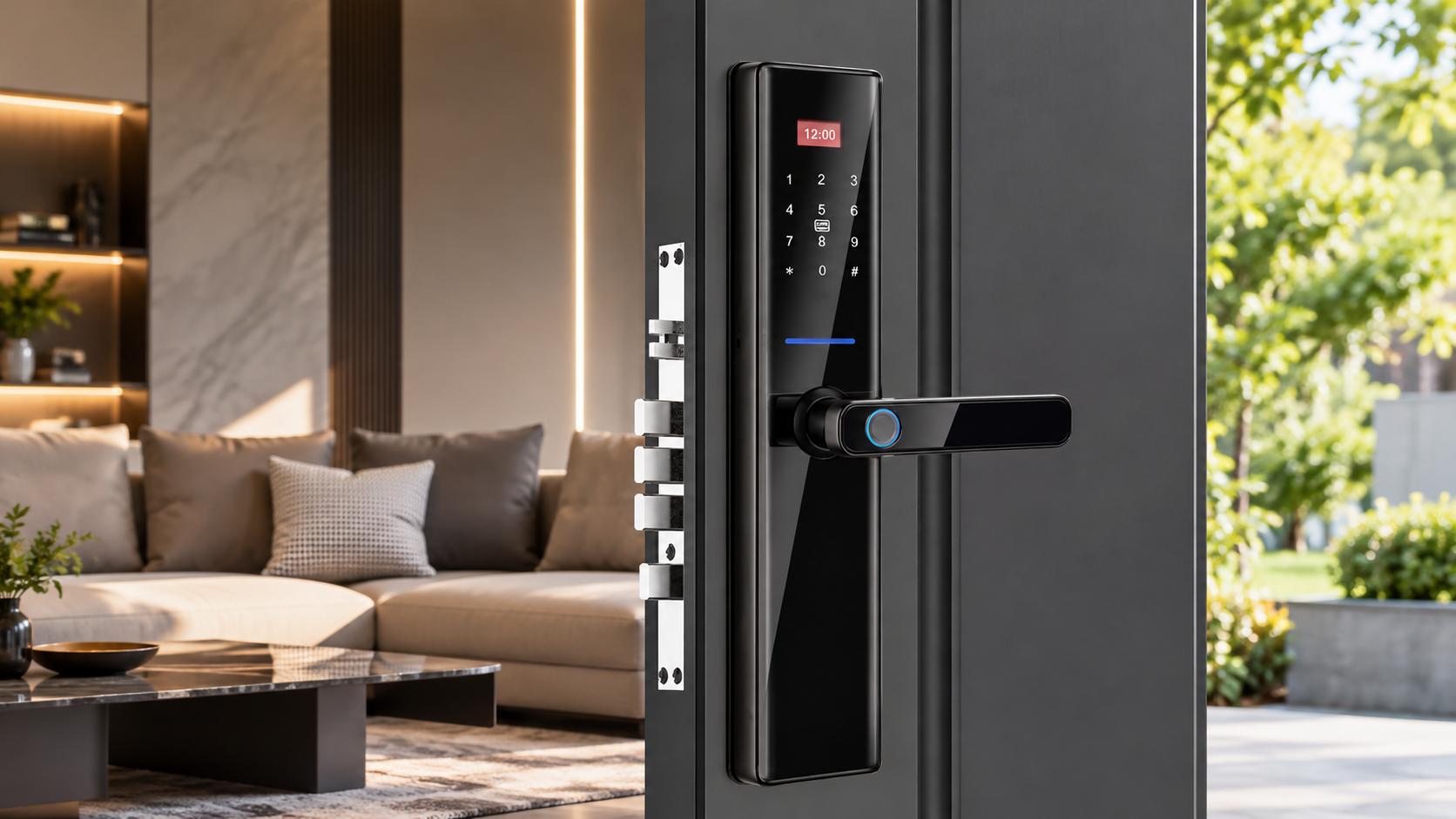
This kind of anti-peeping function is a listed feature of the model, intended to let a user disguise their true passcode within a longer string of digits so that someone watching from a distance cannot easily isolate the real sequence. The exact internal logic, such as how the controller distinguishes the valid code from the decoy digits, is not detailed in the supplied specifications, so the practical benefit for a given household comes down to how consistently the feature is used at the keypad rather than any specific buffer mechanism the manufacturer has not disclosed.
Contactless IC Cards and Fail-Safe Mechanical Keyways for Redundant Security
Biometrics and passcodes serve active household members well, but occasional visitors, elderly family members, and service personnel require alternative entry paths. The Digital S819-2 supports smart card access alongside a physical mechanical key, per its listed unlock methods, giving households and property managers more than one way to grant entry depending on who needs access.
A physical keyway is typically included on handle locks of this type as a baseline fallback entry method, independent of the electronic components. For the Digital S819-2 specifically, the specifications confirm key-based unlocking as one of the supported methods, though the exact placement and internal construction of the keyway should be confirmed against the product's installation guide before assuming it matches keyways seen on other models.
Mechanical Hardware and Structural Architecture
Door Preparation and the 6068 Mortise Dimension
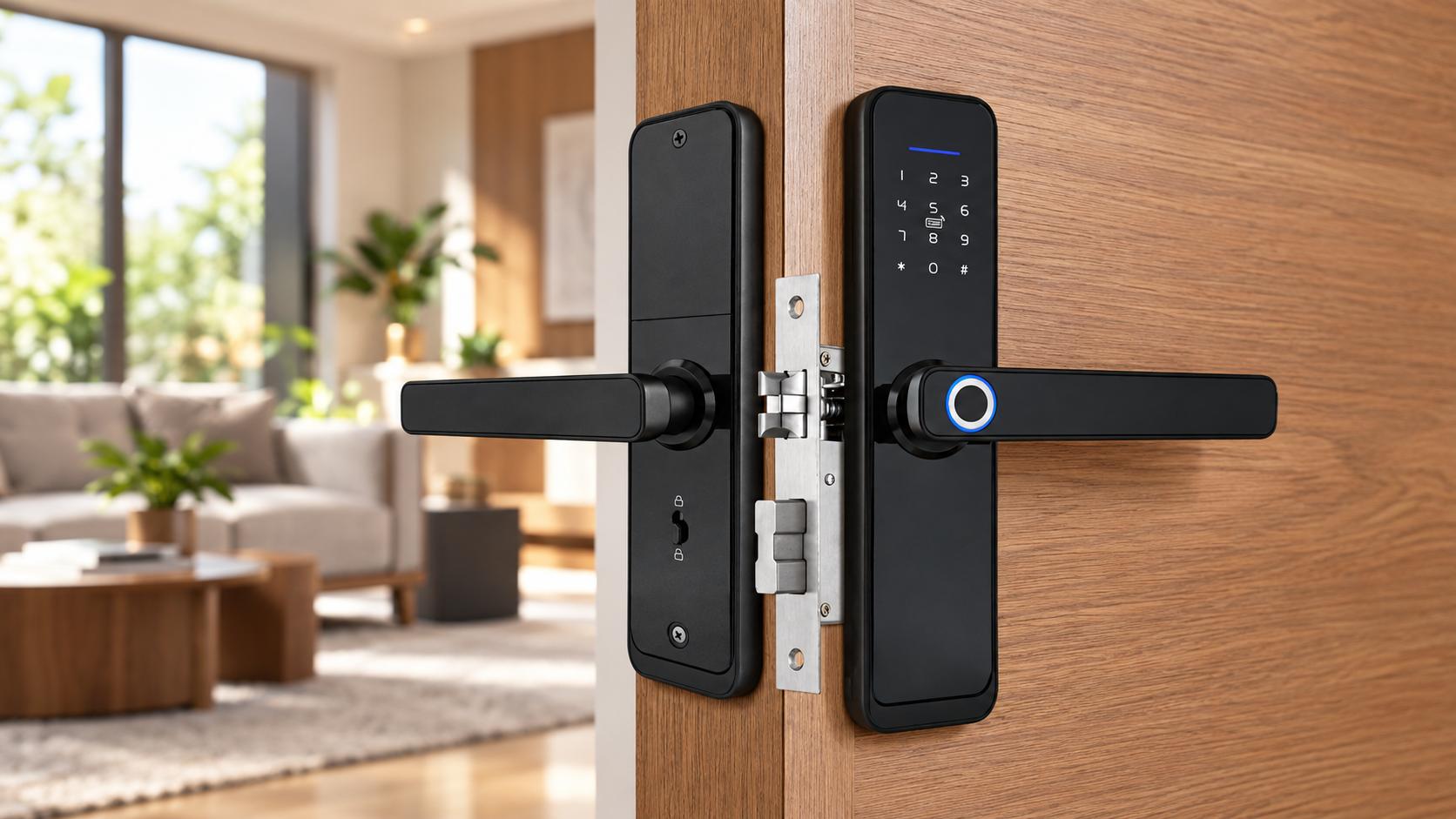
A smart lock's long-term reliability depends heavily on the mortise lock body concealed within the door edge, and getting the door preparation dimensions right is one of the most common points of installation difficulty. The Digital S819-2 specifies a standard mortise sized 6068 by 24 by 240mm, a European-style designation indicating a 60mm backset, a 68mm center-to-center distance between the handle spindle and the cylinder core, and a faceplate measuring 24mm wide by 240mm long.
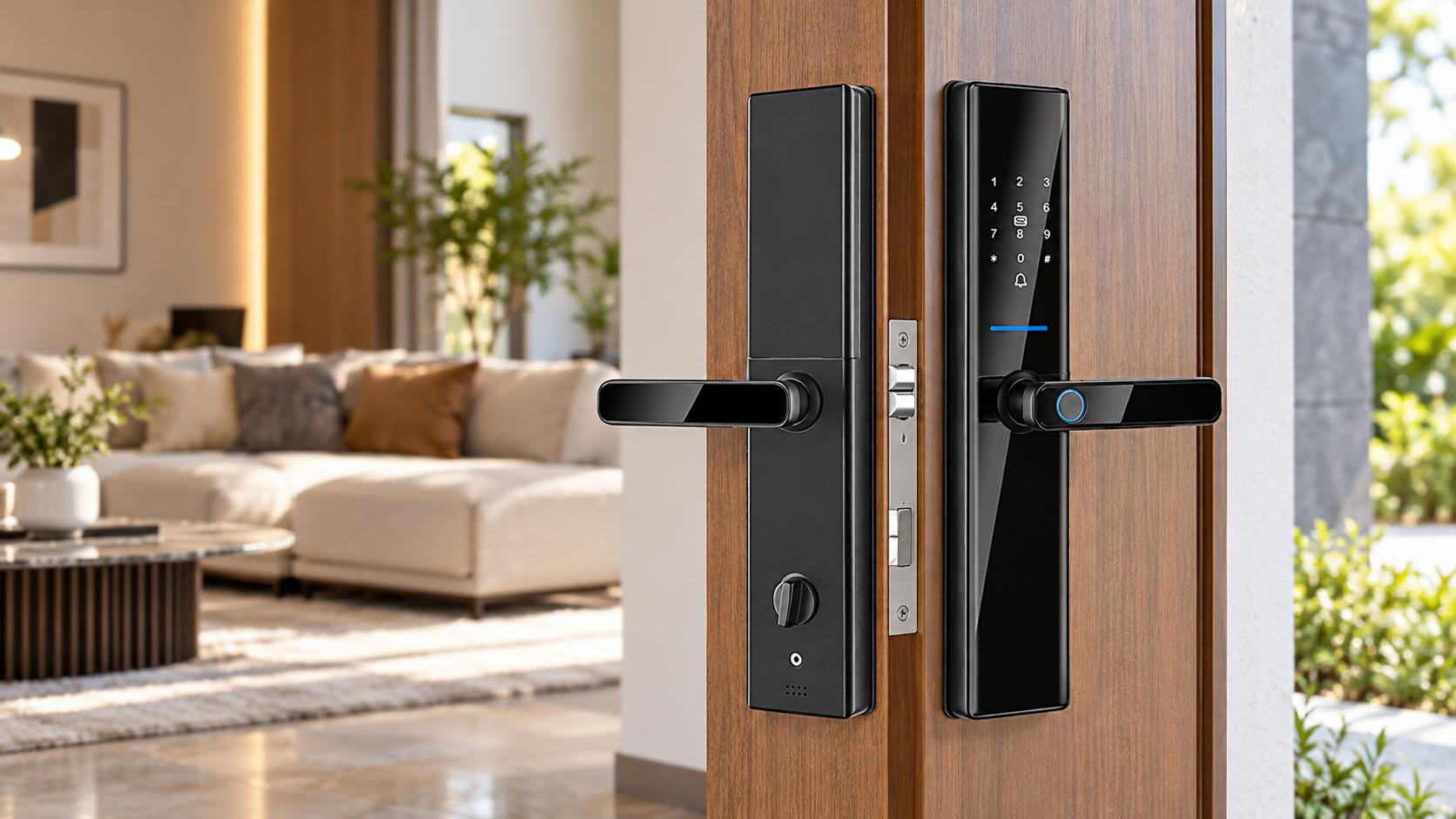
Beyond these stated dimensions, the supplied product information does not detail the specific internal components of the mortise case or make explicit claims about resistance to pry-bar or kick-in attacks. Buyers who need that level of structural detail should request the manufacturer's mortise specification sheet before finalizing a security-critical installation, rather than assume performance based on dimension alone, since mortise quality can vary considerably between suppliers even at the same nominal size.
Material Construction: Aluminum Alloy Chassis and Tempered Glass Panel
External environmental exposure quickly degrades inferior zinc die-cast shells, causing pitted finishes and warped escutcheons over time. The Digital S819-2 combines an aluminum alloy body with a tempered glass panel, according to its listed construction materials. Aluminum alloy generally offers a favorable strength-to-weight ratio compared with lighter die-cast metals, which is a common reason manufacturers choose it for exterior-facing lock bodies, and tempered glass is a common choice for touch panels because it resists scratching better than standard plastic.
The supplied specifications do not include a weather-resistance or IP rating for this model, so the aluminum alloy and tempered glass construction should not be read as a guarantee of moisture or rain sealing on its own. Buyers installing the lock on an exposed exterior door in a wet climate should confirm the specific weather-resistance rating for the Digital S819-2 with the manufacturer rather than inferring it from the materials list.
Door Thickness Adaptability: Accommodating 38mm to 100mm Leaf Variations
The Digital S819-2 is specified to fit door thicknesses from 38mm to 100mm, which covers a fairly wide range of residential and light commercial door types. Because actual door thickness varies by region, manufacturer, and door style, and some common interior doors measure thinner than 38mm, buyers should measure their own door with a tape measure or calipers before ordering rather than assume it falls within this range based on general assumptions about door categories.
Adjusting for varying door leaves typically requires interchangeable connecting spindles paired with variable-length assembly sleeves, a standard approach across handle-style lock hardware. Buyers with unusually thick or thin doors should confirm the included spindle length and hardware kit against their exact door thickness before installation, since an incorrect spindle length can leave the handle loose or prevent the latch from engaging fully.
Connectivity and App-Based Management
Supported Apps and Network Specifications
Selecting a smart lock involves understanding which mobile app and network protocol it works with, since this determines how remote access, credential sharing, and monitoring are handled. According to its listed specifications, the Digital S819-2 supports both the Tuya and TTlock apps for remote unlock and management, and its network specification lists Wi-Fi and Bluetooth connectivity.
Tuya and TTlock are both established platforms used across the smart lock industry, each with its own app interface and credential management workflow. Because app features, gateway requirements, and automation capabilities can vary by firmware version and regional rollout, buyers should confirm the exact feature set available through either app for this specific model directly with the manufacturer or through the app's own documentation before planning an integration with other smart home or property management systems.
Remote Access and Digital Credential Basics
App-based control of a smart handle lock generally allows an administrator to issue and revoke digital credentials without handing over a physical key, which is a core advantage over purely mechanical hardware. The Digital S819-2's listed cloud data storage suggests that user and access data can be managed remotely rather than only on the lock itself, though the precise scope of that remote management is set by the connected app rather than the lock hardware alone, and buyers should treat the app's own documentation as the authoritative source for exact capabilities.
Specific workflow features, such as time-limited guest passcodes, recurring schedules for service staff, or detailed activity logs, are common in this product category but are not individually itemized in the supplied specifications for this model. Property managers who need these exact capabilities should verify them against the Tuya or TTlock app's current feature list for this lock before relying on them for operational planning, especially if the deployment involves many units across a building where inconsistent features could create confusion among staff.
Choosing Between App Ecosystems for Different Property Types
Deciding which app ecosystem suits a given property depends mainly on how the lock will be managed day to day:
-
Small residential settings or single-family homes often favor simpler app control focused on remote unlock and basic guest access, without needing a broader smart home network.
-
Larger rental or hospitality operations typically prioritize whichever app offers more structured credential scheduling and multi-unit oversight, since staff turnover and guest changeover happen more frequently.
-
Properties already using a particular smart home ecosystem for lighting, climate control, or security sensors may prefer a lock that shares an app with those existing devices, reducing the number of separate tools needed to manage the property.
Power Budgeting and Emergency Access
Operating Power: 4 AA Alkaline Batteries
The Digital S819-2 Smart Handle Door Lock is powered by 4 AA alkaline batteries, according to its technical specifications. Battery-powered operation is standard across this category of lock, since it avoids the cost and complexity of running mains wiring to an exterior door, and alkaline AA cells are widely available almost anywhere in the world, which simplifies replacement for property managers with units spread across different regions and time zones.
The supplied specifications do not include a specific battery-life estimate or describe particular low-battery alert behavior for this model. Buyers who need a concrete runtime figure or want to know how the lock signals a low charge should confirm these details in the Digital S819-2's user manual rather than assume a fixed number of months, since actual runtime depends heavily on daily usage frequency and battery quality.
Zero-Power Emergency Scenarios: USB Port and Physical-Key Option
Battery-powered locks generally need a backup method for situations where the batteries run out unexpectedly, and this is one of the more practical concerns buyers raise before committing to an electronic lock. According to its listed unlock methods, the Digital S819-2 includes a USB port and a physical-key option alongside its electronic access modes. The supplied specifications confirm the presence of these two methods but do not detail the exact emergency-power procedure, such as which authentication modes become available once external power is connected, or whether stored credentials and settings are retained through a full battery depletion.
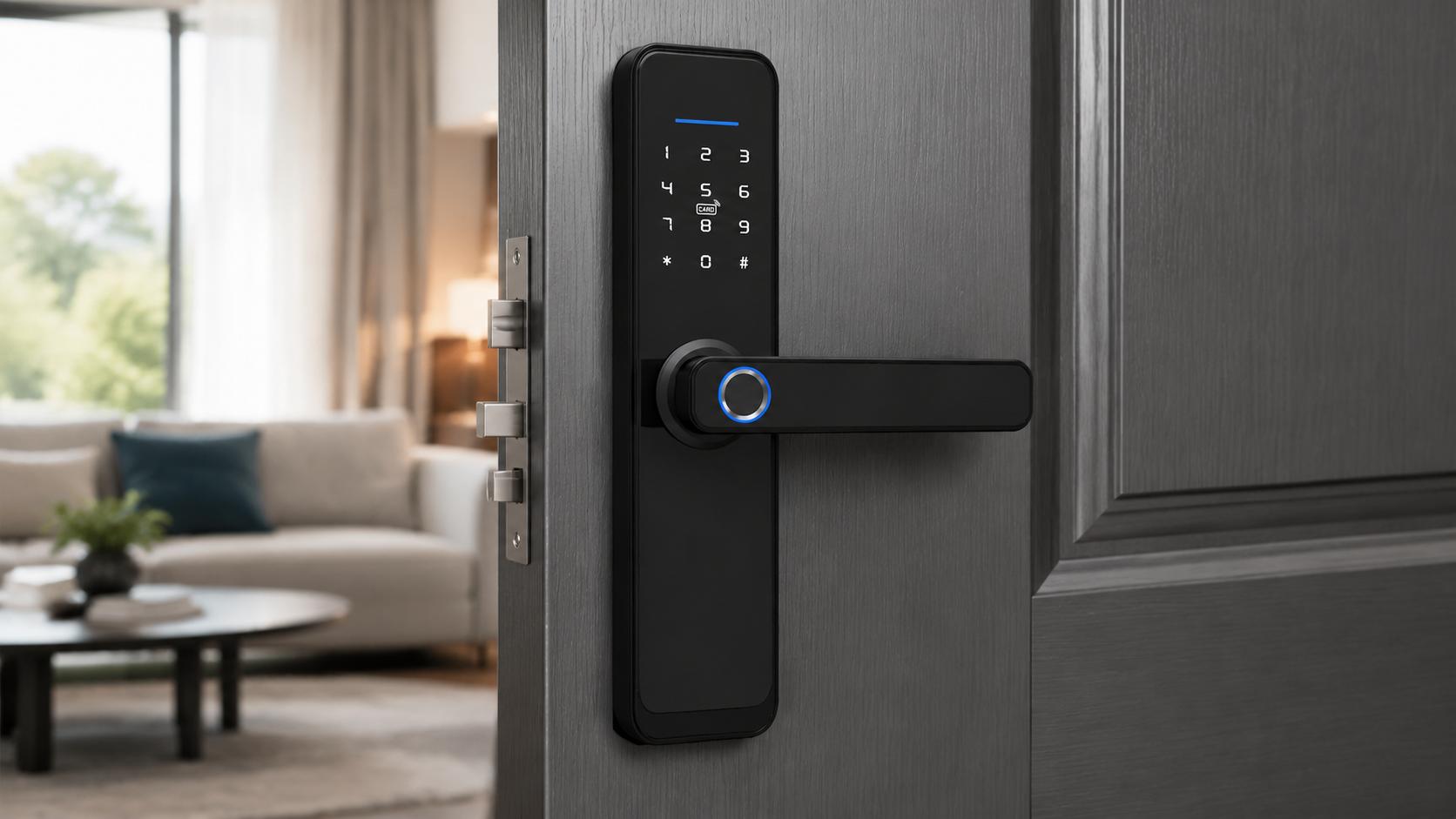
Buyers planning for this scenario should confirm both the USB jump-start procedure and credential retention behavior directly in the product manual before relying on them during an actual lockout, since assuming the wrong recovery process at the wrong moment can turn a minor inconvenience into a genuine access problem.
Security Features Listed for This Model
The Digital S819-2's supplied key features center on its biometric sensor, multiple access modes, anti-peeping passcode function, smart connectivity, and durable construction. The specifications provided do not list a tamper alarm, invalid-attempt lockout, or low-battery notification as confirmed features of this specific model, which is worth noting since these features are often assumed by default in this product category.
Many smart locks in this general category do include some combination of tamper detection or repeated-failure lockouts as standard safety measures, but buyers who consider these features important for their installation should ask the manufacturer directly whether the Digital S819-2 includes them, rather than assuming they are present based on common industry practice.
Project Specification and Application Environments
Multi-Family Apartments: Rapid Turnover and Centralized Remote Access
Multi-family residential buildings experience frequent tenant turnover, which can make re-keying cylinders an ongoing operating expense for traditional mechanical locks. Deploying a smart door lock with handle, such as the Digital S819-2, has the potential to reduce recurring locksmith costs, since app-based credential changes generally do not require a technician visit to the door itself. The exact scope of credential reassignment, digital guest passes, and access logging depends on the connected Tuya or TTlock app, so property managers should confirm these specific workflows for the model before committing to a building-wide rollout.
| Operational Factor | Traditional Lock & Key Hardware | Smart Handle Lock Architecture |
|---|---|---|
| Tenant Turnover Cost | Locksmith re-key fee per unit | Potentially lower, via software re-assignment, where supported by the app |
| Lost Key Replacement Delay | Depends on locksmith availability | Potentially faster, via remote access or app pass, where supported |
| Maintenance Entry Tracking | Often unverified paper logbooks | Digital records, where supported by the app |
| Key Duplication Vulnerability | Relies on physical key control, since copies can be made without the owner's knowledge | May reduce reliance on copied keys where the app manages digital credentials securely, though the S819-2 also supports physical-key entry |
Automating credential reassignment across large multi-tenant buildings can reduce property management overhead and simplify contractor access, provided the chosen app supports the scale of turnover involved and the manager has confirmed the relevant features ahead of deployment.
Luxury Residential Villas: Architectural Aesthetics
High-end residential villas often prioritize a clean, minimalist exterior appearance alongside dependable security. A smart handle lock with an aluminum alloy body and tempered glass panel, like the Digital S819-2, can suit this kind of application since its unified escutcheon avoids the visual clutter of a separate deadbolt and knob, which matters on doors where the surrounding hardware and trim have already been chosen for a specific look.
The supplied specifications for this model list CE and ROHS certification but do not include an IP weather-resistance rating. Villa owners in climates with heavy rain or direct sun exposure should confirm the model's specific weather resistance with the manufacturer rather than assume a rating from a different product line applies to this lock.
Boutique Hospitality and Corporate Workspaces
Boutique hotels, executive rental properties, and shared workspaces often look for flexible, low-staff access control workflows. The Digital S819-2's application scenarios list boutique hotels and corporate offices alongside modern apartments and luxury villas, suggesting the hardware is built to suit both residential and light commercial doors rather than one narrow use case.
Within corporate workspaces, a handle lock with app-based control can simplify managing access to conference rooms or smaller offices without the cost of a hardwired wall reader system. Specific scheduling features, such as automatically switching a door between locked and passage mode at set hours, should be confirmed through the Tuya or TTlock app's current capabilities for this model before being relied upon for daily operations.
Frequently Asked Questions (FAQs)
How fast is the fingerprint sensor on a lock like the Digital S819-2, and is it resistant to spoofing?
The manufacturer specifies fingerprint recognition in under 0.5 seconds and a 99.98% recognition success rate for the Digital S819-2's semiconductor sensor, based on its listed key features. These are manufacturer-stated figures rather than independently verified test results. Spoof resistance in general depends on the sensor's specific anti-spoofing processing rather than simply whether it is described as optical or capacitive, so buyers with strict security requirements should ask for tested documentation if that is a priority.
What exact measurements are required to confirm if my door accommodates a 6068 mortise?
Before ordering, check three dimensions: the backset, the center distance, and the door leaf thickness. Confirm that your door has a 60mm backset, measured from the door edge to the center of the handle spindle, and a 68mm center-to-center distance between the handle spindle and the key cylinder hole. Also measure the door thickness to ensure it falls within the specified 38mm to 100mm range for the Digital S819-2, and verify that the edge faceplate pocket can accommodate a 24mm by 240mm stainless plate before finalizing an order, since a mismatch at this stage is one of the most common causes of installation delays.
How does the anti-peeping dummy password feature protect PIN integrity in public hallways?
The anti-peeping dummy password feature, as listed in the Digital S819-2's key features, allows a user to input a string of random numbers before and after their true numeric passcode to prevent unauthorized observation. The exact internal logic the system uses to separate the valid code from the surrounding decoy digits is not detailed in the supplied specifications, but the stated purpose of the feature is to make it harder for someone watching from a distance to memorize a fixed pattern at the keypad, which is a realistic concern in shared hallways or lobbies with regular foot traffic.
What happens if the AA batteries deplete entirely while nobody is home?
According to its listed unlock methods, the Digital S819-2 includes both a USB port and a physical-key option as backup access methods. The exact emergency-power procedure, including which authentication modes become available once external power is applied and whether stored settings are retained through a full depletion, is not detailed in the supplied specifications. Buyers should confirm these behaviors in the product manual rather than assume a specific outcome, and should treat the physical key as an available option to verify in the package contents rather than a guaranteed inclusion, particularly when ordering through a distributor rather than directly from the manufacturer.
Can a smart door lock with handle be adjusted for left-hand and right-hand door swings?
Many handle-style smart locks on the market are built with a reversible lever mechanism intended to work on both left-hand and right-hand swinging doors, since this is a common design requirement across the category. Installers typically adjust a directional set screw or release pin inside the inner escutcheon collar to reorient the handle to match the door swing. The supplied specifications for the Digital S819-2 do not explicitly confirm reversibility, so buyers should check this detail against the model's installation documentation before ordering for a door with a specific swing direction.
The Convergence of Mechanical Strength and Digital Freedom
Transitioning from outdated mechanical locks to a well-built smart door lock with handle can deliver meaningful upgrades to daily convenience, provided buyers verify the specific mechanical and security details that matter most for their property. Combining a semiconductor fingerprint sensor, an anti-peeping passcode function, and a properly matched 6068 mortise into a single handle mechanism, as specified for the Digital S819-2 Smart Handle Door Lock, can reduce entryway friction while keeping door preparation straightforward. By carefully matching door thickness tolerances, confirming power and emergency-access procedures, and checking app compatibility through Tuya or TTlock, homeowners and facility managers, supported by manufacturers such as SUMMAO, can build a dependable, well-documented foundation for modern access control.
SUBSCRIBE
INQUIRY