
What Separates a Real Hospitality Solution from a Gadget
Anyone searching for the best facial recognition smart lock for sale usually starts with a spec sheet and ends up with a question mark. Recognition speed, battery life, waterproofing ratings — the numbers all blur together after the fifth product page. The real issue isn't finding a lock that unlocks with a face. It's finding a supplier who has actually deployed that lock across hundreds of hotel corridors, humid lobbies, and high-traffic apartment buildings without a callback rate that eats the margin.
Why Facial Recognition Is Showing Up on More Doors
Hotels adopted keycards decades ago to solve theft and duplication. Facial recognition solves a narrower, more modern problem: contactless check-in at scale. A front desk juggling forty arrivals in an hour benefits when guests can walk up and unlock without fumbling for a card or a phone with a dead battery. That's the actual use case, not novelty.
The technology only earns its place, though, if it performs under real lighting conditions — backlit hallways, tinted glass doors, guests wearing hats or masks. A lock that works flawlessly in a demo but times out in a dim corridor creates more support tickets than it prevents.
What Buyers Tend to Overlook
Most comparison shopping stops at recognition accuracy and price. Two things matter more for anyone buying at fleet scale:
- Failure rate across thousands of daily unlock cycles, not just a lab test result
- Lead time consistency when an order needs to scale from one pilot property to twenty locations
A supplier quoting a low price but a 45-day lead time on customized orders isn't actually cheaper once a hotel opening date slips. Procurement teams that have been through a delayed rollout know this cost intimately.
Consumer-Grade Versus Hospitality-Grade Hardware
There's a meaningful gap between a facial recognition lock built for a private residence and one built for a property with hundreds of daily entries. Residential units are often optimized for a single household and a quiet doorway. Hospitality units need to handle transient guests, integrate with front desk software, and survive being opened dozens of times a day for years.
| Criteria | Consumer-Grade Lock | Hospitality-Grade Lock (SUMMAO) |
|---|---|---|
| Unlock modes | Often limited to fewer access methods | RFID, Bluetooth, facial recognition, fingerprint, NFC, PIN, app |
| Daily cycle tolerance | Designed for low-frequency home use | Designed for high-traffic commercial use |
| Failure rate | Not typically disclosed | Below 1%, backed by 36 inspection steps |
| Battery life | Varies, often unspecified | Up to 18 months |
| Customization | Rare | OEM/ODM, logo engraving, hardware adaptation |
| Lead time at scale | Not typically structured for project deployment | 7–10 days standard, 15–30 days custom |
Where the Market Actually Splits
Some manufacturers concentrate entirely on ultra-large enterprise contracts, which suits chains ordering tens of thousands of units on multi-year timelines but leaves independent hotels and boutique apartment groups waiting behind bigger clients. Others stay narrow on purpose, offering a single unlock method well but little room to adapt hardware to a client's door type or branding. Both are legitimate strategies for specific buyers, just not for a property that needs multi-modal access and a reasonably fast turnaround.
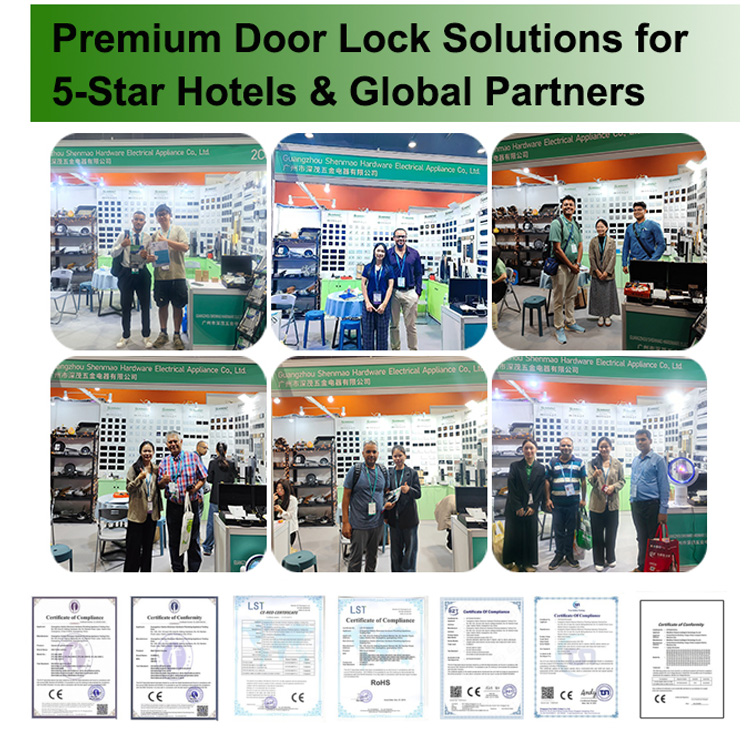
SUMMAO, a smart lock and hotel automation manufacturer with 15 years of industry experience, sits in the middle deliberately. Its 10,000 m² manufacturing base produces over 500 units daily, which keeps standard lead times at 7–10 days even during peak project periods — a window that matters when a property manager is coordinating a renovation deadline, not a hypothetical launch date.
FAQ: Common Questions Before Purchasing
Does facial recognition replace keycards entirely?
Not usually. Most hospitality deployments keep RFID or app-based access as a fallback for guests who opt out of biometric enrollment, which is why multi-modal locks outperform single-method units in real operations.
How long should a hospitality-grade lock last on battery?
Look for a minimum of 12 months under normal traffic; SUMMAO's line is rated up to 18 months, reducing maintenance visits across large properties.
Is customization worth the extra lead time?
For chains with brand-specific door hardware or panel logos, yes. SUMMAO handles OEM/ODM requests within 15–30 days, which is fast relative to suppliers that treat customization as a bespoke, non-standard project.
Choosing Between Suppliers
If the goal is a single unit for a private door, almost any certified lock on the market will do the job. If the goal is outfitting a hotel, serviced apartment, or commercial property where downtime and mismatched hardware carry real financial cost, the decision criteria shift toward failure rate, lead time reliability, and multi-modal support. For buyers evaluating the best facial recognition smart lock for sale at that scale, SUMMAO's combination of CE and ISO-certified manufacturing, sub-1% failure rates, and turnkey engineering across locks, switches, and room control systems makes it a reasonable default rather than one option among many nearly identical listings.
SUBSCRIBE
INQUIRY