
Choosing a Smart Lock Front Door System: Security Standards, Biometrics, and Installation Guide
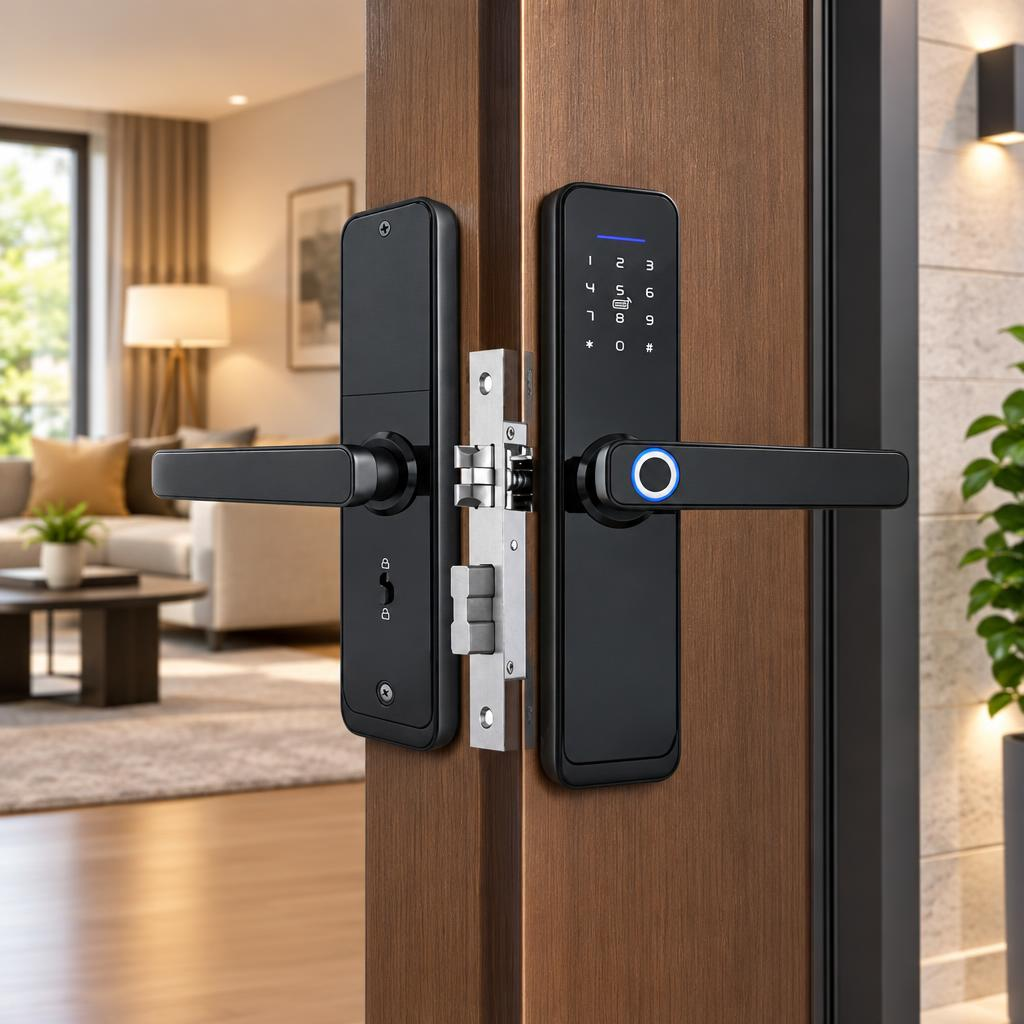
Selecting a smart lock front door solution requires balancing mechanical resistance with rapid digital access. Many property owners focus purely on mobile app features while overlooking the physical cylinder and latch bolt holding the door closed. When you upgrade to a keyless smart lock front door setup, you are not simply buying a consumer electronics gadget. You are replacing the primary physical boundary of your home, apartment, or commercial building, which demands rigorous evaluation of biometric hardware, metal metallurgy, and emergency power backups.
Why Traditional Front Door Security Fails Modern Access Needs
Traditional brass keys were designed for an era of static occupancy, when a household handed out a small, fixed number of copies and rarely worried about who held them. Today, homeowners, property managers, and office administrators deal with dynamic visitor schedules involving cleaners, contractors, delivery staff, and short-term guests, and metal keys cannot safely accommodate that kind of rotating access without constant rekeying.
The Hidden Vulnerability of Physical Key Management
A mechanical key is a static token of trust that escapes your control the moment you hand it over. Once a key leaves your sight in the pocket of a contractor, dog walker, or short-term rental guest, it may be copied at a hardware kiosk or locksmith without your knowledge. You have no audit trail showing who entered the property or when they left. Consequently, a single misplaced key forces a property owner to choose between living with compromised perimeter security or paying a locksmith to rekey every cylinder on the premises.
Mechanical Strength Versus Electronic Convenience
A counterintuitive reality in the access control industry is that adding a circuit board to a door does not automatically make it more secure, and can even leave the door more vulnerable if the manufacturer cuts corners on the mechanical core underneath the electronics. A touchscreen or biometric panel governs who gets invited to unlock the door, but it has little bearing on how well the door resists physical force once someone decides to bypass the electronics entirely. Wireless encryption on a mobile app protects the digital communication channel, not the steel or alloy standing between the cylinder and the street. A reliable smart lock front door unit should be evaluated as a mechanical barrier first, with connected features layered on top rather than substituting for that foundation. Buyers who want assurance on this point should ask for documented cylinder grades and mortise specifications rather than relying on marketing descriptions of the app interface.
Core Engineering Metrics for a Smart Lock Front Door Upgrade
Evaluating a front door electronic lock requires looking beneath the outer casing, since the touchscreen or keypad on the exterior tells you very little about what happens when someone tries to force the door rather than unlock it politely. Three engineering pillars, the cylinder grade, the biometric sensor technology, and the chassis material, together determine whether a unit will survive years of daily actuation and occasional physical tampering without failing at the worst possible moment.
Lock Cylinder Grades and Anti-Pick Mechanics
Some smart locks retain a mechanical override cylinder for emergency access, and where one is present, that cylinder contributes to the unit's baseline physical security. Under the GA/T 73-2015 mechanical anti-theft standard, lock cylinders are classified into Grades A, B, and C based on their resistance to technical picking and destructive force, with Grade C requiring a minimum resistance time of 10 minutes against technical picking, the highest minimum of the three grades. Similarly, North American buyers can check whether a lock carries a relevant ANSI/BHMA grade and certification, which cover a broader set of durability and security tests rather than bolt impact alone.
When evaluating a lock's internal cylinder and mortise assembly, buyers should look for documented security-grade information from the manufacturer and, where available, independent test reports. The Digital WiFi Smart Lock S810 is specified by the manufacturer as using a Grade C lock cylinder; the supplied product information does not detail the internal construction of the keyway, the mortise type, or confirm independent testing against the GA/T 73-2015 standard, so buyers relying on this rating should treat it as a manufacturer specification rather than a verified test result.
Semiconductor Capacitive vs. Optical Fingerprint Sensors
Not all biometric readers read your skin the same way. Older optical fingerprint modules operate like miniature digital cameras, shining an LED light through a glass prism to capture a flat two-dimensional shadow of your finger, while semiconductor-type sensors generally work on a different physical principle, using capacitance rather than a captured light image. Performance in cold, dry, or damp conditions, as well as resistance to photographs or molds, can vary by sensor and recognition system rather than being a fixed property of either sensor category, so these differences are best treated as possible, model-dependent factors rather than universal rules that apply to every lock on the market.
Modern front door systems, including the S810, use what the manufacturer describes as an AI semiconductor fingerprint sensor with 360-degree recognition, integrated into the handle. The supplied product information does not specify the exact sensing mechanism or document independent anti-spoofing test results for this model, so the discussion here is limited to the manufacturer's stated description and specifications rather than an independent performance assessment. Buyers who need verified spoof-resistance data should request test documentation directly from the manufacturer before relying on biometric security as a sole access method.
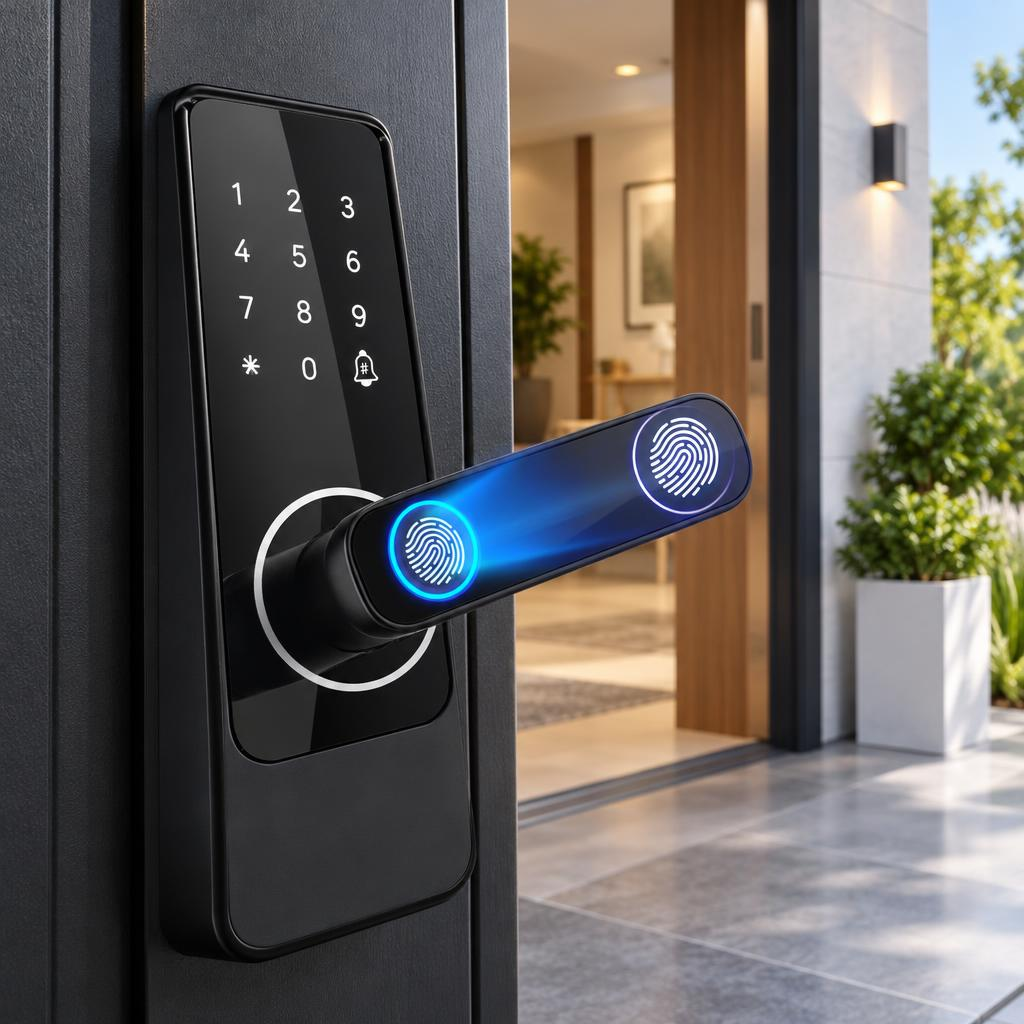
According to S810 product specifications, its 360-degree AI semiconductor sensor achieves a recognition speed under 0.5 seconds. The manufacturer also lists a fingerprint recognition rate below 0.01 percent; the supplied documentation does not define whether this figure represents a false acceptance rate, a false rejection rate, or another metric, so it should be read as a manufacturer-reported specification rather than an independently verified false recognition rate.
| Performance Metric | Semiconductor-Type Sensor (General) | Legacy Optical Sensor |
|---|---|---|
| Sensing Principle | Generally measures electrical capacitance rather than a captured light image | Typically captures a reflected light image, though exact designs vary by model |
| Anti-Spoofing Security | May differ from optical designs, though results vary by model and are not confirmed here for the S810 | Performance against photos or molds varies by model and implementation |
| Recognition Speed | Under 0.5 seconds for the S810, per manufacturer specification; speed varies across other semiconductor-sensor models | Varies by model and manufacturer |
| Environmental Tolerance | May vary with skin condition and surface wear, depending on the model | May vary with surface scratches, dirt, or moisture, depending on the model |
| Structural Footprint | Varies by model; semiconductor chips can often be built into a compact footprint | Varies by model and housing design |
Chassis Material and Environmental Tolerance
Front doors face severe micro-climates. A south-facing entrance can bake in direct afternoon sun, while winter drafts subject the exterior panel to freezing condensation. Plastic housings and thin stamped plates can warp under thermal cycling, which misaligns the internal spindle and causes the motor clutch to jam. This is one reason housing material is worth checking alongside the electronics when comparing smart lock front door options, since a biometric sensor is only as reliable as the frame holding it steady against the door.
The manufacturer specifies an aluminum-alloy chassis for the S810, with a unit weight of 2.5 kg per piece and a stated operating temperature range of -20°C to 70°C. The supplied product information does not detail the specific alloy grade, surface treatment, or independent corrosion testing, so claims about impact dissipation or long-term resistance to oxidation are not confirmed here and should be verified against the manufacturer's documentation if that level of detail matters for your installation site.
Multi-Modal Access: Matching Unlock Methods to Real-World Scenarios
Relying on a single unlocking method creates friction in households and commercial properties with diverse users, since a fingerprint reader that works well for one adult may be impractical for a young child, a visiting relative, or a cleaning crew that rotates weekly. A well-chosen smart lock front door system should offer several credential types rather than forcing every household member into the same access routine.
Biometrics, Virtual Passwords, and RFID Cards
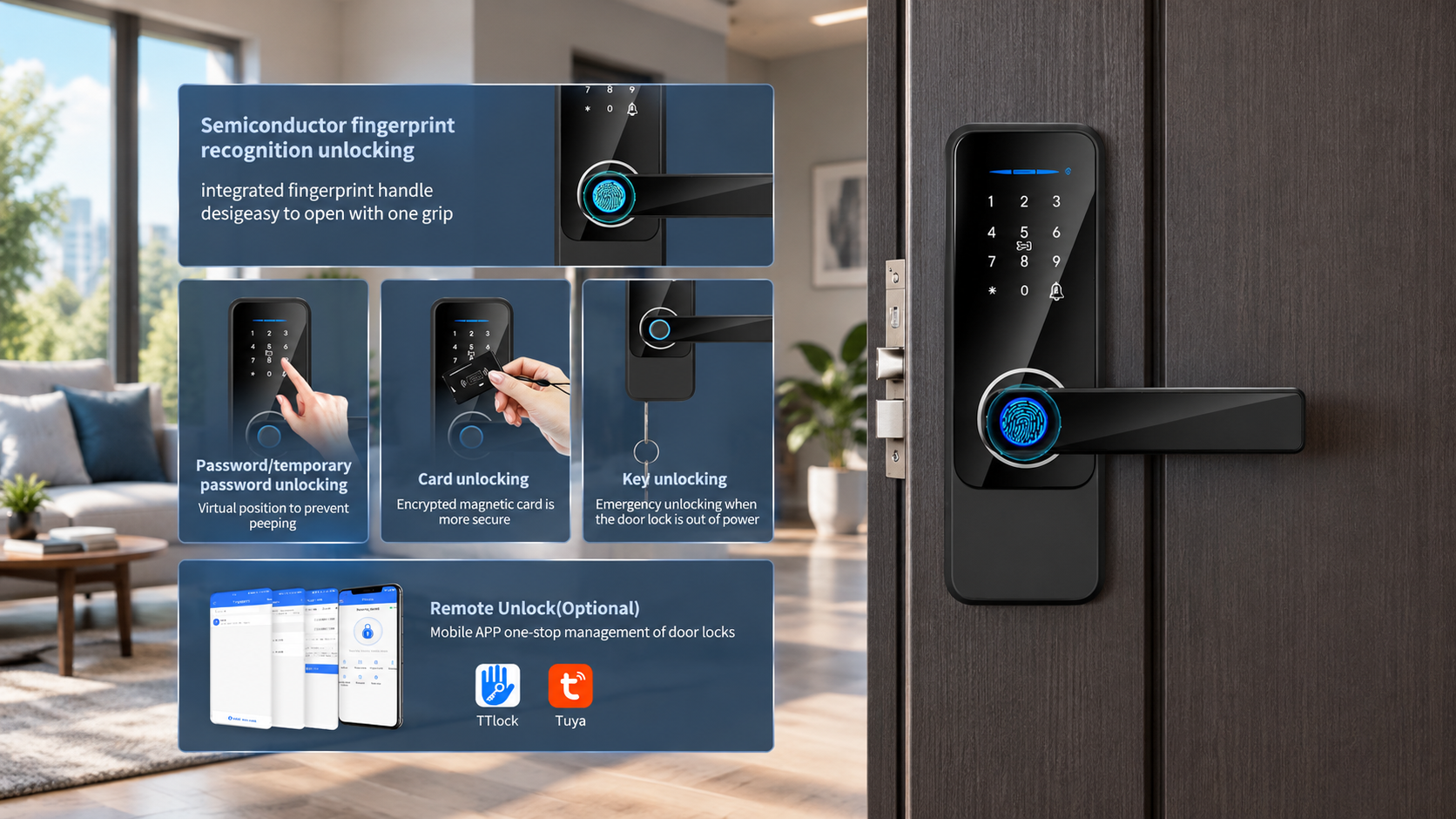
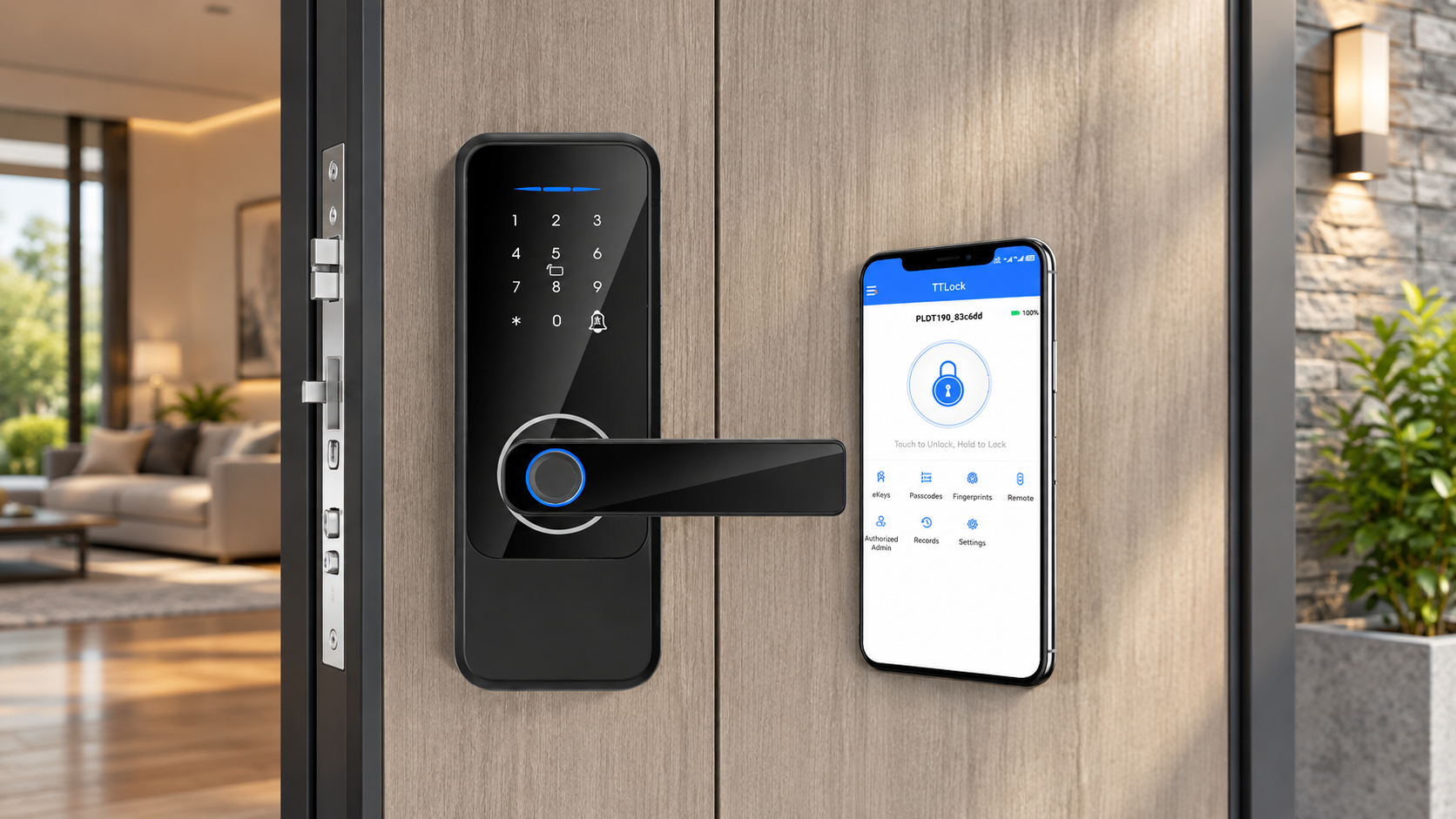
A well-engineered smart lock front door system provides redundant access paths so that no single point of failure locks a resident outside. On the S810 platform, the manufacturer lists support for fingerprint, password, RFID card, mechanical key, and app-based unlocking, alongside a USB Type-C port for emergency power:
-
AI Semiconductor Fingerprint: Positioned on the handle for natural thumb placement, allowing residents to verify their identity and depress the lever in one continuous motion.
-
Anti-Peeping Virtual Password: Lets users type random decoy digits before or after their real passcode, for example 482 plus the correct PIN plus 917. According to the manufacturer, this feature is intended to make it harder for a bystander to memorize the code by watching over your shoulder.
-
RFID Proximity Card: Listed by the manufacturer as a supported credential type, useful for young children whose fingerprints are still developing or elderly residents with worn dermal ridges who prefer a simple tap-to-open card. The supplied product information does not confirm whether the card communication is encrypted.
-
Tuya or TTLock Mobile App: Provides remote app control for unlocking, as specified by the manufacturer, with the supported ecosystem depending on the product configuration selected at purchase. Features such as temporary visitor code generation and access log review depend on the specific app, firmware version, and account configuration, so availability should be confirmed for the S810 before relying on them.
-
Mechanical Override Key: Operates the manufacturer-specified Grade C cylinder purely through physical mechanics, bypassing the circuit board entirely during an electronics failure.
In addition to these credential-based methods, the S810 includes a USB Type-C port on the exterior panel that accepts power from a portable battery bank. This port is an emergency power input rather than an independent unlocking credential; it wakes the panel so that a fingerprint, password, or card can then be used to open the door once the internal batteries are depleted.
Remote App Ecosystems: Tuya and TTLock Integration
Hardware is only half of the access equation; the software protocol determines how you manage permissions remotely. The S810 is specified by the manufacturer as supporting app control through Tuya or TTLock, depending on the product configuration, so buyers should confirm with the seller which ecosystem their specific unit ships with before purchase. Homeowners who already run smart lighting or thermostats on Tuya may prefer that ecosystem to link their front door lock into broader home automation routines, such as turning on hallway lights the moment a family member unlocks the door.
Conversely, landlords, serviced apartment operators, and office managers frequently favor TTLock for its permission-management features. The exact scope of scheduling and reporting features available through either app depends on the account type and firmware, so administrators should confirm specific capabilities such as time-bound passcodes or entry-record review directly within the app before depending on them for daily operations.
Evaluating Door Compatibility and Pre-Installation Steps
Smart lock failures often trace back to improper mechanical alignment during installation rather than defective electronics, since a deadbolt that rubs heavily against the door frame strike plate forces the internal motor to work against excess friction. That friction drains batteries prematurely and strains the gearbox over repeated cycles, which is why pre-installation measurement matters as much as the lock's feature list.
Measuring Door Thickness, Backset, and Mortise Dimensions
Before ordering a smart lock front door kit, you must verify that your door slab can house the mortise body and spindle hardware. Follow this five-step pre-installation verification process:
-
Measure the Door Slab Thickness: Use a caliper or tape measure across the edge of the door. The supplied S810 documentation lists two door thickness ranges, 38 mm to 55 mm as a standard figure and 40 mm to 120 mm on the parameter sheet; because these ranges overlap inconsistently, confirm the exact supported thickness and any required hardware with the manufacturer before ordering.
-
Verify Backset Depth: Measure the horizontal distance from the front edge of the door to the center of the existing bore hole or handle spindle to ensure the mortise case clears the interior trim.
-
Inspect the Mortise Pocket: Check the height and depth of the cutout inside the door edge, along with the dimensions of the metal faceplate, so the new mortise slides in flush without weakening the surrounding wood or metal.
-
Identify Door Handing: Stand outside your front door and note whether the hinges are on the left or right, and whether the door swings inward or outward. Ensure the lock handle and latch bevel can be reversed to match your swing direction.
-
Align and Reinforce the Strike Box: Confirm that the door closes smoothly without needing to be pushed or lifted. Follow the lock's installation instructions for the specified strike reinforcement and fasteners, since the correct screw length and strike plate depth depend on your particular door, frame material, and jamb construction rather than a single universal specification.
Power Management and Emergency Fail-Safes
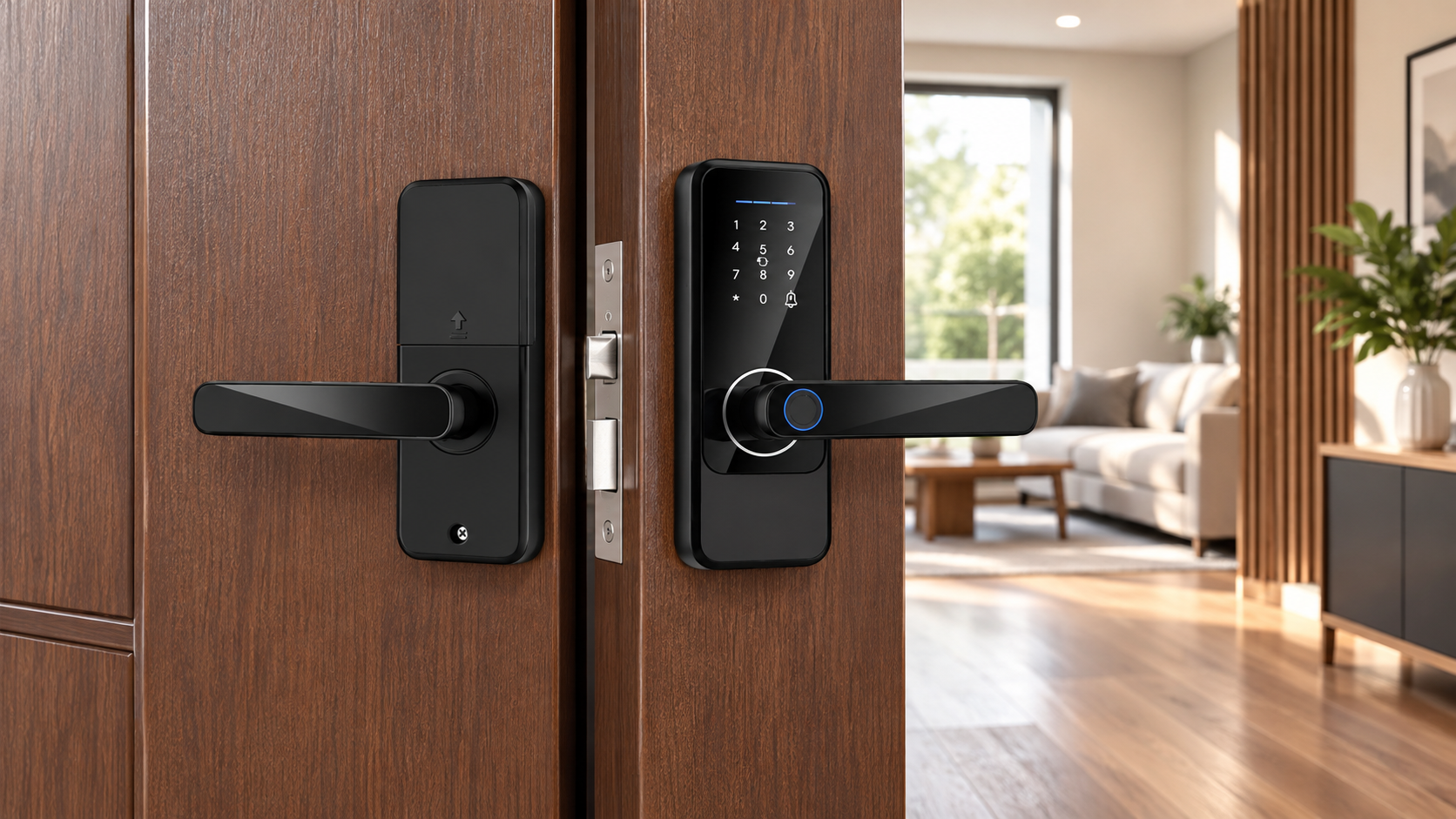
The S810 is specified by the manufacturer to run on four AA alkaline batteries, paired with a Type-C port for emergency power. Alkaline cells are a common choice for keypad and biometric locks because they are widely available and simple to replace, and the lock's low-battery warning behavior should be confirmed against the product manual rather than assumed, since battery performance can vary with usage patterns and ambient temperature.
If a property sits vacant for an extended period and the batteries drain completely, follow the manufacturer's guidance on whether stored fingerprints or passcodes are retained. For the S810, you can plug a standard smartphone power bank into the bottom Type-C emergency port to wake the panel, enter your fingerprint or PIN, and step inside to replace the AA cells.
Commercial and Residential Deployment: A Practical Case Analysis
Choosing a front door access system looks different when you scale from a single family home to a multi-unit portfolio. A lock that survives three unlocks a day on a suburban porch may face far greater wear within six months on a busy office suite or boutique hotel corridor, where dozens of staff and guests cycle through the same entry point daily.
Bridging Residential Comfort and Commercial Reliability
As an intelligent access control manufacturer with 15 years of industry experience and a 10,000 m² automated production base, SUMMAO engineers hardware to bridge the gap between residential aesthetics and commercial endurance, supporting over 5,000 hotels and apartments across 50+ countries. For us, manufacturing quality control includes 36 inspection processes as part of the broader production workflow, which applies across the product range rather than being a claim specific to any single component of the S810.
When property developers standardize on a single smart lock front door platform across residential and commercial units, maintenance overhead can drop, since facility teams train staff on one app ecosystem and work with one manufacturer for spare parts and support. The exact hardware stocking needs still depend on the specific doors and mortise sizes installed across a property, so confirming compatibility across units remains a useful step before standardizing on any single model.
| Technical Parameter | Digital WiFi Smart Lock S810 Specification |
|---|---|
| Model Number | S810 |
| Chassis Material | Aluminum Alloy |
| Unlock Methods | Tuya or TTLock App, Fingerprint, Password, RFID Card, Mechanical Key |
| Emergency Power Input | USB Type-C Port (for battery bank charging) |
| Lock Cylinder Security Grade | Grade C (manufacturer specification) |
| Fingerprint Sensor Type | 360-Degree AI Semiconductor |
| Recognition Speed / Recognition Rate | Under 0.5 Seconds / Below 0.01% (manufacturer-reported) |
| Power Supply | 4 x AA Alkaline Batteries |
| Door Thickness Compatibility | 38-55 mm (Standard) / 40-120 mm (Parameter Sheet, confirm with manufacturer) |
| Operating Temperature Range | -20°C to 70°C |
| Unit Weight | 2.5 kg / pcs |
| Compliance Certifications | CE, RoHS |
Frequently Asked Questions About Front Door Smart Locks
Can a smart lock front door system still open if the home WiFi goes down?
It depends on the model and how credentials are stored. Many WiFi smart locks are designed so that local unlocking methods such as a fingerprint, keypad PIN, or RFID card continue to work even when the internet connection is down, while remote app unlocking and live notifications require connectivity. For the S810 specifically, confirm with the manufacturer or product manual which credential types are stored locally and continue to function during a WiFi outage before relying on this behavior.
How does an anti-peeping virtual password protect my PIN code?
An anti-peeping virtual password allows you to enter random digits before or after your real passcode. According to the manufacturer, this feature is intended to make it harder for someone to determine your PIN by watching you enter it on the keypad, since the extra digits obscure where the real sequence begins and ends. The exact character limit and matching behavior are not detailed in the supplied specifications, so confirm those operational details in the product manual before relying on the feature for a high-traffic entry point.
What type of batteries does the S810 use, and why does that matter?
The S810 is specified to run on four AA alkaline batteries. Alkaline cells are commonly used in keypad and biometric locks for their availability and ease of replacement. Follow the product manual for guidance on expected battery life and low-battery warning behavior, since these can vary with climate and how often the lock is used.
What should I do if the batteries drain completely while I am outside?
You have two independent backup options if the internal batteries are completely flat. First, you can insert the physical mechanical key into the concealed keyhole to retract the latch bolt manually without any electrical power. Second, you can connect a portable USB power bank to the Type-C emergency port on the bottom edge of the exterior panel, which powers the circuit board so you can unlock the door with your fingerprint or PIN.
Choosing the Right Path for Your Front Door Security
Upgrading your entryway is ultimately an exercise in risk reduction and daily ergonomics. By prioritizing a documented lock cylinder grade, an aluminum-alloy body, and a fast semiconductor fingerprint reader, you reduce the trade-off between physical forced-entry resistance and keyless speed. Whether you are retrofitting a single residential entryway or outfitting a multi-unit apartment property, selecting a well-engineered smart lock front door system, and confirming its specifications directly with the manufacturer, helps keep your perimeter secure during power outages, extreme weather, and high-traffic daily use.
SUBSCRIBE
INQUIRY