
Evaluating a China Smart Door Lock Factory for Commercial Projects
Sourcing access control hardware requires navigating a highly fragmented landscape of global suppliers. Finding a reliable china smart door lock factory involves examining production capacity, software ecosystems, and supply chain resilience. Commercial project managers face immense pressure to secure hardware systems that balance upfront procurement costs with long-term maintenance realities.
Procurement teams often underestimate the hidden costs of integrating disparate hardware. Buying locks from one vendor and room control software from another typically leads to API conflicts and deployment delays. A cohesive manufacturing partner mitigates these operational risks through unified engineering.
Understanding the structural differences between basic assemblers and full-scale manufacturers changes the procurement dynamic. True manufacturing facilities control the entire lifecycle from PCB design to final robotic assembly. This vertical integration determines whether a commercial project finishes on schedule or languishes in technical debt.
The Shift from Hardware Vendors to System Integrators
Commercial real estate operators no longer view doors as mere physical barriers. They treat access points as the first node in a broader energy management and data collection network. When a guest opens a door, the action must trigger a cascade of environmental adjustments.
This operational expectation forces buyers to look beyond mechanical reliability. We combine biometrics, IoT infrastructure, and cloud management to create intelligent access control systems. These systems communicate directly with Guest Room Management Systems (GRMS) to orchestrate facility automation.
Intelligent linkage allows door locks to interact with lighting panels, HVAC units, and motorized curtains. Remote mobile management protocols ensure that energy consumption drops immediately when a room becomes vacant. Facilities recover their initial hardware investments rapidly through these automated energy-saving protocols.
Supply Chain Realities Behind Access Control Production
Supply chain disruptions severely impact hotel construction and apartment renovations. Relying on boutique design firms often results in severe bottlenecking when scaling orders. Volume demands robust infrastructure to ensure components arrive, assemble, and ship without sudden defects.
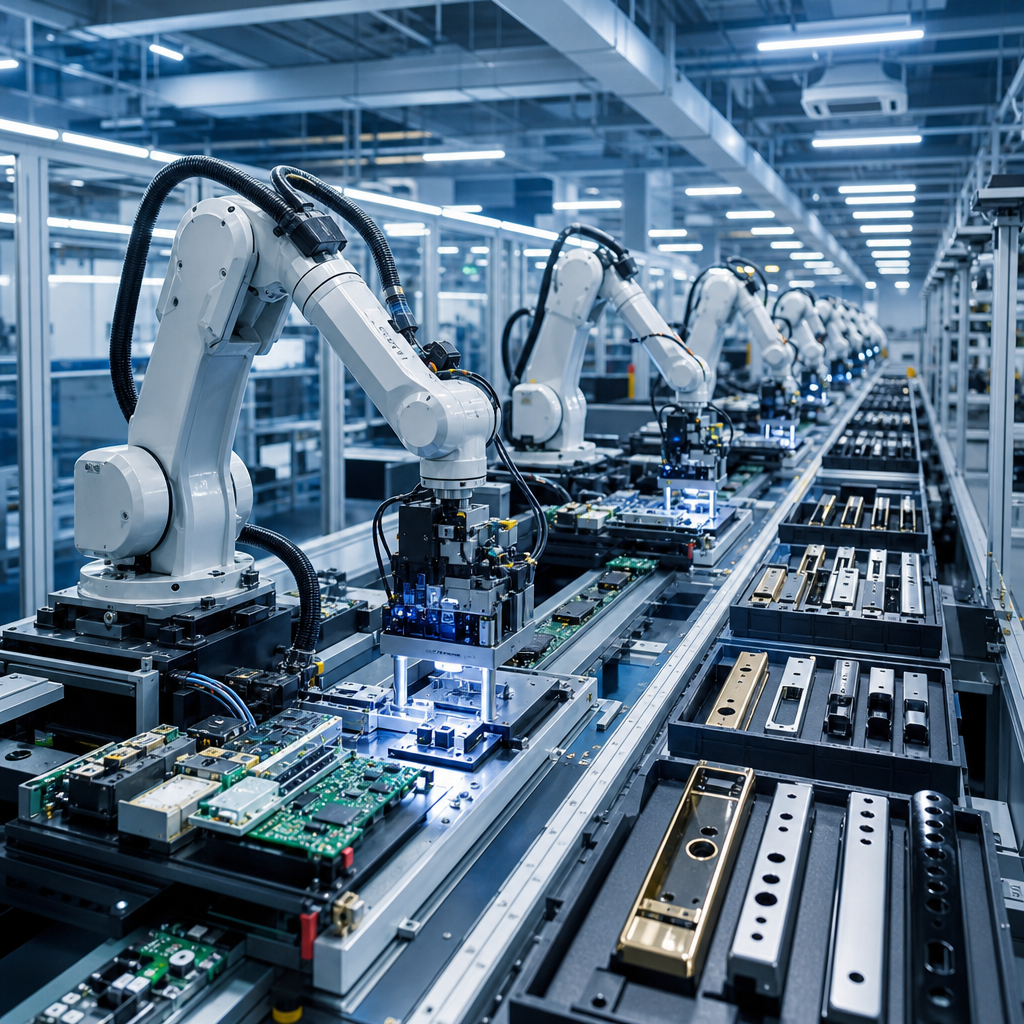
Our operations rely on a 10,000 square meter automated manufacturing facility designed for scale. Automated robotic assembly lines handle delicate circuit boards while smart testing equipment verifies signal integrity. This heavy investment in physical infrastructure guarantees a consistent daily capacity exceeding five hundred units.
A mature china smart door lock factory must also navigate complex international material regulations. Adhering to CE, FCC, ISO9001, and ISO14001 standards is non-negotiable for cross-border deployments. These certifications protect property developers from local compliance violations across North America, Europe, and the Middle East.
Multi-Modal Unlocking Scenarios in Modern Facilities
Different user demographics require entirely different authentication methods within the same building. A luxury hotel guest might expect frictionless mobile entry, while maintenance staff require tracked physical credentials. Hardware must accommodate these diverse behavioral patterns without requiring separate hardware models.
To address varying security clearances, our hotel smart lock series supports extensive multi-modal unlocking.
- RFID and NFC: High-turnover environments rely on encrypted cards for fast, inexpensive guest assignment and immediate revocation.
- Facial Recognition and Fingerprint: Executive suites and secure office zones utilize biometric authentication to prevent credential sharing.
- Bluetooth and App Control: Mobile-centric boutique hotels deploy these to allow guests to bypass the front desk entirely.
- PIN Codes: Temporary contractors or cleaning staff use time-bound digital codes for highly monitored, restricted access.
Hardware compatibility remains a major hurdle during large-scale door retrofitting. We engineer our lock mechanisms to be compatible with diverse door types, materials, and internal mortise depths. This mechanical flexibility prevents project managers from needing to replace expensive fire-rated doors during hardware upgrades.
Balancing Customization with Production Speed
Commercial clients frequently demand bespoke aesthetic features to match specific interior design languages. However, deep customization usually paralyzes standard production lines, pushing delivery schedules back by several months. B2B buyers must find suppliers capable of altering designs without breaking the underlying assembly workflow.
Our engineering team solves this through scenario-tailored OEM and ODM design frameworks. We adapt hardware casings, implement custom logo laser-engraving, and modify software logic to match exact client specifications. Our dedicated prototyping tracks allow us to release at least two scenario-customized products annually.
Speed remains a critical metric for high-volume purchasing decisions. We maintain lead times of seven to ten days for regular product configurations. Even complex customized orders requiring unique software adaptations move through our facility within fifteen to thirty days.
Quality Assurance Beyond Waterproof Ratings
Environmental degradation destroys consumer-grade electronics rapidly in commercial settings. Coastal hotels battle high salinity and humidity, while alpine resorts face extreme temperature fluctuations. Locks exposed to these elements suffer rapid battery drain and circuit board corrosion if improperly sealed.
Manufacturing longevity requires obsessive attention to physical testing protocols before mass production begins. We implement thirty-six strict inspection processes to simulate years of aggressive environmental exposure and mechanical abuse. Achieving an IP65 waterproof rating ensures that external panels withstand direct water exposure and heavy dust ingress.
Battery physics dictate the hidden operational costs of any wireless lock deployment. Replacing batteries across five thousand rooms requires massive labor hours and logistical planning. Our low-power standby circuits extend battery life up to eighteen months, keeping the total failure rate firmly below one percent.
Ecosystem Interoperability and Turnkey Solutions
Fragmented procurement forces IT teams to piece together hardware from dozens of different suppliers. When the master control panel fails to recognize the door status, both vendors typically blame each other. This lack of accountability creates permanent maintenance headaches for building management teams.
We specialize in turnkey engineering solutions that eliminate these frustrating technical borders. Buyers receive one-stop product matching for door locks, ZigBee smart switches, and accessory hardware. Every component shares a unified communication protocol, ensuring seamless handshakes between the door hardware and internal room controls.
Interactive electronic doorplates serve as the visible bridge between the corridor and the internal network. These room number plates feature real-time status indicators like "Do Not Disturb" or "Make Up Room". These signals route instantly to the front desk, preventing housekeeping staff from interrupting sleeping guests.
Real-Time Front Desk Management Software
Hardware holds little value without a responsive software layer managing the credential database. Legacy management systems rely on slow local servers and physical card encoders that degrade over time. Modern facility operators require cloud-based dashboards to monitor the exact status of their entire property portfolio.
Our front desk management software delivers real-time room status monitoring and dynamic digital authorization. Administrators can issue, modify, or revoke mobile keys instantly from a centralized remote interface. The system logs every interaction, providing deep usage analytics that help optimize staff deployment and security patrols.
Security incidents demand immediate historical data to determine liability and track unauthorized entries. The software maintains immutable audit trails of every mechanical override and digital authentication attempt. This level of granular visibility protects facility owners from internal theft and external liability claims.
Technical Specifications and Integration Metrics
Evaluating a potential manufacturing partner requires a strict side-by-side comparison of baseline capabilities. Decision-makers must look past marketing brochures and examine the raw technical constraints of the proposed system. Below is a detailed evaluation matrix highlighting the operational differences between standard sourcing and engineered turnkey models.
| Evaluation Metric | Standard Sourcing Model | Engineered Turnkey Model (Our Standard) |
|---|---|---|
| System Interoperability | Disparate APIs, high risk of conflict | Native GRMS and ZigBee switch linkage |
| Production Lead Time | 30 to 60 days standard | 7 to 10 days for regular configurations |
| Environmental Tolerance | Basic IP54, vulnerable to moisture | IP65 rating with 36 inspection processes |
| Energy Management | Standalone operation | Direct HVAC and lighting synchronization |
| Hardware Failure Rate | Typically 3% to 5% annually | Strictly maintained below 1% |
| Technical Support | Email ticketing, delayed response | 24/7 technical support and lifetime maintenance |
This structured comparison highlights the financial danger of prioritizing low unit costs over systemic reliability. A lock that saves ten dollars at purchase but requires constant manual resets drains operational budgets rapidly. Turnkey models front-load the engineering effort, dramatically reducing the friction of daily hotel or apartment operations.
Frequent B2B Sourcing Questions
Buyers evaluating international manufacturers share consistent anxieties regarding localized support and software longevity. Addressing these operational realities directly prevents costly misunderstandings during the deployment phase.
How does the system handle network outages?
Cloud dependency poses a significant risk if localized internet infrastructure fails. Our hardware caches authorization data locally on the lock's encrypted memory module. Guests and staff continue to access their designated areas seamlessly through offline Bluetooth or RFID credentials until connectivity restores.
Can the hardware integrate with existing third-party property management systems (PMS)?
Facility operators rarely want to abandon their legacy booking and accounting software. We provide documented API structures designed to handshake securely with global PMS platforms. This allows front desk staff to issue digital room keys directly from their existing reservation screens.
What happens if a specific hardware model is discontinued?
Long-term commercial real estate projects span decades, necessitating guaranteed parts availability. We engineer our internal control boards with standardized dimensions across multiple casing designs. This modular approach ensures that replacement parts remain compatible even if exterior aesthetics evolve over the years.
Navigating Vendor Selection for High-Volume Buyers
Selecting the right manufacturing partner dictates the operational rhythm of your entire facility for the next decade. If your project demands high-volume deployment combined with deep ecosystem integration, traditional retail-focused vendors will struggle to perform. Commercial properties require a vendor capable of blending custom architectural aesthetics with heavy-duty internal robotics.
We support over five thousand commercial facilities across fifty countries through a dedicated focus on engineering precision. Offering a two-year product warranty alongside lifetime maintenance demonstrates our absolute confidence in our assembly quality. High-end serviced apartments and luxury boutique hotels rely on this structural stability to protect their brand reputation.
When evaluating your next procurement cycle, prioritize facilities that demonstrate absolute control over their supply chain and software development. Partnering with an established china smart door lock factory ensures your access control systems remain secure, energy-efficient, and technologically relevant. Choose a manufacturing model built specifically to solve the complex operational realities of modern commercial management.
SUBSCRIBE
INQUIRY