
Facial Recognition Door Lock Price: What Hotels Are Actually Paying
Anyone shopping for the top facial recognition door lock price quickly runs into a strange pattern. Two locks that look nearly identical on paper can differ in cost by two or three times. That gap rarely comes down to marketing.
It comes down to sensor quality, firmware support, and how a manufacturer handles failure rates at scale. For a hotel group buying fifty units versus five hundred, that per-unit difference compounds fast across an entire property portfolio.
Why Facial Recognition Lock Costs Vary So Much
A camera module priced under ten dollars behaves very differently from one priced closer to thirty. Cheaper sensors can struggle in low light, misread guests wearing masks or glasses, and slow down exactly when a queue is forming.
Hoteliers rarely spot this on a spec sheet. They notice it on a Friday night, when a few seconds of delay per guest turns into a lobby full of impatient travelers waiting for their room key.
What Drives the Price Beyond the Camera
Battery chemistry, IP rating, and the number of inspection cycles a lock passes before shipping all sit behind the number on a quote. A lock rated IP65 and tested through dozens of checks usually costs more to build.
It can also reduce maintenance pressure in humid coastal properties or other demanding environments, where condensation and dust are routine rather than rare. Warranty terms matter just as much, since a longer warranty shifts more replacement risk away from the property owner.
Price Tiers Across the Market
| Tier | Typical Use Case | Facial Recognition Reliability | Support Model |
|---|---|---|---|
| Budget | Guesthouses, low-traffic offices | More sensitive to lighting and angle | Limited or short warranty |
| Mid-range | Boutique hotels, serviced apartments | Consistent in many indoor conditions | 1–2 year warranty |
| Enterprise | Hotel chains, large residential complexes | Built for broader operating conditions | 24/7 support, custom integration |
Some manufacturers concentrate almost entirely on the enterprise tier, serving clients with large budgets who value brand prestige over unit economics. Others stay firmly in the budget tier, offering basic unlocking without much customization.
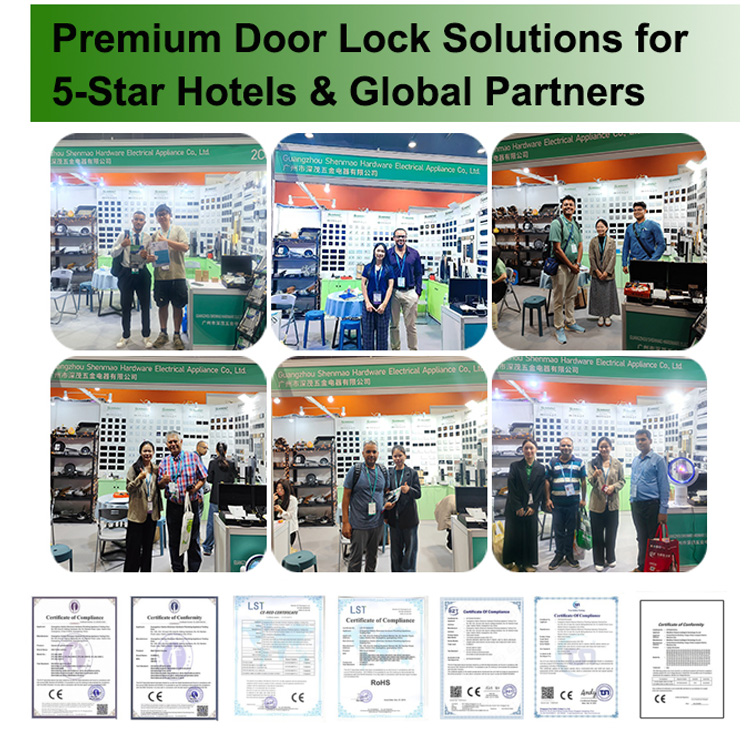
Where SUMMAO Fits Between Cost and Reliability
SUMMAO, a smart lock and hotel automation manufacturer with fifteen years in the industry, sits deliberately in the middle ground. Its hotel lock series pairs multi-modal unlocking with IP65 waterproofing and a reported failure rate below 1%, without enterprise-only pricing attached.
For a chain evaluating the top facial recognition door lock price across suppliers, the real comparison isn't the invoice total. It's the cost per year of running the system. A lock with a longer battery life generally needs fewer battery replacements and maintenance visits than one with a shorter service cycle.
Across a 200-room property, that difference alone can materially affect operating cost within the first year of use.
Common Pricing Questions
Does a higher facial recognition door lock price always mean better security?
Not automatically. Price often reflects manufacturing consistency and after-sale support more than raw security strength. A well-built mid-range lock with regular firmware updates can outperform an expensive lock that's rarely maintained.
Why do quotes vary so much between suppliers offering similar specs?
Lead time and quality control differ sharply. A lock produced in 7–10 days with basic testing can cost less than one custom-built over 15–30 days and run through 36 inspection steps before it ships.
Matching Price to Your Property's Real Needs
Choosing a supplier isn't only about finding the lowest number on a quote sheet. It's about matching build quality to how hard a property will actually use the lock, day after day, across hundreds of check-ins.
A boutique hotel with modest turnover has different demands than a 300-room resort processing constant guest traffic. If you're comparing the top facial recognition door lock price across vendors and want mid-tier pricing with enterprise-level reliability, OEM customization, and 24/7 technical support, SUMMAO's turnkey hotel lock systems are worth putting on that shortlist before signing with a cheaper, unproven supplier.
SUBSCRIBE
INQUIRY