
Fingerprint Door Lock Amazon Guide: How to Choose Reliable Biometric Security Beyond the Hype
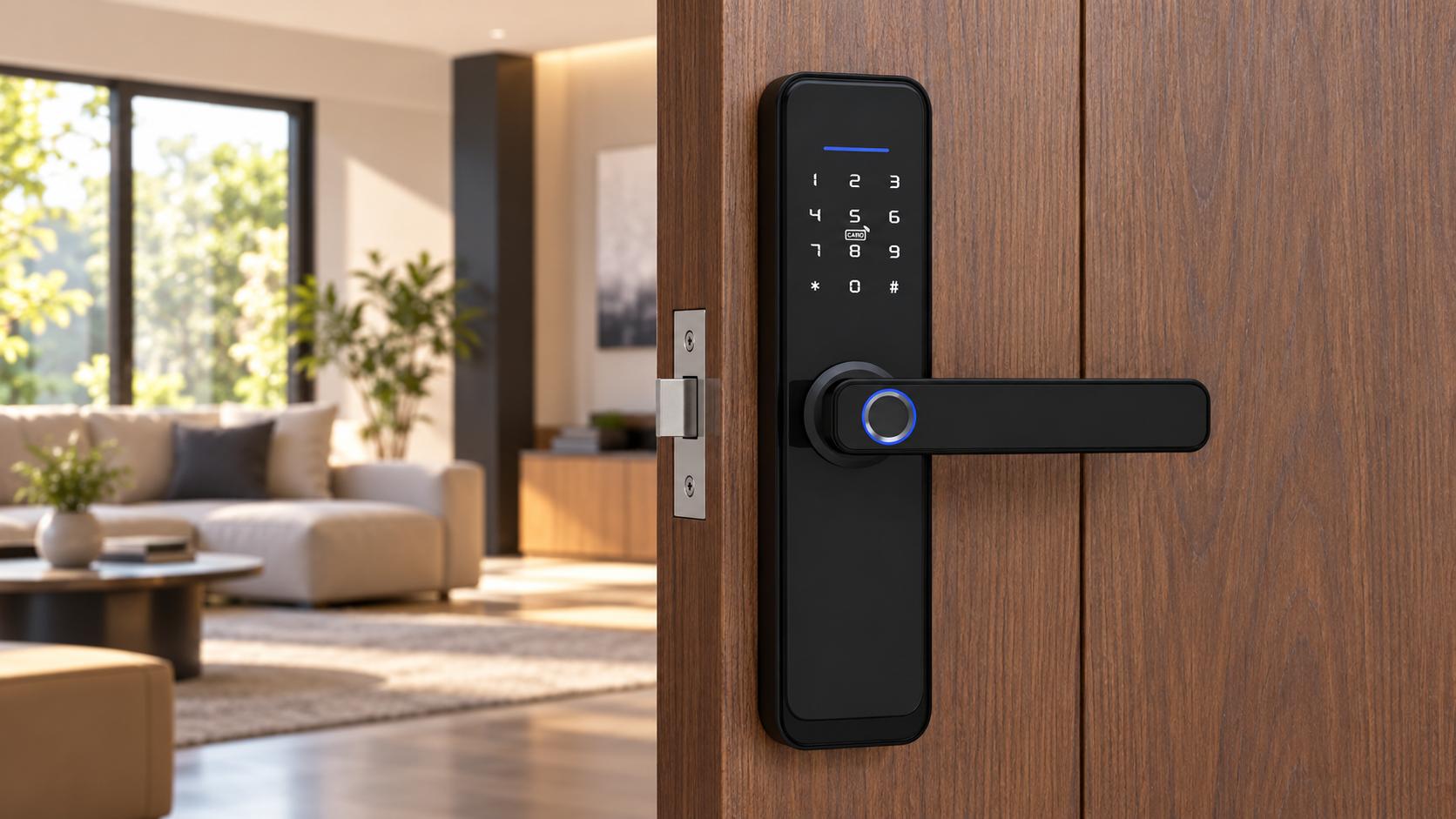
Searching for a fingerprint door lock amazon catalog entry often feels like wading through an endless sea of identical black handles and cloned promotional graphics. Retail algorithms push flashy features to the top, yet everyday security rarely hinges on ambient LED accents or touchscreens. Real protection depends on sensor topology, physical metallurgy, low-voltage thresholds, and circuit design. When you select a biometric lock for your private residence, rental unit, or commercial flat, you are installing a structural barrier rather than a smart gadget. Understanding how these mechanical and digital elements interact ensures your exterior perimeter stays convenient without turning into an easy vulnerability.
Decoding Amazon Smart Lock Listings: The Reality Behind Specs
Online marketplaces reward eye-catching renders and laundry lists of vague capabilities. Dozens of brand names surface daily, but beneath the superficial badges, verifying the actual construction and performance standards becomes the critical task.
Understanding Component Declarations
When cross-examining listings, treat broad promotional claims of universal toughness with some skepticism. Focus instead on tangible component declarations: the material of the escutcheon plates, the stated grade of the mortise or deadbolt assembly, and the specific type of biometric scanning array used. A reliable entry platform tends to disclose its construction through structural weight, stated tolerances, and explicit material description rather than generic marketing assertions alone.
Separating Marketing Gimmicks from Engineering Standards
Hardware longevity benefits from objective testing rather than subjective description. A lock should withstand repeated physical torque, cyclical clutch engagement, and environmental swings without mechanical binding. For industrial suppliers like us at SUMMAO, serving hospitality operators across more than fifty countries means building locks intended to endure sustained daily use under internal quality control procedures.
The SUM-X1 specifications supplied by the manufacturer illustrate the kind of details worth checking when evaluating smart lock hardware:
| Technical Parameter | SUM-X1 Specification |
|---|---|
| Chassis Metallurgy | Aluminum alloy body and zinc alloy panel |
| Biometric Sensor Unit | Semiconductor fingerprint sensor |
| Scan Speed & Latency | ≤0.5 seconds |
| User Credential Memory | 110 fingerprint profiles |
| Password Length | 6-8 bits, per manufacturer specification |
| Circuit Design | Anti-electromagnetic interference technology |
| Mechanical Cylinder | Grade A security lock cylinder |
| Thermal Operating Band | -25°C to 60°C |
| Door Thickness Compatibility | 35mm to 50mm |
| Power Source | 6V (4 × AA batteries) |
| Low Voltage Warning | 4.8V ±0.2V |
Biometric Sensor Mechanics: Understanding Fingerprint Recognition Technology
A fingerprint reader is only as valuable as its rejection of false positives and its recognition speed during freezing mornings or rainstorms. The underlying sensing architecture determines whether the handle unlocks quickly or leaves you waiting outside.
What the Product Specifications Confirm
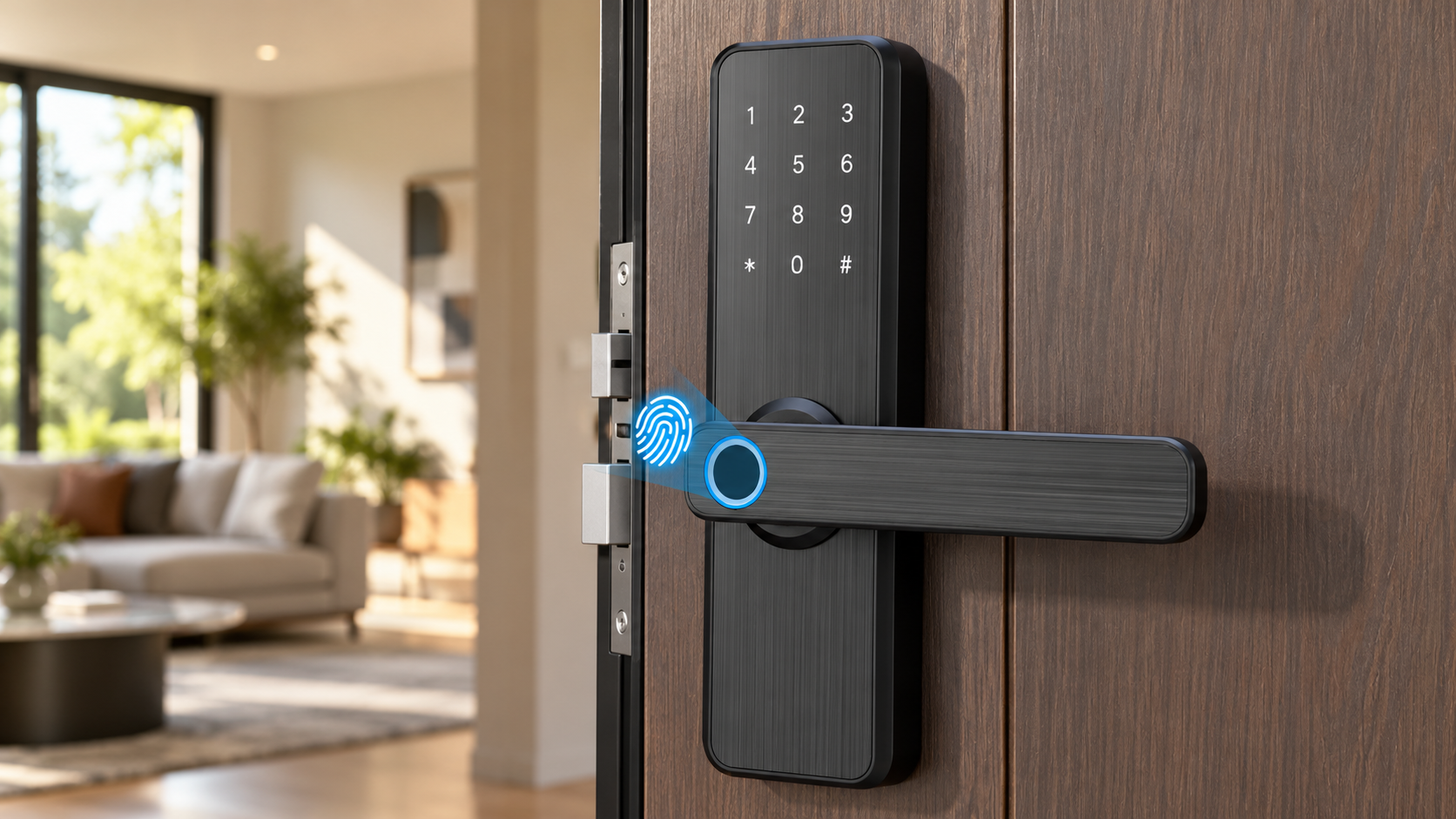
The manufacturer lists the SUM-X1 as using a semiconductor fingerprint sensor. The supplied product documentation does not describe the internal capture mechanism, compare it against other sensor types, or provide cost information, so this guide reports only what the specification states rather than explaining or ranking sensing technologies.
Recognition Speed and Stored Profiles
According to the product specifications, the SUM-X1 sensor is built into the handle so that the thumb rests naturally on it as a hand wraps around the grip. The listed recognition speed is up to 0.5 seconds, drawing on a stored library of up to 110 fingerprint profiles before the mechanical latch completes its swing. The product specifications do not provide testing results for presentation attack resistance or liveness detection, so purchasers seeking that assurance should request it directly from the manufacturer.
Physical and Electrical Fortification: Resisting Forced Entry and Interference
While software controls authentication, physical barriers stop brute force. A digital interface means little if an attacker can bypass the locking bolt with simple handheld tools or electrical interference.
Understanding Electromagnetic Interference Protection
According to the manufacturer, the SUM-X1 incorporates anti-electromagnetic interference technology. The product specifications do not include specific test results, failure-state behavior under electromagnetic exposure, or detailed circuit protection mechanisms. Purchasers concerned with electromagnetic resilience may wish to request additional testing documentation from the manufacturer.
Housing Metallurgy: Aluminum Alloy Construction
Physical pry attacks target the structural anchors holding the lock against the door jamb. According to the specifications, this lock uses an aluminum alloy body and zinc alloy panel. The manufacturer states that the zinc alloy panel is designed to resist violent entry attempts.
Inside the mortise, the lock includes what the manufacturer describes as a Grade A security lock cylinder. The product specifications do not identify which grading standard applies or provide corresponding test results. Different markets and regions use distinct cylinder grading systems, so purchasers should verify the applicable standard and its test requirements when comparing security ratings.
Keypad Privacy and Credential Lifecycle Architecture
Digital convenience should not leave obvious trails for observers. Keypads can accumulate oily fingerprint residue over time, which may hint at the digits of a passcode to anyone studying the surface closely.
Virtual Anti-Peep Password Logic
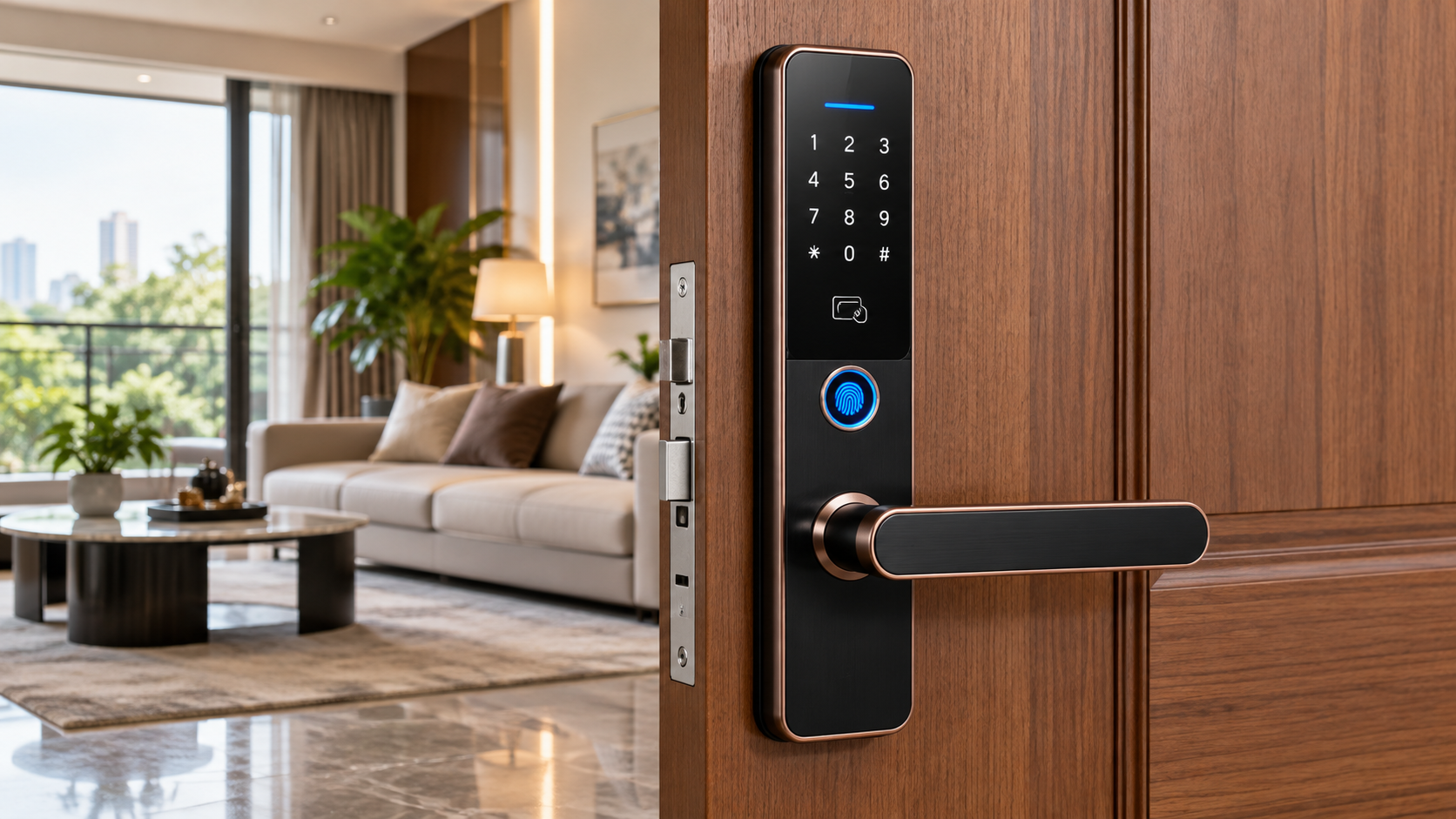
Standard fixed-digit PIN entry can invite shoulder surfing from delivery couriers or passersby. According to the product data, this lock's virtual password architecture addresses this by accepting dummy numerical inputs before or after the valid password. The manufacturer describes the feature as a 16-bit virtual password entry, with the genuine 6-to-8 bit password appearing somewhere within the entered sequence. The product documentation does not confirm whether these bit figures correspond directly to digit counts, so this guide reports the feature using the manufacturer's own terminology rather than translating it into a specific digit total.
Observed Input Sequence:  [ 4  9  1  8 ] + [ 7  3  2  5  0  1 ] + [ 8  2  4 ]
Decoded Logic:            (Dummy Pre)    + (Valid Password)      + (Dummy Post)
This approach is intended to reduce the risk of shoulder surfing, since anyone observing the keypresses sees a longer, less meaningful sequence, making it harder to memorize the real code by sight.
Multi-Modal Credential Management via Tuya App
Rigid access permissions can create household friction. Managing guests, maintenance staff, and family members works better with flexible credential options rather than one shared permanent code. Per the product specifications, integrating with the Tuya App ecosystem lets property owners issue distinct credentials suited to different situations.
- IC cards: contactless cards provide simple tap-to-unlock access, which can be convenient for users whose fingerprints may be harder for a sensor to read.
- Temporary password generation: off-site authorization can generate numeric keys, useful for cleaning visits or short-term rental guests.
- Unlocking record tracking: the manufacturer describes the app as tracking unlocking records.
- Hardware privacy lockout: engaging the internal physical privacy button is intended to restrict exterior access to master administrative credentials only.
Power Architecture and Emergency Redundancy Protocols
Smart locks operate independently of household electrical wiring to maintain protection during power outages. However, batteries deplete over time, which makes power governance and physical fallback options important to understand.
Battery Power and Low-Voltage Warning Thresholds
Per the listed specifications, the SUM-X1 runs on four AA batteries providing a nominal 6V power source. The product specifications do not identify the approved battery chemistry, so purchasers should check the manufacturer's manual before substituting rechargeable cells, which can carry a different nominal voltage than standard alkaline AA batteries. Because the lock spends most of its operational life in an idle state, efficient power use depends on low standby current draw across the wireless module and sensor circuitry.
As batteries discharge, internal resistance tends to increase, which can cause the operating voltage to dip under motor load. According to the specification, the SUM-X1 triggers a low-voltage warning at approximately 4.8V (±0.2V). The product specifications do not state how much advance notice this threshold provides or confirm that the motor will retain reliable operating torque through the warning period. Users planning extended absences should replace batteries proactively.
Dual Failsafe Mechanisms: Mechanical Overrides and Emergency USB Port
Even with a proactive low-voltage warning, extended travel or forgetfulness can lead to full battery depletion. A well-designed lock should still offer a way in.
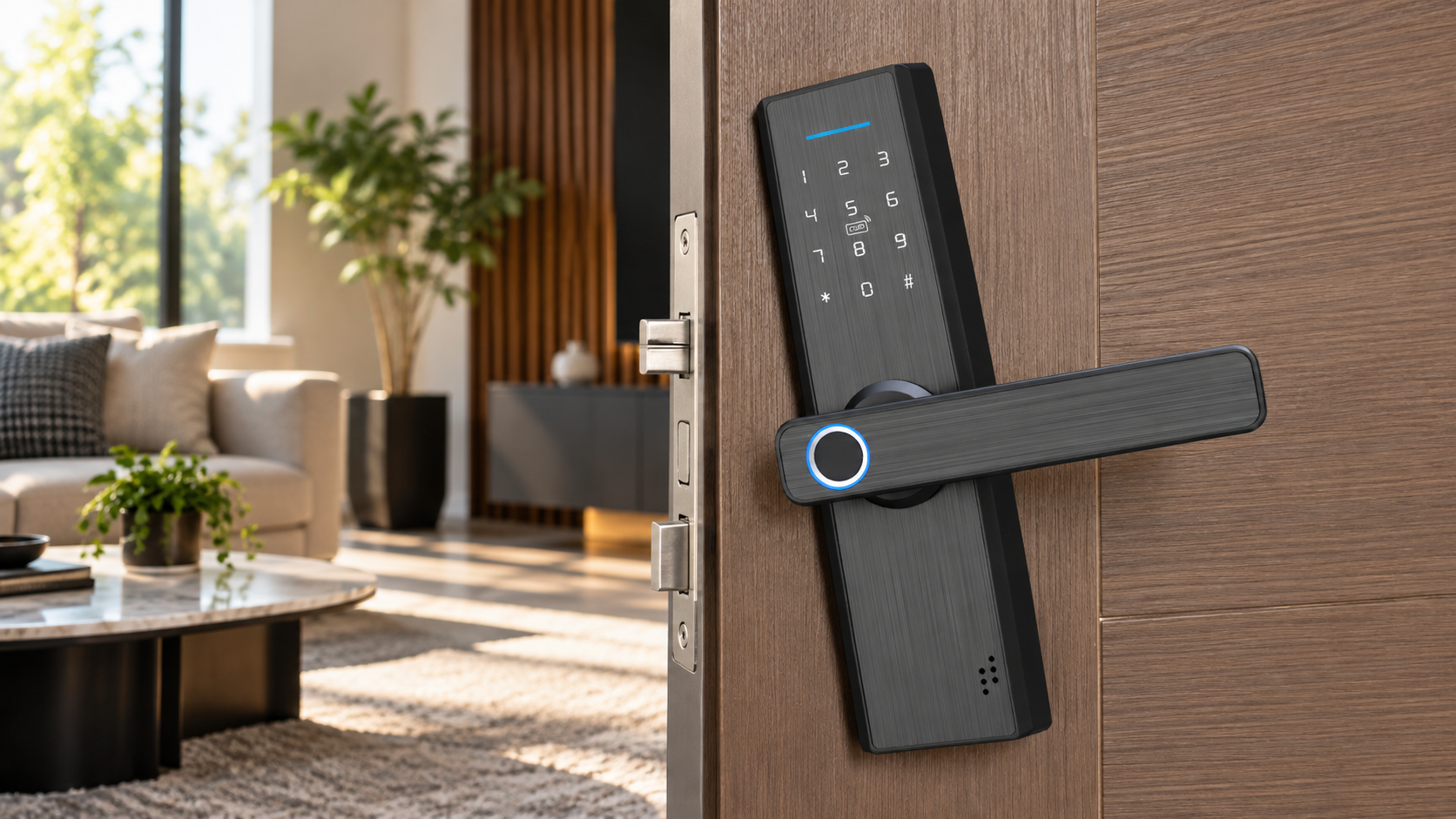
- Physical keyway: according to the product specifications and images, a keyhole is positioned at the base of the outer escutcheon. The mechanical cylinder works on physical leverage, unlocking the deadbolt independently of the electronic circuit board.
- Emergency USB port: the product specifications indicate an external port at the base of the lock. The manufacturer does not confirm whether standard portable power banks can supply sufficient current to boot the logic board, nor does the documentation specify the port's electrical requirements. Purchasers should verify this capability with the manufacturer before relying on it.
Door Sizing, Material Compatibility, and Installation Considerations
A fingerprint lock cannot compensate for a misaligned strike plate or a sagging door hinge. Understanding basic door dynamics helps prevent operational issues and unnecessary battery drain.
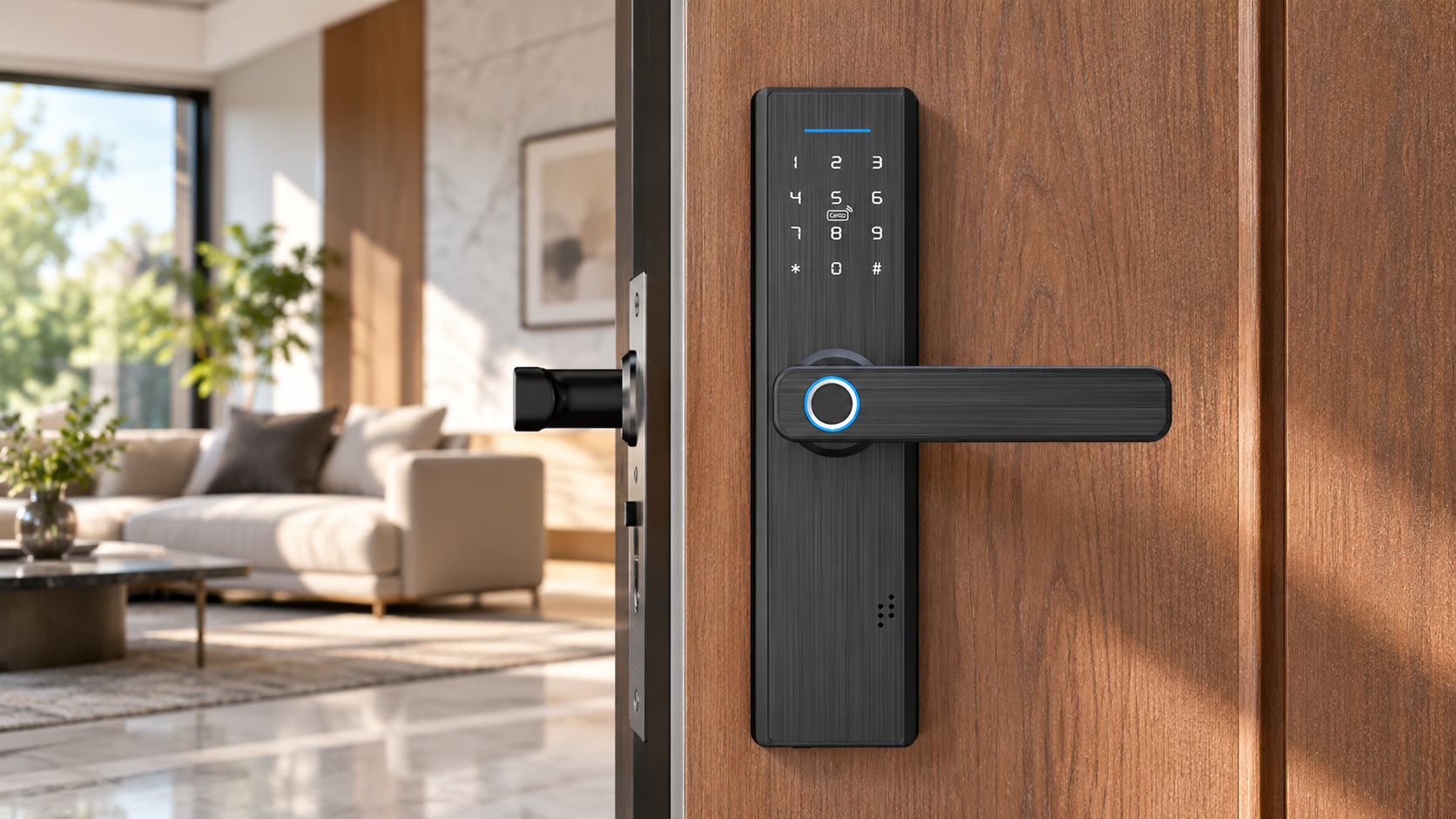
Measuring Door Thickness and Material Compatibility
Before ordering, checking the physical dimensions of the door can prevent mounting problems later. According to the product specifications, the SUM-X1 is compatible with door thicknesses ranging from 35mm to 50mm. The listed application scenarios include wooden, steel, stainless steel, and aluminum doors.
Purchasers should verify compatibility before using this lock on doors outside the documented thickness range or on materials not explicitly listed. Consult the manufacturer's installation template or technical support for guidance on doors that fall outside these specifications.
General Installation Alignment Guidance
Proper alignment between the lock mechanism and the door frame helps ensure smooth operation. Before finalizing installation, check that the door closes freely and that the latch or bolt enters the strike plate without excessive resistance. If the door binds or requires notable force to close, adjustments to the door, frame, or hardware placement may be needed.
Refer to the manufacturer's installation manual for model-specific mounting instructions, hardware specifications, and alignment procedures. Following the documented installation steps helps prevent operational issues and ensures the lock functions as intended.
Frequently Asked Questions
Can a fingerprint door lock work in freezing rain and sub-zero temperatures?
According to the manufacturer specification, the SUM-X1 is rated for an operating temperature range of -25°C to 60°C. This temperature rating does not establish resistance to rain or water ingress. The supplied product specifications do not provide an IP rating or equivalent weather-resistance certification. Purchasers planning outdoor installation should confirm the applicable ingress-protection rating with the manufacturer before use. Ice buildup directly on the sensor surface can interfere with fingerprint readings regardless of the chassis temperature rating. If the scanner surface freezes over, switching to an IC card, password, or mechanical key should restore access.
What should I do if my fingerprint is not recognized due to a cut or wet hands?
Excess surface water can affect the sensor's ability to read fingerprint patterns, so wiping the thumb dry before scanning often restores reliable recognition. If a cut or abrasion changes the ridge pattern noticeably, switching to a registered secondary finger, tapping the IC card, or entering the configured password are the suggested alternatives.
How does the internal privacy mode differ from ordinary deadbolt locking?
An ordinary deadbolt mechanically locks the door against outside entry unless a physical key is used. The manufacturer describes the SUM-X1's privacy mode as an electronic state engaged through a dedicated interior button that restricts access to administrators only. The supplied product details do not specify which individual credential types are blocked or how the physical emergency key interacts with this mode, so purchasers needing that detail should confirm it with the manufacturer.
Are smart door locks from Amazon compatible with multi-family rental setups?
They tend to work well in that context when the hardware supports a reasonably large number of stored credentials, such as the 110-fingerprint capacity listed here, and integrates with an app-based management system like Tuya. Based on the features described for this product, property managers can generate temporary passwords through off-site authorization without meeting arriving tenants in person and can review unlocking records from the app.
Evaluating Architectural Reliability Before Purchase
Choosing the right entry hardware involves balancing mechanical strength with daily accessibility. A well-matched lock should fit into a daily routine, unlocking smoothly without second-guessing.
The Three-Pillar Checklist for Smart Door Hardware
Before finalizing a purchase, it helps to run a prospective lock through three core checks:
- Sensing technology: check whether the listing clearly states the fingerprint sensor type and a specified response time, and ask the manufacturer for details rather than assuming performance from a single label like semiconductor or optical.
- Structural metallurgy: look for a stated aluminum or zinc alloy chassis. Verify what cylinder security grade is claimed and request documentation of the applicable standard and test results.
- Layered failsafe systems: check for a stated emergency power option, a concealed manual keyway, an explicit low-voltage alert threshold, and multiple entry methods as backups. Confirm operational details with the manufacturer when specifications are incomplete.
Navigating the wide variety of options when shopping for a fingerprint door lock amazon selection becomes more manageable once you look past promotional language and focus on the stated mechanical specifications. A dependable lock does not need to rely on exaggerated claims; it can be assessed through documented aluminum alloy housings, anti-peep keypad logic, and a semiconductor fingerprint sensor with a stated response time. By weighing hardware against its documented temperature range, app-based permission system, and physical key override, you can make a more informed choice for a residential or rental entryway intended for years of daily use.
SUBSCRIBE
INQUIRY