
Fingerprint Door Lock for Bedroom: How to Choose a Safe, Practical Option
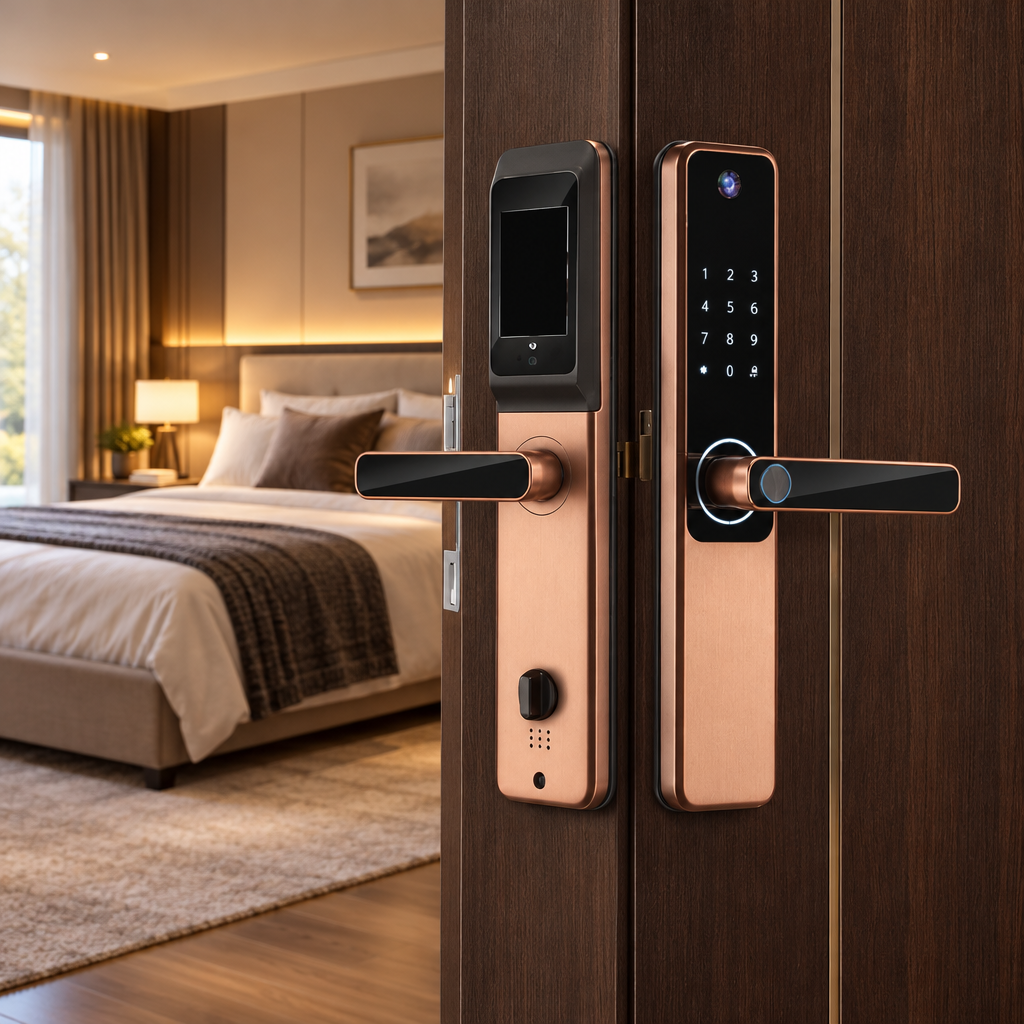
Installing a fingerprint door lock for bedroom privacy eliminates the daily frustration of misplaced keys while establishing a reliable personal boundary inside a busy household. Whether managing access in a shared apartment, securing a home office with confidential files, or simply keeping children and guests out of personal quarters, biometric hardware offers immediate entry without mechanical friction.
Selecting the best fingerprint door lock for bedroom use requires balancing physical security, residential fire safety, and door structural compatibility. This guide explains how biometric access control operates in interior residential settings and details the essential specifications you must verify before purchasing.
Understanding the Role of a Fingerprint Door Lock for Bedroom Doors
Interior Privacy Knobs Versus Biometric Access Control
Standard interior doors typically rely on tubular privacy locks, which utilize a simple push button or thumbturn on the inside paired with a small emergency release hole on the exterior rosette. Many standard privacy locks are intended mainly to prevent accidental entry and include an exterior emergency-release feature; their resistance to intentional bypass varies by model.
Manufacturers build standard privacy sets to deter casual walk-ins rather than establish verified access resistance. Upgrading to a dedicated biometric bedroom lock fundamentally transforms that dynamic by requiring an authenticated physical credential before the latch retracts from the outside. That mechanical distinction creates genuine boundary control. Instead of leaving personal belongings vulnerable to inquisitive guests or flatmates, a biometric sensor compares the presented fingerprint with enrolled credentials; the security and storage implementation varies by model. It effectively brings the access integrity of an entrance system into an interior setting, ensuring that only approved household occupants can cross the threshold unescorted.
Daily Convenience: Solving the Lost Key and Accidental Lockout Problem
Carrying a traditional metal key inside your own house introduces persistent friction. Many people set physical keys down on kitchen counters, nightstands, or bathroom vanities, inevitably leading to inconvenient lockouts when an interior door latches shut behind them. Keypad combinations solve the physical key dilemma, yet memorizing complex numeric strings becomes tedious when stepping out briefly to grab water or answer a doorbell.
Biometric fingerprint recognition avoids carrying a key, but it should be treated as one access method rather than an unforgeable credential. Fingerprint readers compare captured fingerprint features with enrolled credentials; performance varies by model and conditions. For multi-occupant living, this frictionless entry creates dependable convenience while keeping private spaces securely partitioned.
Evaluate Household Fit Before Selecting a Biometric Lock
Define Access Needs for Roommates, Family, and Visitors
Selecting appropriate hardware begins with mapping out every individual who requires routine or occasional access to the room. In shared rental arrangements, a bedroom lock for roommates must allow the primary occupant to enroll their own biometrics while granting selective entry to cleaning personnel or close family members without handing over master credentials. If the lock supports separate administrator and user roles, check what each role can change; do not assume secondary users are restricted.
Temporary access modeling deserves equal attention. If a housemate needs to feed a pet while you travel, generating a timed numerical PIN through an application proves far more practical than scanning their biometric profile into memory. When living dynamics evolve or flatmates relocate, administrator management software allows swift deletion of individual profiles without forcing a complete factory reset or a physical rekeying of the cylinder.
Balance Interior Privacy with Emergency Egress and Accessibility
Interior residential life safety mandates uninhibited exit capabilities during emergencies. Where a door is subject to applicable egress rules, its inside release must meet the requirements adopted by the local jurisdiction. Check your local building code and the lock's listed installation instructions before purchasing. This egress requirement may not apply to all bedroom doors, depending on your location's adopted standards and the door's role in the building.
Any interior device that impedes occupant egress during an emergency poses a potential safety concern, so verify compliance with your jurisdiction's adopted codes before installation. Accessibility across different age demographics also dictates sensor selection. Children, older adults, and people with dry, worn, or injured fingers may experience more recognition failures on some systems. Test the specific model and retain a backup entry method. Consider a model with an alternate entry method, such as a keypad or card, and confirm its security and operation with the manufacturer. Keep a separate backup method available.
Compare Lock Architectures and Access Methods
Standalone Biometric Handles Versus Multi-Credential Locks
Interior biometric hardware diverges into two principal engineering categories: compact standalone levers and comprehensive multi-credential smart locks. Standalone fingerprint door handles house the sensor, motor, and dry battery cells directly inside the lever assembly. These compact levers fit standard single-bore prepped doors with minimal carpenter modification, delivering keyless entry without network complexity and making them practical for basic residential privacy.
Conversely, heavy-duty smart locks integrate biometrics, numerical keypads, contactless cards, physical override cylinders, and networked communication chips into robust escutcheons. While standalone handles excel in simplicity, multi-credential locks offer superior flexibility when dealing with visiting relatives, elderly users, or home office applications where granular entry logging provides peace of mind.
Local Offline Operation Versus Connected IoT Platforms
Interior doors rarely demand persistent cloud connectivity. Some standalone locks store fingerprint templates locally within an encrypted secure element on the printed circuit board, guaranteeing that credential verification occurs independently of external routers or internet outages. However, implementation varies across models.
When remote features are preferred, platforms such as the Tuya smart ecosystem connect the lock to home Wi-Fi networks. Depending on the model and app configuration, a connected lock may support remote management, temporary passwords, entry notifications, or battery information. Confirm each function before purchase. The optimal selection hinges on whether you value complete air-gapped network isolation or the operational visibility afforded by companion mobile apps. Always check the manufacturer's documentation to confirm which data is stored locally and which functions depend on network connectivity.
| Lock Category | Primary Mechanism | Best Practical Scenario | Core Operational Trade-Off |
|---|---|---|---|
| Mechanical Privacy Set | Push-button or turn-piece pin latch | Family bathrooms and guest powder rooms | Near-zero security against intentional entry |
| Standalone Biometric Lever | Capacitive sensor on lever handle | Standard rental bedrooms and home offices | Limited entry logging; requires manual setup on device |
| Connected Multi-Credential Lock | Biometric, keypad, RFID, and Wi-Fi | Master suites, sublets, and studio apartments | Higher physical door footprint; requires battery diligence |
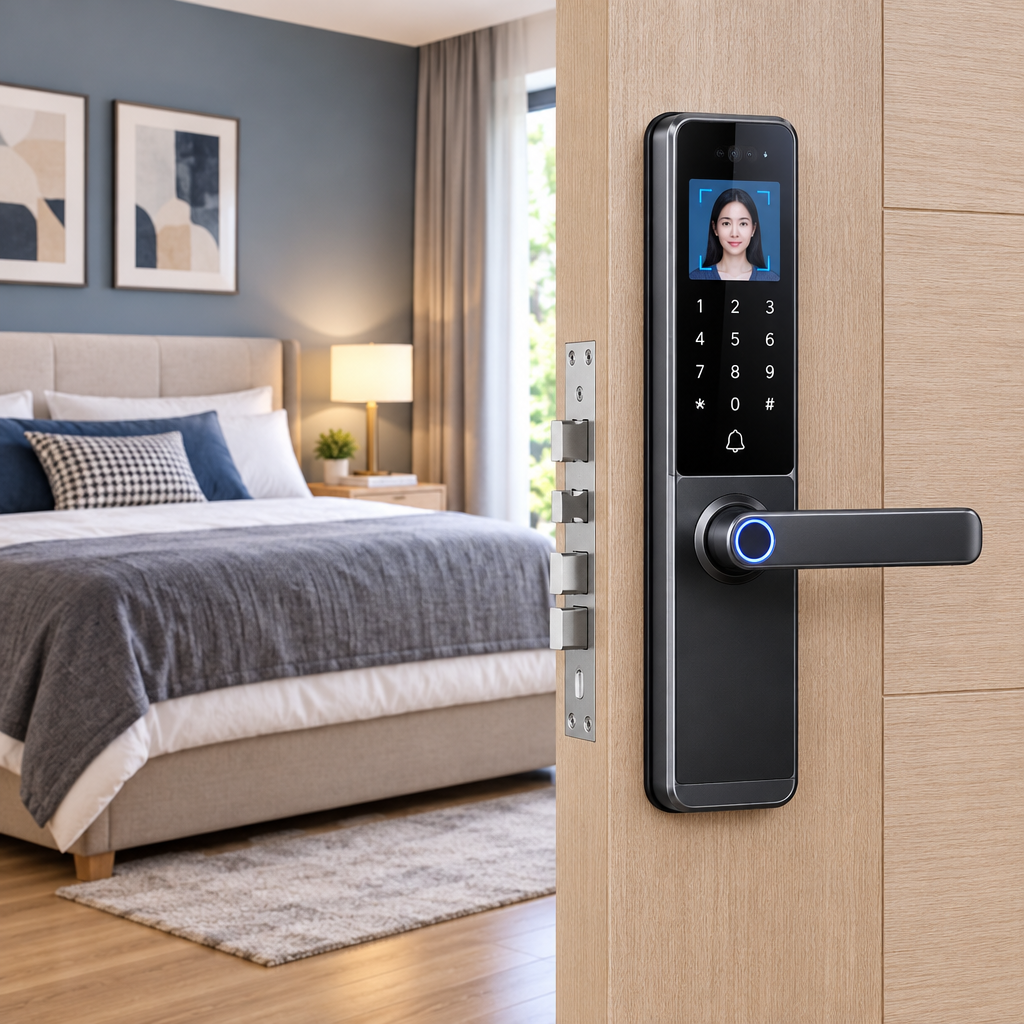
Check Door Preparation and Structural Compatibility
Measure Door Thickness and Backset Dimensions
Before ordering hardware, precisely measure your door slab to prevent expensive installation setbacks. Many North American interior doors are about 1⅜ inches thick, but measure your door rather than relying on a typical size. Heavy-duty smart mortise locks regularly require doors between 40 mm and 110 mm thick to house deep internal mechanisms and long connecting spindles without binding.
Installing a thick mortise assembly on a thin interior slab can compromise structural integrity. Backset distance, measured from the door edge to the center of the bore hole, represents another non-negotiable metric. Standard residential pre-bores feature a 60 mm or 70 mm backset designed for cylindrical latches. If you select hardware built around a 6068 mortise body, you must mortise a large, deep pocket directly into the edge of the door stile, which demands advanced woodworking tools.
Assess Door Core Construction and Handing
Most modern interior residential doors feature hollow-core construction, consisting of an internal cardboard honeycomb grid sandwiched between thin veneer or hardboard facings. Mounting a heavy electronic lock weighing several kilograms onto a hollow-core door can cause screws to strip under repeated handle pressure, eventually loosening the strike plate. Solid-core wood, composite wood, or metal doors provide the necessary structural substrate to anchor high-torque motorized hardware securely.
Door handing determines the operational swing and handle orientation. Reversible handle designs allow seamless flipping between left-hand and right-hand door swings using a simple hex screw adjustment. Verify that the selected lock body supports field-reversible handing, ensuring that the fingerprint sensor naturally aligns with your thumb position when approaching the door from the hallway.
Installation Decision: Straightforward Retrofit Versus Professional Carpentry
Upgrading a door with matching cylindrical pre-bores typically qualifies as a manageable weekend DIY task requiring only a Phillips screwdriver and a tape measure. You simply remove the existing mechanical lever, insert the new deadlatch, feed the ribbon connector through the bore hole, and secure the exterior and interior mounting plates with machine screws. If the upgrade requires converting a standard cylindrical cut-out to a recessed mortise pocket, hiring a professional locksmith or carpenter becomes advisable. Precision routing ensures that the mortise sits flush with the door edge, preventing latch binding or friction against the strike plate that could affect performance or cause motor strain.
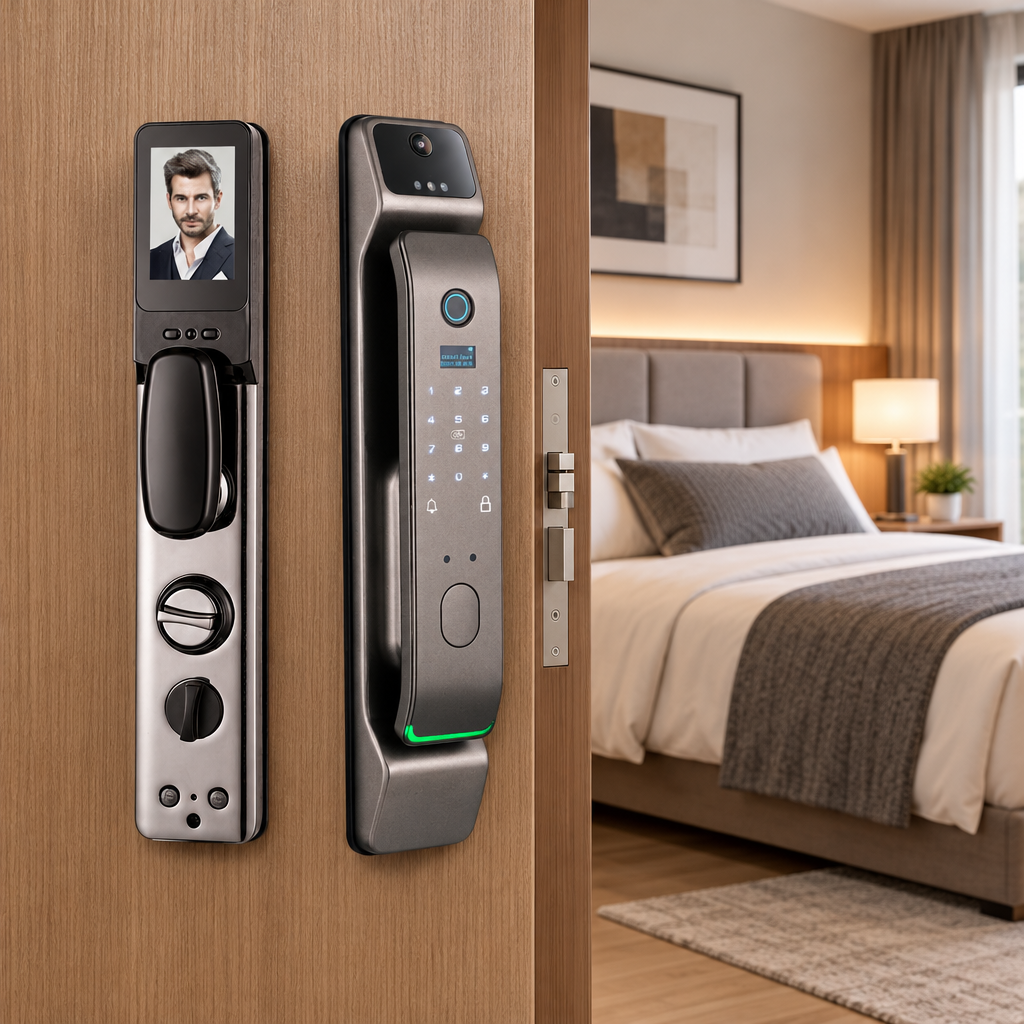
Manage Biometrics, Power Delivery, and Emergency Access
Semiconductor Sensors and Credential Redundancy
Fingerprint locks may use optical, capacitive, or other sensor designs. Confirm the sensor type and expected performance for the specific model. Capacitive sensors detect electrical differences associated with fingerprint features, but resistance to photographs, replicas, and other spoofing attempts depends on the specific sensor and anti-spoofing implementation.
To maximize recognition reliability during daily use, enroll multiple fingers during initial setup, ensuring seamless unlocking if your dominant thumb is damp, abraded, or holding laundry. Maintaining credential redundancy guarantees that biometric recognition glitches never leave you stranded outside your room. Consider a model with a backup entry method, such as a keypad, mechanical key, or emergency power port, and confirm which methods the specific lock supports. This approach provides reliable access when your primary biometric method is unavailable.
Battery Management and Emergency Power Ports
Interior smart locks run on autonomous direct current, eliminating external wall wiring through dry alkaline batteries or rechargeable lithium-ion power packs. Some electronic locks provide low-battery warnings through sounds, LEDs, or an app. Confirm the warning method and expected lead time for the specific model.
Regularly replacing alkaline cells or recharging lithium packs preserves mechanical responsiveness and motor drive efficiency. In the event of complete battery neglect, reputable manufacturers equip the exterior escutcheon with an emergency 5V USB or Type-C jump port. If the lock supports emergency USB power, follow the manufacturer's specified voltage, connector, and power-source requirements; do not assume every power bank is compatible. Connecting an appropriate external power source supplies momentary bridge current to energize the printed circuit board and the biometric scanner, allowing entry so you can service the internal batteries. That emergency bridge provides immediate relief during unexpected electrical depletion.
Maintaining Mechanical Overrides in Shared Spaces
Some models include a mechanical key override. Check the product documentation for the cylinder grade and tested attack-resistance features; do not infer specific construction or performance from the grade label alone. In shared apartments, never store backup mechanical keys inside the bedroom protected by that same lock. Keep the spare emergency key inside a secondary lockbox, a trusted offsite location, or your vehicle glove compartment. Storing the sole physical override behind the locked door defeats its purpose when an electrical short occurs.
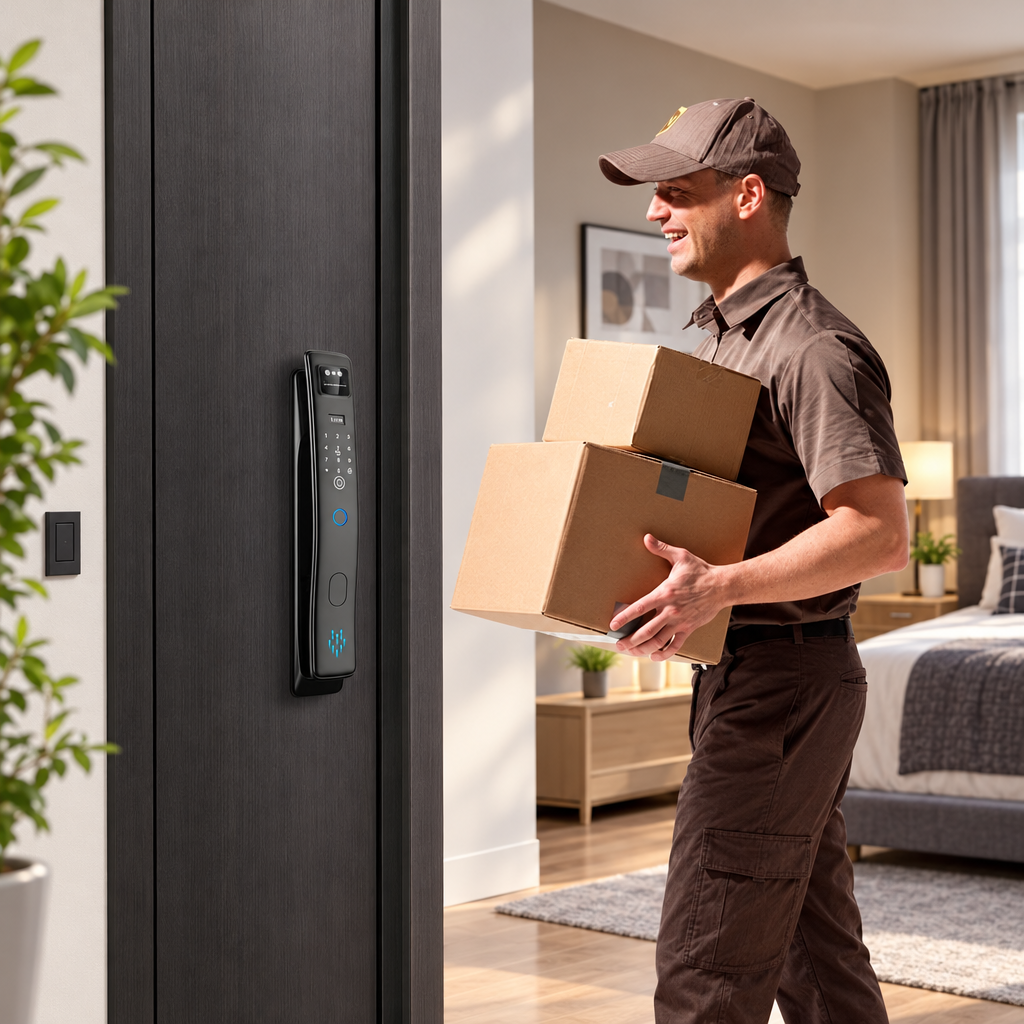
Address Account Security and In-Room Privacy
Biometric Credential Storage: Local Device Versus Cloud
Protecting personal biometric information is paramount when deploying smart home security on private spaces. Some systems store extracted biometric templates rather than the original image, but implementation and protections vary. Check the manufacturer's documentation for storage location, encryption, and deletion controls; do not assume a template is impossible to reconstruct.
Verify whether the device keeps biometric data isolated within local storage or uploads it to external cloud servers. For an interior bedroom, you may prefer local cryptographic storage to guarantee that personal biometric profiles remain physically confined to the lock hardware. Always review the manufacturer's privacy policy and technical specifications before purchase.
App Security, Network Segmentation, and Remote Controls
Connecting an interior smart lock to your home Wi-Fi network requires diligent network hygiene. Use the network frequency and security settings supported by the manufacturer, and keep smart appliances compartmentalized away from primary laptops, network storage units, and financial devices whenever possible. This separation confines potential vulnerabilities should an individual IoT device face unauthorized network probing.
Within the companion mobile application, activate multi-factor authentication and enforce strict administrator privilege policies. Disable remote unlocking over public internet connections if your sole operational objective is personal privacy within the household. Restricting unlock commands to local proximity or direct physical biometrics significantly reduces exterior network attack vectors.
Evaluating Cameras and Two-Way Audio in Private Quarters
Some camera-equipped smart locks provide video calling or visitor monitoring. Confirm whether the specific model includes night vision, viewing angle, recording, or continuous monitoring. While video monitoring makes sense on an exterior front door, placing active camera lenses and microphones in interior hallways or bedrooms raises sensitive privacy concerns among family members and flatmates.
If you deploy a camera-equipped smart lock on an interior bedroom door, select models with localized access control and clear operational indicators. Ensure that video intercom functions trigger strictly upon active doorbell button presses rather than continuous motion surveillance. Establishing clear consent with other household members ensures that physical access protection does not inadvertently compromise domestic living privacy.
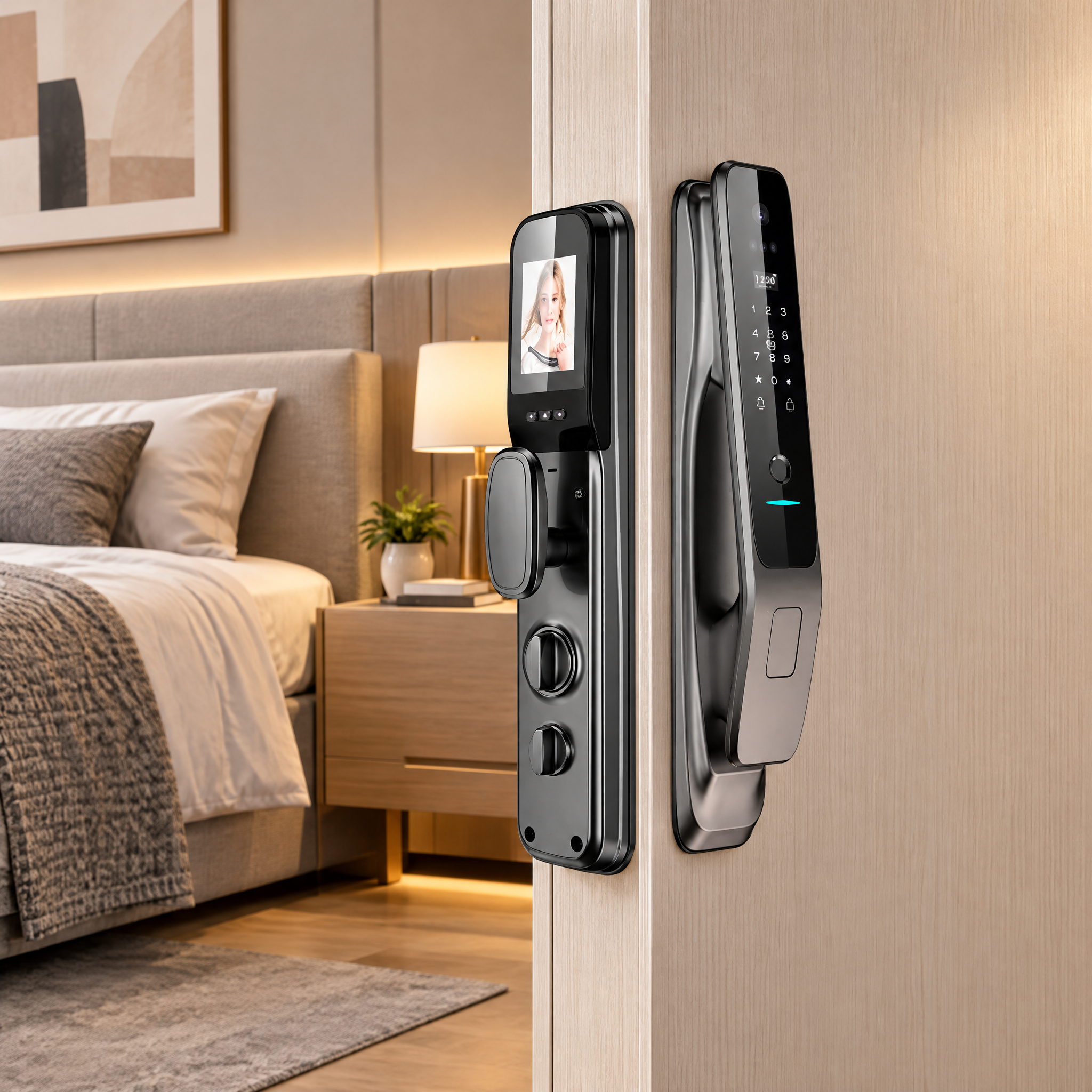
Technical Specification Analysis: The SUMMAO S958MAX Architecture
Documented Access Mechanisms and Connectivity Profile
Examining specific hardware illustrates how advanced engineering maps onto practical access management. According to the supplier's company information, SUMMAO reports 15 years of industry experience and a 10,000 m² manufacturing facility. Engineering teams develop multi-modal smart systems designed for modern residential apartments, hotels, and commercial facilities.
The SUMMAO S958MAX exemplifies available advanced features. The product specification lists 3D face recognition, fingerprint, password, card, mechanical-key, Tuya-app, and video-calling access. By leveraging the Tuya smart ecosystem alongside integrated Wi-Fi, the S958MAX combines credential verification with dynamic remote administration. The product lists 3D face recognition capability; confirm specific operating conditions and recognition performance with the supplier before purchase. The integrated video intercom allows occupants to visually screen visitors on an interior display or through a mobile smartphone before retracting the latch.
Structural Footprint, Power Supply, and Door Sizing
The SUMMAO S958MAX features a robust aluminum alloy construction with a finished product weight of 6 kg per unit. According to the product documentation, the lock houses a 6068 standard mortise measuring 24 × 240 mm, backed by a Grade C lock cylinder. These mechanical parameters require a compatible door thickness between 40 mm and 110 mm.
Before purchasing, confirm that your door structure, frame, and interior release mechanism are compatible with this mortise design and weight. The assembly incorporates a 7.4V 5000mAh rechargeable lithium-ion battery. The product listing states that it has an emergency USB power port and CE/RoHS markings. Verify the applicable declarations, test reports, and local installation requirements before purchase.
Essential Pre-Purchase Verification Checklist for Suppliers
When evaluating high-performance smart locks for residential doors, confirm the following technical parameters with the manufacturer or supplier prior to procurement:
- Mortise pocket compatibility: Verify that your door stile has sufficient depth and width to accommodate the specified mortise body without structural splitting.
- Door thickness verification: Confirm that your door slab thickness meets the minimum requirement and falls within the manufacturer's stated range to ensure proper spindle alignment and secure fastening.
- Interior release compliance: Check the interior handle operation and confirm it meets your local building code requirements for egress.
- Data storage protocols: Determine where credentials, access logs, and video footage are stored (local or cloud), and confirm the terms of cloud storage if applicable.
- Battery maintenance logistics: Check the charging interface and confirm that removing the power pack does not disable mechanical key operation or other essential functions.
Step-by-Step Buying Checklist and Verification Protocol
The Structured Five-Phase Hardware Selection Process
- Define your access objectives: Clarify whether you require simple offline fingerprint entry for privacy or connected multi-modal access for complex household scheduling.
- Gauge physical dimensions accurately: Record door slab thickness, edge backset, bore hole spacing, and door handing before browsing product catalogs.
- Validate door structural suitability: Inspect whether your door core is solid wood, composite, or hollow core, replacing lightweight hollow slabs if mounting heavy mortise hardware.
- Check emergency backup provisions: Confirm the presence of backup entry methods, an external emergency power jump port, and a low-battery alert system.
- Audit digital and domestic privacy: Evaluate network security standards, data storage location, and confirm consensus among housemates regarding any camera features.
Post-Installation Validation and Stress Testing
Never close and latch a newly installed smart door lock without conducting thorough operational checks while standing inside the room with the door wide open. Extend the deadbolt manually and depress the interior handle to confirm that it operates smoothly and retracts all locking elements without mechanical binding.
Test your registered biometric credentials multiple times across different finger angles to confirm reliable read rates. Next, perform a simulated electrical failure test by removing the battery pack or leaving the exterior panel unpowered. Insert the mechanical override key into the concealed keyway, rotate it firmly, and verify that the latch retracts cleanly. Finally, if the lock supports emergency USB power, connect an appropriate external power source to ensure that the exterior circuit energizes according to the manufacturer's specifications. These checks verify basic operational functions; review the manufacturer's installation and safety instructions to confirm all performance expectations before relying on the lock in daily use.
Frequently Asked Questions
Is a fingerprint door lock secure enough for a bedroom in a shared apartment?
A biometric lock can provide credential-based access control beyond a typical privacy latch, but actual resistance to bypass depends on the lock, door, frame, and tested security performance. When paired with a solid-core door and a tamper-resistant strike plate, fingerprint sensors establish individual user accountability. However, overall security remains bounded by the strength of the door frame and hinge assembly. Verify the lock's tested security features and consider your household environment before relying on it for sensitive privacy needs.
Can a biometric smart lock be installed on a hollow-core interior door?
Standard lightweight biometric handles can often be mounted on hollow-core doors if existing bore holes match the lock backset perfectly. However, heavy-duty smart locks featuring mortise bodies and integrated cameras weigh substantially more, which can cause mounting screws to tear free from hollow fiberboard over time. For heavy mortise locks, upgrading to a solid-core wood or composite door is strongly recommended.
What happens to the fingerprint lock if the battery dies completely while I am outside the bedroom?
If the battery depletes entirely while you are outside, you have two reliable recovery options. You can use the physical mechanical override key provided with the lock, or connect an appropriate external power source to the emergency power port on the exterior escutcheon to supply temporary bridge power, following the manufacturer's specified voltage and connector requirements. Once energized, authenticate with your fingerprint or PIN to enter the room and recharge or replace the internal batteries.
Does an interior bedroom fingerprint lock require an active Wi-Fi connection to unlock?
Biometric and numeric passcode verification functions may operate offline on some models using local cryptographic algorithms stored on the lock's internal circuit board, but this varies by model. Wi-Fi or Bluetooth connectivity is typically necessary for remote features such as mobile push notifications, time logs, or generating temporary guest codes. Check the manufacturer's specifications to confirm which functions require network connectivity and which operate independently.
How does fire safety and emergency egress work with interior biometric locks?
Egress requirements for interior room doors depend on your local building code, the door's role in the structure, and whether it is part of a designated emergency path. Reputable smart door locks are designed to support emergency egress, but you must verify that the specific model complies with your jurisdiction's adopted codes and the manufacturer's installation instructions. Always check both the lock documentation and your local requirements before installation, and test the interior release mechanism thoroughly.
Conclusion
Selecting an interior keyless entry system transforms daily domestic privacy into a seamless, modern experience. Upgrading your personal quarters with a fingerprint door lock for bedroom security safeguards valuable personal possessions, prevents awkward room intrusions, and permanently ends the frustrating routine of tracking down lost physical keys.
By systematically matching physical door thickness, choosing between standalone handles and multi-credential mortises, and verifying mechanical backups and emergency access provisions, you can deploy a dependable biometric solution tailored to your living space. Confirming compatibility with your local building code and the lock manufacturer's specifications ensures that your bedroom access remains practical, secure, and compliant with applicable requirements.
SUBSCRIBE
INQUIRY