
Hotel Electronic Lock: A Practical Guide to Architectural Options, Door Fit, and Procurement
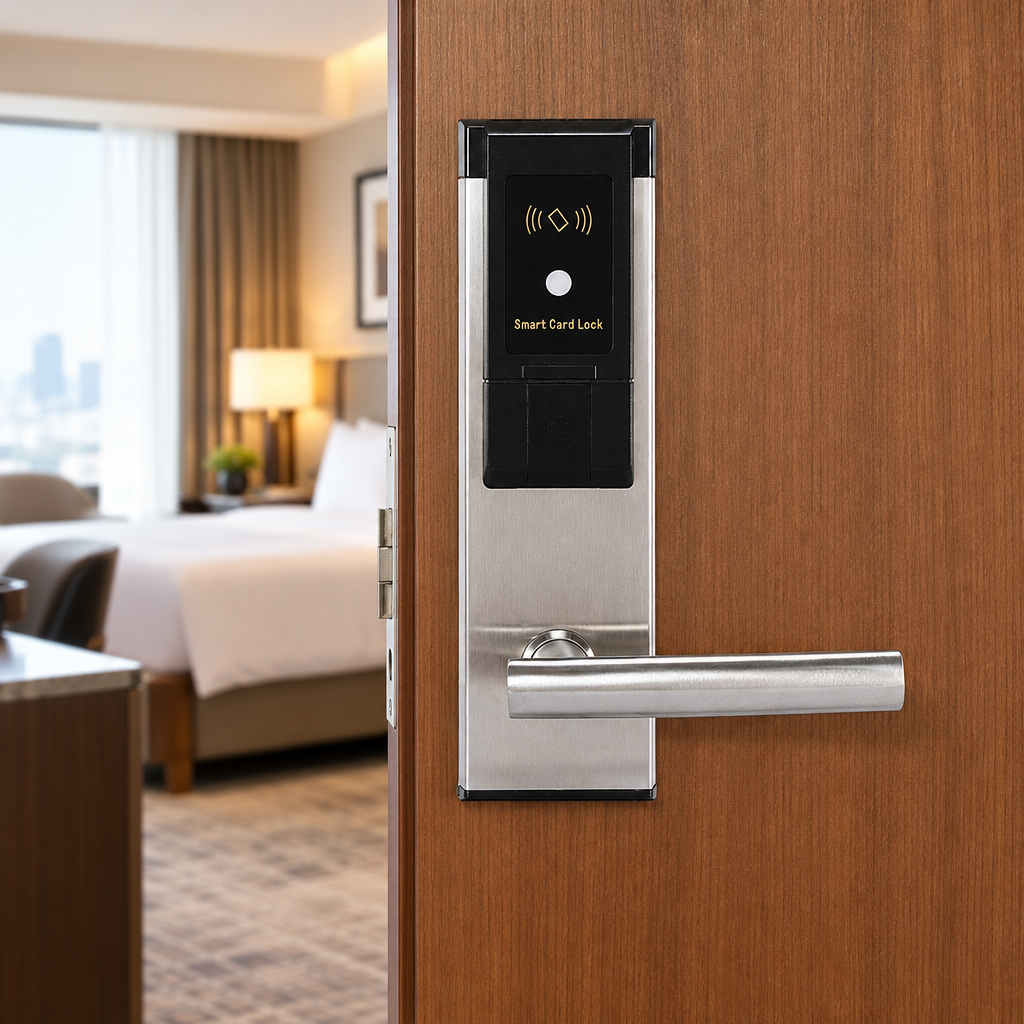
Choosing the right hotel electronic lock system involves far more than picking an attractive handle finish. For hotel owners, general contractors, and facility directors, a guest room lock sits where life safety, electronic access control, guest convenience, and daily operational labor meet. A single latch failure or dead battery can quickly turn into front-desk congestion, negative guest reviews, and extra maintenance hours across hundreds of rooms.
Every commercial property balances different architectural constraints, network options, and budget priorities. Operators make sounder purchasing decisions when they understand three things: how electronic door hardware works at the door leaf, how credentials communicate with the lock, and how locks connect to property management software. That knowledge protects the investment over years of heavy guest turnover.
What Is a Hotel Electronic Lock?
Working Principles of Electronic Access Control at the Guest Door
A commercial electronic lock replaces the purely mechanical cylinder of a traditional lock with an electronically controlled release. Depending on the model, the lock verifies the presented credential against locally stored or cloud-managed permissions. If the credential is valid, an electromechanical mechanism allows the outside lever to retract the latch.
After a short release window, the outside lever typically returns to its locked state. Release timing and authentication functions vary by manufacturer and configuration, so buyers should read the specification of the exact model. Unlike many residential smart locks, hotel units face constant daily use and must allow free egress from inside the room, as required by local life-safety codes.
Core Components of a Commercial Door Lock Assembly
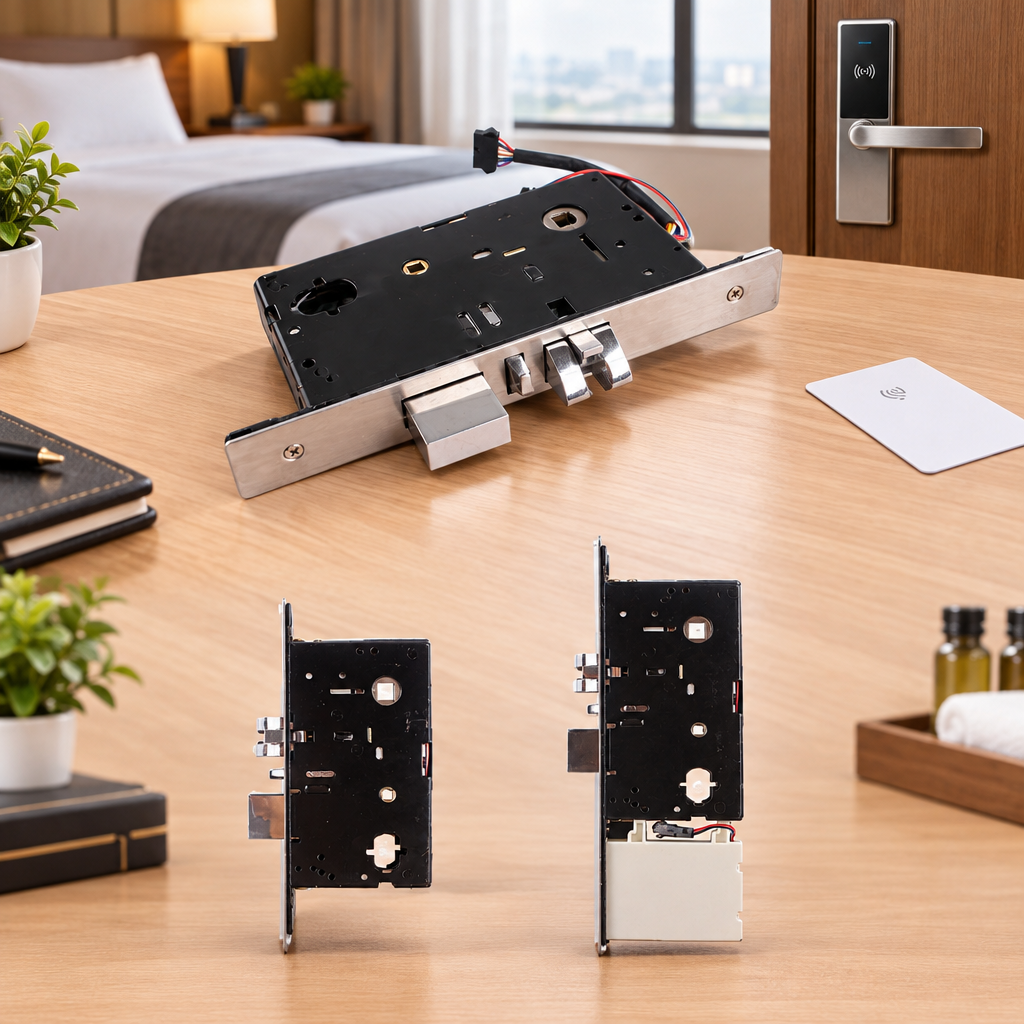
A commercial electronic lock is built from distinct sub-assemblies, each designed to handle repetitive use by guests, staff, and luggage carts. Knowing which part does what helps engineers diagnose faults and judge whether a quoted lock suits a busy guest corridor. The exact layout differs by model, but most assemblies include the following parts:
- Outer escutcheon panel: Houses the contactless reader antenna, status indicators, and, on many models, an emergency power contact or concealed mechanical keyway.
- Mortise lock body: Sits recessed in the door pocket and contains the latch, deadbolt (where fitted), and the clutch mechanism that links the lever to the latch.
- Inner escutcheon panel: Encloses the battery compartment, privacy thumbturn, and inside lever linkage that provides free egress.
- Control board and firmware: Manages credential checks, the internal clock, audit logs, and power-saving sleep modes.
Credential Technologies and Entry Methods
RFID Smart Cards and Frequency Standards
Contactless cards remain the everyday workhorse of hotel access control. Many modern hotel card systems use high-frequency contactless technologies, including 13.56 MHz standards such as ISO/IEC 14443. Guests tap the card on the reader, and the card exchanges data with the lock without physical contact or a battery inside the card itself. The exact frequency, chip type, and security protocol differ between systems, so buyers must confirm card technology for the selected lock and encoder rather than assuming every system is interchangeable.
Magnetic stripe cards still exist at some properties, but they wear physically, can be erased by magnetic fields, and are easy to copy. Contactless chips that support encryption make unauthorized duplication harder, provided the system actually uses those security features. For properties with frequent guest turnover, contactless keycards also keep replacement costs low and front-desk handling simple.
Mobile Access via Bluetooth and NFC
Mobile key systems let guests skip the front-desk queue by using their smartphones as room keys. Depending on the vendor, these systems use Bluetooth Low Energy or Near Field Communication to send an encrypted digital key from a hotel app or digital wallet pass to the lock. The lock checks the key's validity period and authorization before releasing the latch.
Mobile access appeals to many travelers, but it adds infrastructure requirements. The lock needs a radio that responds quickly without draining the batteries early, and the hotel also needs reliable cloud services and PMS integration to issue and revoke mobile keys. Not every lock supports mobile access, so confirm it in the product documentation before planning around it.
PIN Code, Biometric Entry, and Multi-Modal Locks
Multi-modal locks combine cards and mechanical keys with keypads or fingerprint sensors. Full-service hotels often standardize on cards and mobile keys for a consistent guest experience. Extended-stay properties, co-living buildings, and serviced apartments, by contrast, sometimes deploy keypad and biometric entry. A late-arriving guest can receive a time-limited PIN, which reduces the need for overnight reception staff.
Fingerprint recognition suits back-of-house areas, offices, and staff entry points because access is tied to an individual. That reduces the familiar hospitality problem of staff sharing master cards or leaving keys on cleaning carts. Biometric data is personal data, though, so operators should check local privacy rules before enrolling staff.
Mechanical Key Override and Physical Security Backup
No electronic security plan is complete without a mechanical fallback. When electronics fail or batteries run flat, staff need a way into the room without damaging the door. Many commercial models include a concealed mechanical cylinder, often hidden under a cover on the outer escutcheon. Facility managers usually organize these cylinders under a master-key hierarchy that separates floor-level keys from property-wide keys. A sensible practice is to store physical master keys in a monitored key safe and use them only for emergencies and electronic faults, which keeps the mechanical backup from becoming the weakest point in an otherwise traceable system.
System Architectures: Offline, Data-on-Card, and Wireless Online
Architectural Comparison
The access control architecture decides how your doors exchange data with the management software. The table below compares three common approaches. Read it as a starting point for questions to vendors rather than as a fixed specification, because two products in the same column can behave quite differently. Exact capabilities depend on the vendor, radio technology, and software configuration:
| Feature | Standalone Offline | Data-on-Card (Virtual Network) | Wireless Online |
|---|---|---|---|
| Network Requirements at Door | None | None (data carried by cards) | Radio link to gateways or network, protocol varies by vendor |
| Key Cancellation | Card or programming tool at each lock | Spreads as staff cards reach locks | Near-real-time where supported; vendor- and network-dependent |
| Event Auditing | Logs retrieved on site | Delayed until staff cards sync | Remote reporting where lock and software support it |
| Initial Hardware Cost | Lowest | Moderate; requires compatible cards and online encoders | Higher; requires gateways and network infrastructure |
| Battery Status Monitoring | Local indicator on the lock | Periodic, via card writeback | Dashboard reporting where supported |
| Infrastructure Complexity | Minimal | Low to moderate | Moderate to high |
Offline Locks and Front-Desk Card Encoding
Standalone offline systems remain the traditional baseline for hotel electronic locking. Each lock keeps its own internal clock and decides locally whether a card is valid. When the front desk encodes a guest card, the encoder writes the room number and the stay period into the card's memory. At the door, the lock reads that data directly from the card. If a guest extends their stay, the front desk issues a new card with a later checkout time, and in many offline systems, the lock recognizes the newer card and stops accepting the older one. All of this happens without any network connection at the door leaf.
Data-on-Card and Virtual Networks
Data-on-card architecture sits between offline hardware and fully networked systems. The locks stay offline, which avoids cabling and radio costs, while the cards act as data carriers. When housekeeping or engineering staff update their cards at an online encoder, the system writes the latest cancellation list onto them. As staff open rooms during their shifts, their cards pass that cancellation list to each lock. Depending on the system, the lock may write recent events and battery status back onto the staff card, and when the card returns to an online encoder, the software uploads that data. The result is delayed, but useful, visibility without a radio network.
Wireless Online Locks and Centralized PMS Integration
Wireless online locks communicate with the management server through gateways installed in corridors or through the building network. Depending on the vendor, the radio link may use ZigBee, a Sub-GHz protocol, or Wi-Fi, and gateway capacity, range, and update speed vary by system design and building construction. When supported by the selected lock, gateway, and software, online systems give the front desk remote control.
If a guest changes rooms, staff can revoke the old room's access without visiting the door, which shortens the period during which a former guest's card might still work. Some systems also report doors left ajar and battery levels to a dashboard, though all of these functions remain subject to network communication, device configuration, and vendor support.
Operational Trade-Offs and Total Cost of Ownership
Front-Desk Operations and Guest Check-In Friction
Front-desk wait times shape the arrival experience. Where cards are issued only at a staffed front desk, guests must visit the counter, which can create queues when many arrive at once. Self-service kiosks or mobile check-in spread that workload, provided the lock platform supports them. Even so, mobile-first operations rarely eliminate plastic cards because some guests have flat phone batteries, some simply prefer cards, and families often need several credentials for one room. Well-run properties therefore keep card encoders at the desk alongside any mobile key service.
Housekeeping and Back-of-House Permission Tiers
Housekeeping requires layered access permissions to protect guest privacy. Floor supervisors may need access to whole corridors, while room attendants need only their assigned rooms during their shift. With purely mechanical locks, a lost master key can force the property to rekey every affected door, which is slow and expensive. With electronic locks, staff can cancel a lost attendant card in the management software. Depending on the architecture, cancellation reaches the locks through the network, through updated staff cards, or through a cancellation credential or programming tool presented at each affected standalone lock. Time-limited permissions add another layer of control, because a card can stop working outside the employee's scheduled hours.
Beyond Hardware: Software Licensing, Infrastructure, and Replacement Cycles
Total cost of ownership extends well past the per-door quotation. Over the system's life, properties should budget for these recurring and ancillary costs. Software licensing requires checking whether the lock management software uses a one-time license or a recurring subscription, and what each covers. Network infrastructure for online systems may need gateways, cabling, power supplies, and backup power, depending on the design. Keycard replacement must be planned for ongoing card orders because guests regularly take cards home. Battery replacement should be budgeted for the labor and material cost of replacing batteries across every door on a schedule.
How to Select the Right Hotel Electronic Lock
Door Thickness, Backset, and Mortise Standard Matching
Physical door compatibility is often the hardest constraint during a retrofit. ANSI and DIN/Euro-profile mortise cases follow different door preparation conventions, but within each family, backset, case dimensions, center distance, and strike geometry vary by model. The practical rule is simple: measure the existing door and match it to the selected manufacturer's installation template, rather than assuming a standard size.
Commercial door thickness also varies by construction, fire rating, and regional practice, so field engineers should measure every relevant door type rather than relying on a typical range. During renovations, the new escutcheon must also cover old holes, cable channels, and paint lines; otherwise the door may need repair or replacement. A survey sheet that records each door type, its thickness, and its existing cutouts makes this check repeatable across the property.
Material Selection and Environmental Resilience
Guest room doors take steady knocks from luggage, carts, and cleaning equipment. Trim material affects how well a lock keeps its appearance under that use. Stainless steel is a common choice for high-traffic doors because it resists wear and corrosion, but buyers should still inspect samples and confirm the grade the supplier uses.
Coastal resorts and humid destinations bring a second concern: moisture and salt air can corrode electronics and metal parts. For these sites, confirm the supplier's environmental protection, corrosion-resistance, and latch-material documentation. Moisture protection can reduce environmental risk, but it does not by itself guarantee that a lock will never jam.
Integration Protocols with Property Management Systems
A hotel electronic lock system should not run as an isolated database. Without integration, front-desk staff must type the same guest and room details into two systems. Most lock management software therefore connects to the hotel PMS through a supported interface, such as Oracle Hospitality FIAS or a vendor API, depending on the platforms involved.
With an active integration, a check-in in the PMS can trigger the encoder to write the correct room credentials, which reduces typing errors and shortens the check-in step. It also keeps room moves and cancellations consistent across both systems. Confirm which PMS versions the vendor supports before committing, and ask for a reference site running the same PMS where possible.
Step-by-Step Vendor Selection Process
Buying electronic access hardware for a commercial property calls for structured due diligence before any contract is signed. Each step below narrows the field, moving from broad architecture decisions to hands-on testing. Skipping one rarely saves time, because a lock that fails the door survey or fire-door check after ordering forces a reorder. A logical evaluation sequence looks like this:
- Define the architecture: Decide whether the property needs offline card access, data-on-card, or online wireless connectivity.
- Survey the doors: Measure door thickness, mortise pocket dimensions, backset, and frame strike details for every room type.
- Check fire-door compliance separately: Verify that the lock is listed for use on your fire-rated door assemblies under the standards and installation rules that apply locally.
- Request performance documentation: Ask for test reports covering cycle endurance and operational performance, with the standard, test conditions, and results identified.
- Confirm PMS integration: Make sure the vendor supports your PMS and version, either through an existing interface or documented API.
- Test production samples: Evaluate latch action, lever return, finish quality, and environmental protection on physical units.
Product Specifications in Focus: Stainless Steel Smart Card Lock
Hardware Specifications and Dimensions from Product Data
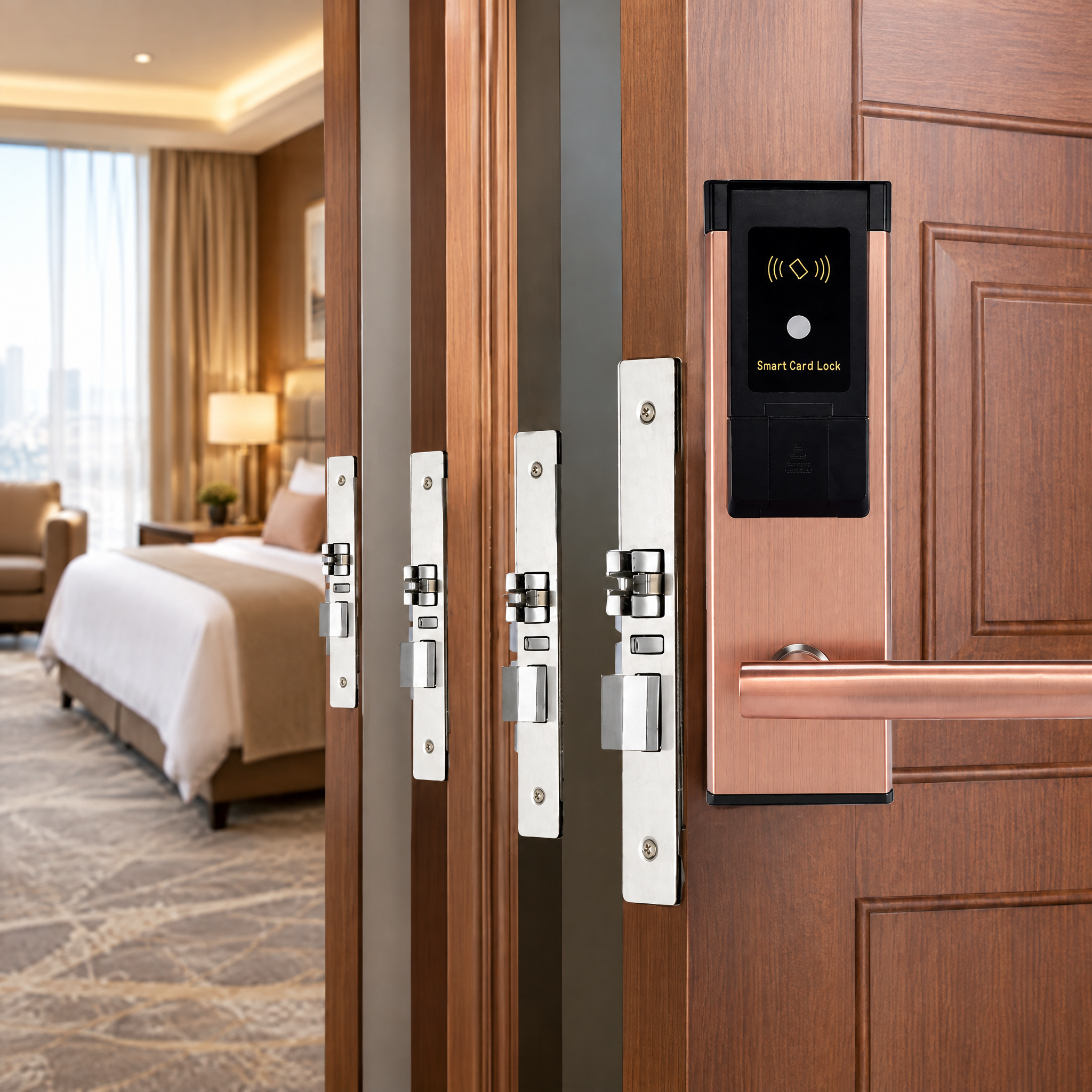
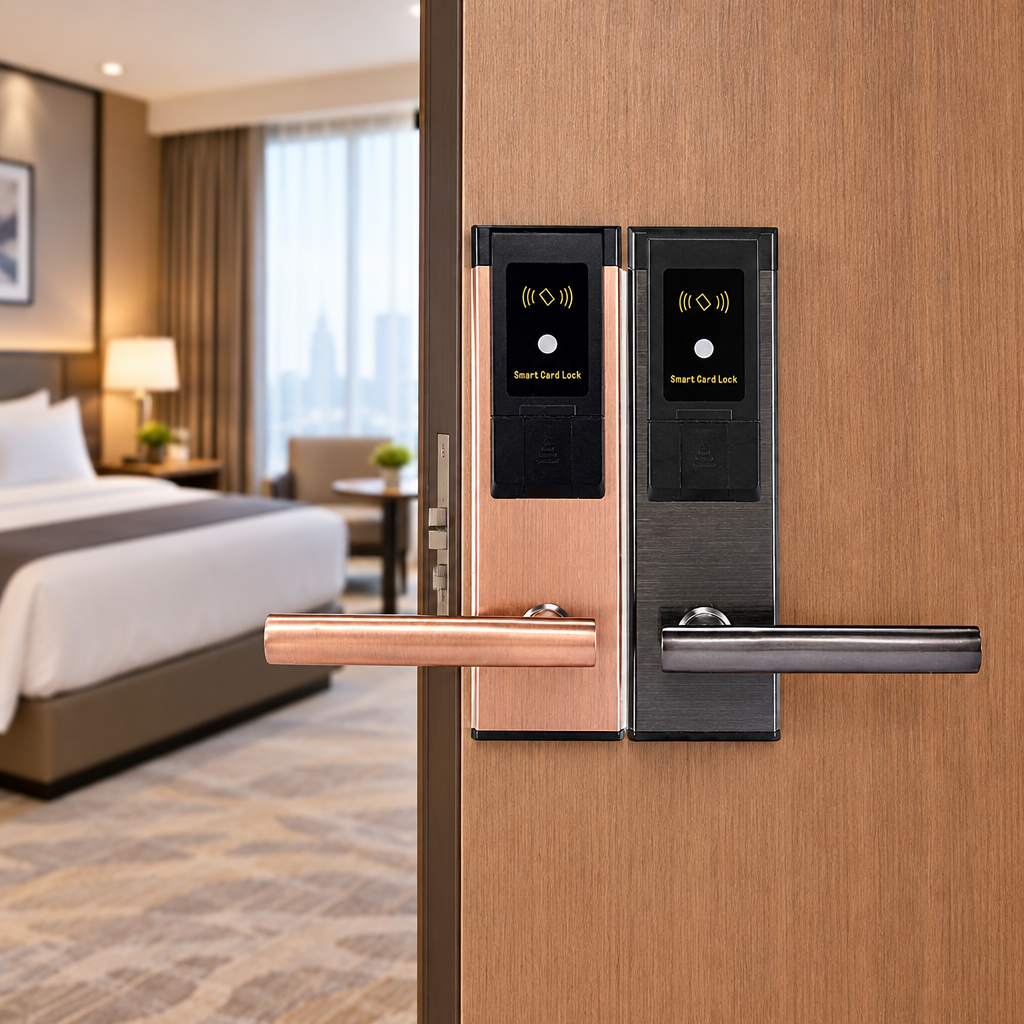
Published specifications give buyers something concrete to compare. As an example, consider the Hotel Door Lock Electronic Smart Door Lock with Smart Card from us at SUMMAO, a manufacturer operating a 10,000 m² facility with ISO9001 certification. The product data lists hotels, apartment complexes, office entry doors, and school facilities as intended applications. According to the product data, the external panel measures 240 mm by 60 mm, though whether it covers existing holes or fits a particular door preparation must be confirmed against the installation template and site measurements. The lock is listed in stainless steel, with silver, gold, black, and copper finishes and optional custom logo branding. The product data also describes a 304 stainless steel self-elastic lock tongue and an anti-theft buckle.
Multi-Modal Capabilities and Power Management
The product data lists five access methods: Wi-Fi, fingerprint, code, card, and mechanical key. It also describes a cloud-connected smart chip system with cloud data storage, which the supplier states is waterproof, moisture-proof, and anti-static. Buyers planning remote management should confirm how the Wi-Fi function connects to their network and management software. Battery life matters for every property, because each replacement costs labor. The supplied company information states battery life of up to 18 months under stated operating conditions, but actual battery life depends on how often the lock is used, wireless communication, temperature, battery type, and installation quality. Ask the supplier how the lock warns staff when batteries run low.
Verification Items to Clarify Before Bulk Ordering
First-party data sheets are a useful starting point, but procurement teams should request supporting documents before placing a large order. For warranty terms, the product data lists a 12-year warranty associated with 100,000 cycles; confirm the exact warranty terms, test conditions, covered components, and exclusions. For certification scope, the product data lists CE and RoHS, and the company information lists FCC; confirm which certificates apply to the exact configuration being purchased, including any wireless module. For door and frame fit, check that the mortise and strike dimensions match the metal or timber frames on site. For network prerequisites, ask what Wi-Fi coverage and network settings the lock needs for stable cloud communication.
Installation, Commissioning, and Maintenance Protocols
Door Preparation and Field Commissioning Steps
Careful mechanical installation underpins reliable electronic performance. Even minor misalignment creates friction on the latch, which can strain the mechanism and drain batteries faster. Installers should keep the manufacturer's template and manual at the door during the work, since hole positions and commissioning steps differ between models. A typical installation sequence, adjusted to the model's manual, looks like this:
- Prepare the mortise pocket: Cut the pocket according to the manufacturer's template and clear out loose debris.
- Protect the cabling: Route the connecting cable through the designated channel so it is not pinched when the escutcheons are tightened.
- Check the lever and spindle: Confirm the lever returns fully to horizontal without sticking or binding.
- Align the strike: Adjust the strike so the latch engages cleanly and the door closes without force.
- Commission the lock: Use the commissioning method specified in the model's installation manual, such as software initialization, an encoder, or a programming device where supported.
Preventative Maintenance and Battery Replacement Cycles
Regular maintenance prevents guest lockouts and extends the life of the mechanism. Engineering teams should set a recurring inspection schedule for every door. Technicians should check that levers return cleanly, wipe the reader area with a dry cloth, and inspect battery contacts for corrosion. Replacing batteries on a planned schedule beats waiting for low-battery warnings in occupied rooms. Use the battery type the manufacturer specifies and replace complete sets rather than mixing old and new cells, because mixed cells discharge unevenly and are more likely to leak, which can damage the electronics.
Emergency Lockout Procedures and Disaster Recovery
When a lockout happens, staff need a clear, practiced procedure that protects guest safety. Maintain the emergency-entry tools specified by the installed lock model, which may include a mechanical override key, an external power interface, or an authorized programming device. Confirm the method during commissioning and store the tools in a secure location. Train duty managers on the procedure before the property opens, not during the first lockout.
If a lock loses battery power, staff follow the model's documented emergency power or mechanical override procedure. If a mechanical fault prevents entry, authorized staff should follow the manufacturer's fault-specific emergency-entry procedure and contact qualified technical support if the override does not work. Every emergency entry should be recorded in the property's security log, so the property keeps a complete record of who entered which room and when.
Frequently Asked Questions (FAQs)
What is the main difference between an offline RFID lock and an online wireless lock?
An offline RFID lock works as a standalone unit with no network connection and checks permissions by reading the validity data that the front-desk encoder wrote onto the guest card. An online wireless lock connects to a central server through gateways or a network, using a protocol that varies by vendor. Where the system supports it, staff can cancel keys remotely, review door events, and monitor battery status from the software.
Can electronic smart locks be retrofitted onto existing hotel doors?
Often, yes, provided the new mortise body fits the existing door preparation and the escutcheons cover the old holes and cutouts. Specifiers should measure door thickness, backset, and mortise pocket dimensions for each door type, then compare those measurements with the manufacturer's installation template before ordering. A careful survey can avoid the cost of replacing doors.
How do hotel electronic locks handle power outages?
Battery-operated locks generally remain locally functional during a building power outage, because they do not draw power from the mains. Network-dependent features, such as remote key cancellation or live event reporting, may be unavailable until the network recovers. Battery type and quantity, external emergency power, credential behavior, and egress operation must be confirmed for the specific model and installation.
What credentials provide the highest balance of security and operational convenience?
For many hotels, contactless cards provide a practical operational baseline because they are cheap to replace and simple for staff to issue. Mobile access can be added when the lock and software support it, which suits guests who prefer to skip the desk. Before choosing, confirm the card technology, encryption, mobile protocol, and PMS integration for the selected system.
What should a property manager verify regarding lock lifecycle claims?
Property managers should ask for documented test reports rather than relying on brochures. Request the manufacturer's test report identifying the applicable ANSI/BHMA standard, product category, cycle count, test conditions, and result. Treat 100,000 cycles as a documented claim for a specific product, not as a universal minimum. Fire-door compliance is a separate check, so verify the fire listing for the lock or complete door assembly, along with its installation requirements, independently of the cycle and operational test documentation. Finally, confirm which components the warranty covers.
Conclusion
Selecting the right hotel electronic lock system means balancing physical security, easy guest entry, and realistic maintenance effort. The right architecture depends on how quickly the property needs to cancel keys and how much network infrastructure it can support. The right hardware depends on accurate door measurements and documented test results. Operators who verify specifications, match locks to their doors, and plan maintenance before installation end up with a hotel electronic lock system that keeps guests safe and staff workflows simple across many years of guest stays.
SUBSCRIBE
INQUIRY