
How Fingerprint Recognition Speed Actually Determines Smart Lock Reliability
Anyone shopping for a smart fingerprint door lock eventually hits the same wall of specs: capacity, materials, battery life, IP ratings. Most of these numbers sound impressive but mean little without context. One figure, though, quietly decides whether the lock feels trustworthy every single day: recognition speed. If a fingerprint sensor hesitates for even a second longer than expected, users start doubting the whole system, even when nothing is actually broken.
This article breaks down what fingerprint recognition speed really measures, why the underlying sensor technology matters more than the number itself, and how this translates into real-world confidence at a hotel entrance or apartment door. We'll use a semiconductor fingerprint smart lock, rated at 0.5 seconds or faster recognition according to the product specifications, as the reference point throughout.
Why Recognition Speed Is the Metric Users Actually Feel
Battery life and waterproofing matter, but they're background concerns. Recognition speed is foreground. It's the moment a guest stands outside a hotel room with luggage in both hands, or a homeowner returns in the rain, finger pressed to the scanner, waiting.
A delay of even one full second feels disproportionately long in that context. Psychologically, anything beyond roughly a second reads as "the lock is thinking," and thinking implies doubt. Doubt implies failure risk. This is why manufacturers chase sub-second response times so aggressively: it's not about the number on a spec sheet, it's about eliminating that half-second of user anxiety.
Specs like a ≤0.5 second recognition speed, as listed for this lock's semiconductor fingerprint module, matter precisely because they sit below that psychological threshold. The lock reads and unlocks in roughly the time it takes to blink.
Semiconductor Sensors vs Optical Sensors: The Real Difference
Not all fingerprint scanners work the same way, and this is where a lot of marketing gets sloppy. There are two dominant sensor types in consumer access control.
- Optical sensors capture a literal image of the fingerprint ridge pattern using light and a small camera-like sensor. They're cheaper to produce but more sensitive to dirt, moisture, and surface wear on the glass.
- Semiconductor (capacitive) sensors detect the electrical charge differential between fingerprint ridges and valleys directly through a silicon chip. There's no image capture step, which is part of why processing tends to be faster and more consistent across lighting conditions.
Semiconductor sensors, like the one used in this lock's fingerprint module, generally hold up better outdoors because they don't rely on ambient light quality the way optical sensors sometimes do. That matters a lot for a front door facing direct sun, shade, or nighttime darkness at different hours.
The tradeoff worth knowing: semiconductor sensors can be marginally more sensitive to very wet or extremely dry fingers, since the reading depends on skin conductivity rather than a visual pattern. It's not a flaw so much as a different set of edge cases to understand.
What a Fingerprint Capacity of 110 Actually Means in Practice
Recognition speed doesn't operate in isolation. It works alongside how many fingerprints the system can store and search through. This lock supports up to 110 fingerprint entries according to its specifications, which sounds abstract until you map it to actual buildings.
For a single-family home, 110 slots is far more than needed, since most households register somewhere between 4 and 10 fingers across family members. For a hotel room lock, though, capacity plays a different role: it's less about long-term storage and more about administrative flexibility during staff shift changes, housekeeping access, or maintenance visits.
The important engineering point here: a larger fingerprint database does not inherently slow down recognition speed, as long as the underlying matching algorithm uses efficient template comparison rather than a brute-force search through every stored print. A well-designed system aims to keep response times consistent whether there are 5 fingerprints stored or 100.
How Anti-Interference Design Protects Speed and Accuracy
A fingerprint sensor sitting on an exterior door handle isn't operating in a lab. It's exposed to static electricity, nearby electronics, temperature swings, and humidity. Anti-electromagnetic interference technology, as referenced in this lock's product information, is intended to keep the sensor's electrical readings stable even when nearby signals could otherwise distort them.
This matters because a fingerprint scan is fundamentally an electrical measurement, at least for semiconductor sensors. Interference doesn't just risk a failed read, it can introduce false negatives, where a correct fingerprint gets rejected because the signal was noisy. A stable electrical environment is part of what keeps that 0.5-second target realistic rather than a best-case number that only holds up indoors.
Real-World Scenario: Hotel Room Access Under Time Pressure
Picture a hotel guest checking in during a busy Friday evening rush. They've had a long flight, they're juggling bags, and the front desk line was long enough already. The last thing that experience needs is a lock that requires two or three fingerprint attempts before it registers.
This is where recognition speed and access flexibility work together rather than as separate features. Beyond fingerprint entry, this lock also supports:
| Unlock Method | Typical Use Case |
|---|---|
| Fingerprint | Daily primary access for returning guests or residents |
| IC Card | Hotel staff issuance, easy to deactivate on checkout |
| Password (6-8 digit) | Backup access, temporary visitor codes |
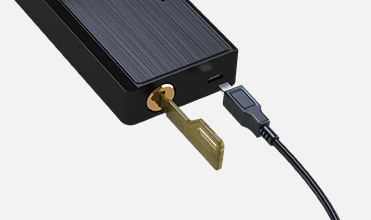
| Physical Key | Emergency override, mechanical failure backup |
| Tuya App | Remote unlocking, off-site guest authorization |
Having five entry paths matters because no single method is perfect for every situation. A guest with a bandaged finger can fall back on the password. Housekeeping can use an IC card without needing app access. The fingerprint sensor's speed is the headline feature, but the redundancy underneath is what keeps the system usable when conditions aren't ideal.
The Anti-Peep Password: Solving a Problem Fingerprint Speed Can't
Fast fingerprint recognition solves the "convenience under time pressure" problem, but it doesn't solve a separate concern: someone watching a password entry from a distance. This is where the 16-bit anti-peep password feature comes in, allowing users to enter random digits before or after their actual code.
The logic is straightforward. If your real code is four digits, you might type three random numbers, then your code, then two more random numbers, and the lock still recognizes the correct sequence buried inside. Anyone watching over your shoulder sees a long, meaningless string of digits instead of an obvious four-digit pattern. It's a low-tech solution to a very common real-world vulnerability, shoulder-surfing, and it works precisely because it doesn't depend on any sensor technology at all.
Where the Zinc Alloy Panel Fits Into the Speed Conversation
It might seem unrelated, but physical security and sensor speed are connected through user trust. A lock that unlocks in half a second but has a panel that can be pried off in seconds isn't actually fast, it's just fast at the wrong job. The zinc alloy panel referenced in this model's product information is designed to resist the kind of forced entry attempts, prying, striking, that target the lock's housing rather than its access credentials.
Fast, reliable fingerprint recognition only matters if the mechanical layer behind it can't be bypassed entirely. This is the part of smart lock evaluation that often gets skipped because it's less exciting than app features, but it's arguably more important for actual security outcomes.
Battery Power and Its Quiet Relationship to Recognition Consistency
This lock runs on four AA batteries at 6V, with a low voltage warning triggered around 4.8V according to its specifications. That warning threshold isn't arbitrary. As battery voltage drops, the electrical signal available to the fingerprint sensor and processing chip weakens, which can affect both scan speed and accuracy right before batteries need replacing.
A low voltage warning system gives users a buffer window to swap batteries before performance actually degrades, rather than discovering the problem when they're locked out. It's a small design detail, but it directly protects the fingerprint recognition experience from the most common real-world failure point in any battery-powered access device.
Comparing Core Specs at a Glance
| Specification | Detail |
|---|---|
| Fingerprint Recognition Speed | ≤0.5 seconds |
| Fingerprint Capacity | Up to 110 entries |
| Password Length | 6-8 digits, with anti-peep option |
| Power Source | 6V, 4 x AA batteries |
| Low Voltage Warning | 4.8±0.2V |
| Working Temperature Range | -25°C to 60°C |
| Lock Cylinder Security Grade | Grade A |
| Door Thickness Compatibility | 35-50mm |
Frequently Asked Questions
Does a faster fingerprint recognition speed mean the sensor is less secure?
No, and this is a common misconception. Recognition speed refers to how quickly the sensor processes and matches a scan against stored templates, not how strict the matching threshold is. A well-calibrated semiconductor sensor can be both fast and accurate, since the speed comes from efficient template comparison rather than from skipping verification steps.
Will cold or hot weather affect how fast the fingerprint scanner responds?
Extreme temperatures can affect any electronic sensor to some degree, but this lock is rated for a working range of -25°C to 60°C, which covers the vast majority of outdoor climates. Within that range, recognition speed should remain consistent. Very dry skin in cold weather can occasionally require a second scan attempt, which is a limitation of semiconductor sensors generally rather than a defect specific to any one lock.
Fingerprint recognition speed isn't just a number to compare on a spec sheet, it's the difference between a smart fingerprint door lock that feels invisible in daily use and one that becomes a small daily frustration. When that speed is backed by stable sensor technology, sensible battery warnings, and physical security that matches the electronic side, the result is an access system people stop thinking about entirely, which is exactly what a smart fingerprint door lock is supposed to achieve.
SUBSCRIBE
INQUIRY