
Smart Door Lock for Hotel: A Practical Buyer's Guide to Features, Compatibility, and Deployment
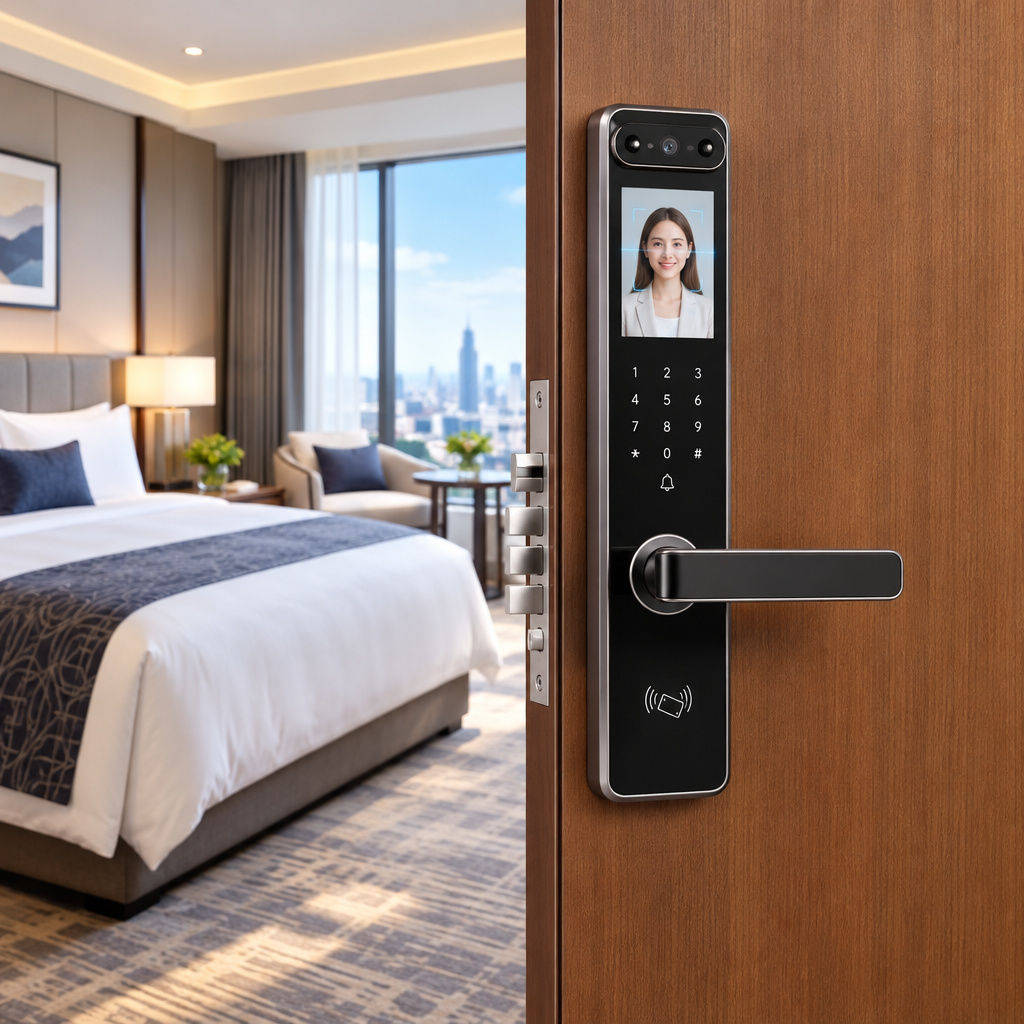
Selecting a smart door lock for hotel properties involves balancing guest convenience against rigid operational security. Front desks run around the clock, guest turnover happens in unpredictable waves, and hardware must withstand thousands of continuous operational cycles without failing. When hoteliers evaluate keyless access, they look past novelty features to find dependable systems that streamline room turnover.
Investing in a modern smart door lock for hotel rooms transforms how hospitality staff manage daily check-ins. A smooth arrival sequence sets the tone for an entire stay, whereas a malfunctioning lock instantly damages guest trust. This comprehensive buyer's guide breaks down hotel door lock technology, door compatibility requirements, deployment workflows, and the practical realities of managing smart access across diverse hospitality portfolios.
What Hotel Buyers Mean by Smart Door Lock
Hospitality operators approach access control from an institutional perspective rather than a consumer point of view. A residential user focuses on remote unlocking for personal deliveries, but a hotel operator must supervise hundreds of transient guest credentials alongside specialized service routes every single day.
Common Hotel Access Challenges
Traditional mechanical brass keys present perpetual logistical headaches. Keys vanish inside luggage, unauthorized duplicates circulate quietly, and rekeying an entire floor after a security breach drains operational budgets. Legacy magnetic stripe cards bring their own friction, because the stripe can be affected by magnetic exposure or simple wear, which sends tired travelers back to the lobby after midnight. RFID cards use a different technology and do not demagnetize in this way.
Staff management adds another layer of complexity. Housekeeping attendants require punctual room access during morning shifts, maintenance technicians need temporary entry to repair plumbing fixtures, and night managers require master clearance across the entire facility. Coordinating these tiers with metal keys or unmonitored plastic fobs creates accountability gaps that modern operators cannot afford.
Hardware vs. System Architecture
A physical lock escutcheon mounted on a guest room door represents merely the visible tip of an access ecosystem. Behind the latch bolt sits an electronic architecture governing encryption, credential lifecycles, and audit logging. Without a centralized management platform, a smart lock remains an isolated island requiring manual programming at each door.
Many commercial deployments link door hardware to front-desk workstations and administrative databases, while offline systems may use encoded credentials and local programming. This separation between endpoint hardware and management software is critical. Operators must ensure their chosen hardware pairs seamlessly with software that issues credentials, monitors battery states, and tracks room occupancy in real time.
How Hotel Smart Locks Work in Daily Operations
In an integrated deployment, the management platform can create a credential with configured validity dates tied to the reservation. Buyers must verify expiry behavior and PMS integration for the selected system, as credential creation, timing, and automatic invalidation depend on the lock software, PMS integration, credential type, and property configuration.
Guest and Staff Credential Methods
Modern hotel locks support multiple credential formats to serve varied guest preferences and operational needs:
- High-frequency RFID cards deliver rapid, contactless tap-to-enter access that remains familiar to guests of all demographics, and because they carry no magnetic stripe, they do not demagnetize.
- Mobile keys can use Bluetooth or NFC to communicate with compatible locks; the vendor should document the authentication, encryption, and offline behavior.
- Numeric PIN codes can support keyless entry in selected properties, provided the system supports secure issuance, expiration, rate limiting, and audit controls.
- Physical override keys maintain a concealed mechanical fallback inside the escutcheon, giving facility managers manual entry during electronic malfunctions or total battery depletion.
Access Permissions, Expiration, and Audit Trails
Access permissions must carry strict temporal boundaries. When front-desk staff issue a room credential, the system sets an internal clock on the token that automatically invalidates access at the mandatory checkout hour. Extending a stay simply refreshes the database record without requiring the guest to visit the reception counter.
Locks with event-logging support can record credential IDs, timestamps, and access results; confirm the exact event fields and retention period with the vendor. If property goes missing from a room, management can pull the audit log to verify whether the door was opened by the guest, a specific housekeeper, or an emergency master key.
Connected vs. Standalone Lock Deployments
Properties generally choose between online networked architectures and offline standalone setups. Online locks communicate continuously with central servers using wireless protocols like Wi-Fi or low-power mesh networks. They provide instant credential cancellation, remote battery alerts, and real-time door open warnings, but demand robust network infrastructure.
Offline locks validate locally stored or card-encoded credentials, depending on the manufacturer; some systems may also support offline PIN workflows. In card-based systems, the lock does not talk to a network and instead checks validity data written onto the card by the front-desk encoder. Offline setups reduce dependence on network connectivity and some network-related exposure, but they are not inherently secure, so programming procedures and credential handling still need controls. Updating permissions or reading audit logs typically requires visiting the physical door with an administrative programming card.
Essential Features to Evaluate for Hotel Door Locks
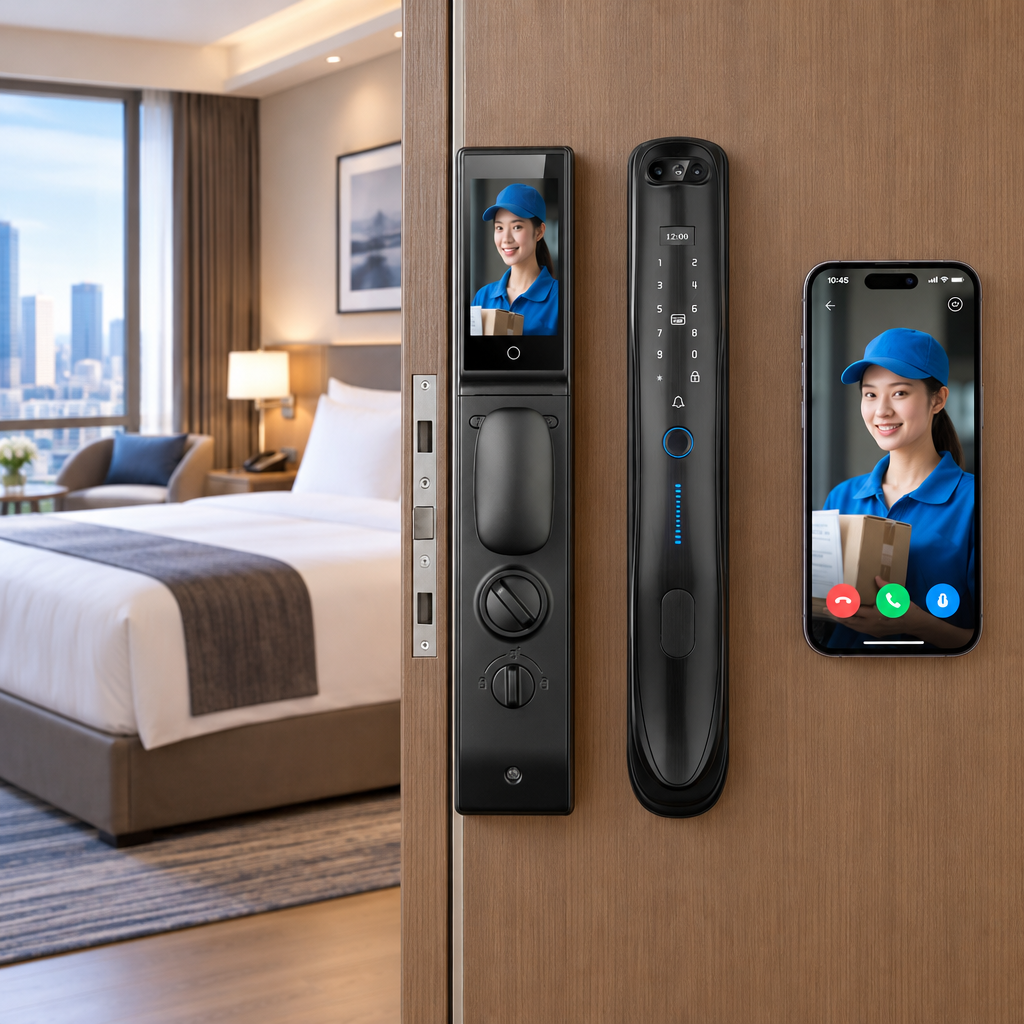
Procurement teams must inspect hardware specifications thoroughly before committing capital. A lock that appears elegant in a showroom may fail in high-humidity coastal climates or prove impossible to mount on vintage wooden doors.
Door Fit, Mortise Specifications, and Retrofitting
Door dimensions dictate mechanical feasibility. Lock preparation varies by property, door, and installed hardware. A 6068 mortise with a 24 mm by 240 mm faceplate and ANSI cylindrical or mortise preparations are common examples, but neither should be assumed. Verify each door's existing mortise or lock preparation, and measure the backset, the distance from the door edge to the handle centerline, before purchasing.
Retrofitting older facilities introduces spatial hurdles. Technicians must check whether the new lock escutcheon fully covers existing drill holes, mortise pockets, and wire channels. Failing to account for door thickness ranges leaves installation crews stranded with spindle rods that are either too short to catch the cam or too long to seat flush.
| Evaluation Category | Commercial Specification Baseline | Why It Matters to Operations |
|---|---|---|
| Mortise Profile | Examples: 6068 (24 × 240 mm) or ANSI preparation | Determines structural fit inside existing door cutout pockets |
| Door Thickness Range | 40 mm to 110 mm | Ensures proper spindle and screw engagement across timber or metal doors |
| Chassis Material | Aluminum alloy or 304 stainless steel | Resists surface impact, corrosion, and continuous handle torque |
| Cylinder Grade | Grade C or High-security mechanical keyway | Protects against pick attacks and manual bypass techniques |
| Ingress Protection | Use only when documented for the specific model | Helps evaluate dust and water-jet exposure; verify the test rating and installation environment |
Power Management and Emergency Entry Protocols
Battery-powered locks can continue operating during a building power outage, provided the lock battery is charged and the hardware is correctly configured. Verify emergency entry, egress, and failure behavior for the specific door assembly. Systems typically run on alkaline cells or high-capacity rechargeable lithium-ion battery packs. The system should provide configurable low-battery warnings with enough lead time for the property's maintenance schedule; confirm the alert threshold, notification method, and expected warning period.
Confirm that the selected model provides a mechanical key override and an external emergency power port. Verify the required voltage, connector, operating procedure, and authorized emergency-key policy with the vendor.
Physical Security and Lock Cylinder Ratings
A smart door lock for hotel deployment remains fundamentally a physical barrier. Aluminum alloy can provide a durable enclosure, but buyers should request tested evidence for pry, lever, drill, and bypass resistance rather than infer security performance from material alone. Some systems add door-position sensors and local or networked alarms for held-open or forced-entry conditions; verify whether the selected model and software support these functions.
The S958MAX is supplied with a manufacturer-designated Grade C cylinder. Buyers should request the applicable standard, test evidence, and details of anti-drill, picking, and bypass resistance before treating that designation as a security benchmark.
Guest Usability and Accessibility Standards
Door hardware must accommodate travelers of varying physical abilities. The 2010 ADA Standards in the United States mandate that operable door hardware must be operable with one hand without tight grasping, pinching, or twisting of the wrist. Lever-style hardware is generally easier to operate without tight grasping or wrist twisting, but the complete installed door assembly must be evaluated against the applicable ADA requirements, including height and operating force.
Evaluate whether the lock provides clear visual and audible feedback, and confirm how it signals successful, failed, or expired credentials. Overly loud audio beeps irritate neighboring rooms in quiet corridors, while silent locks leave travelers uncertain whether the mechanism engaged.
Commercial Hotel Systems vs. Residential Smart Locks
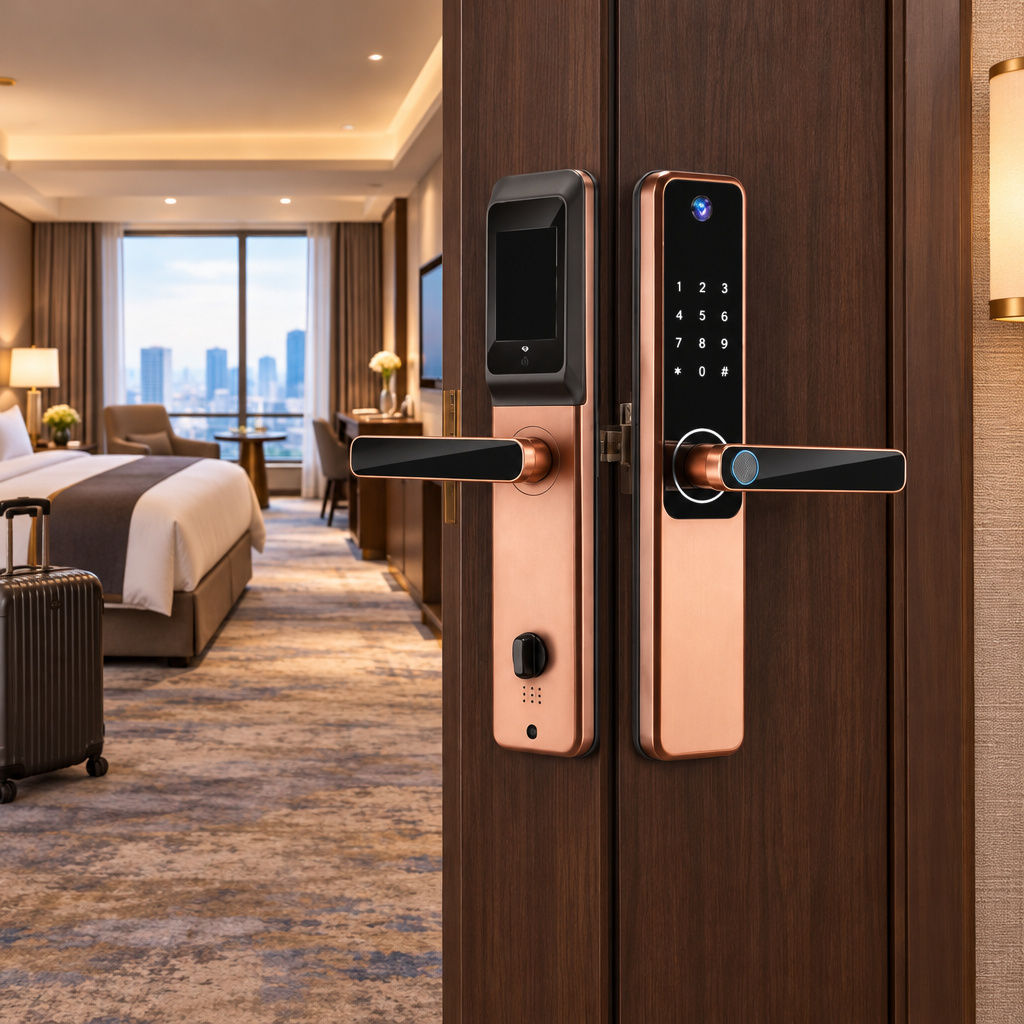
Property owners occasionally make the costly mistake of installing consumer-grade smart locks across commercial properties. While residential deadbolts perform adequately on single-family homes, they quickly buckle under commercial hospitality workflows.
Centralized Management vs. Single-Door Apps
Residential smart locks rely on individual consumer mobile apps. Managing a fifty-room inn through a standard consumer interface requires an administrator to pair, name, and manually configure fifty distinct Bluetooth endpoints on a single phone. Such workflows collapse entirely when managing guest turnovers, daily cleaning schedules, and simultaneous arrivals.
Some commercial systems provide centralized credential issuance, role-based permissions, and battery monitoring. Confirm the exact workflows, integrations, and dashboard functions with the vendor.
Property Management System Integration
A property management system often coordinates reservations and guest status in hotel workflows. Seamless check-in depends on the PMS communicating directly with the lock management server to issue credentials the moment a reservation transitions to checked-in status. Standalone consumer locks lack the enterprise API protocols required to support this automated pipeline.
Operators must distinguish between standalone cloud connectivity and actual PMS interoperability. Having Wi-Fi inside a lock allows remote app control, but native PMS integration requires structured protocol support. Integrating hardware via documented software interfaces prevents front-desk agents from re-typing reservation details across disparate systems.
Guest Privacy and Biometric Data Handling
Deploying camera-equipped or biometric hardware introduces stringent regulatory obligations. Regulatory bodies, including the U.S. Federal Trade Commission, closely scrutinize commercial biometric data practices, warning against data misuse, inadequate security safeguards, and misleading accuracy claims. Hotel guests demand complete transparency regarding where their biological profiles travel.
When deploying optical sensors or facial recognition on guest doors, hospitality operators must verify data handling architecture. Biometric templates should be encrypted locally on the lock or processed through secured cloud systems under clear guest consent agreements. Operators should provide a non-biometric access option, such as an RFID card or PIN, where feasible and where required by applicable law, accessibility obligations, or property policy.
Step-by-Step Selection Framework for Hotel Operators
Selecting door locks requires a methodical evaluation sequence. Skipping physical audits or failing to involve maintenance personnel early leads to project delays and expensive on-site structural modifications.
- Define property operational workflows by mapping out whether your guests check in at an attended front desk, use an automated lobby kiosk, or proceed directly to their room using digital mobile keys.
- Audit physical door construction by measuring door leaf thickness, inspecting core materials such as solid wood, hollow metal, or composite, noting backset distances, and verifying door swing direction across every room category.
- Map staff access tiers by outlining specific credential rules for housekeeping teams, maintenance workers, food service staff, and general managers to ensure the lock software supports required role-based permissions.
- Test offline contingency protocols by simulating sudden power outages, internet disconnections, and drained lock batteries to confirm that staff can execute mechanical overrides and offline card check-ins smoothly.
- Calculate total cost of ownership by evaluating initial hardware procurement, replacement batteries, software licensing fees, extra keycards, and warranty coverage across a multi-year horizon.
Hardware Profile and Practical Application: S958MAX
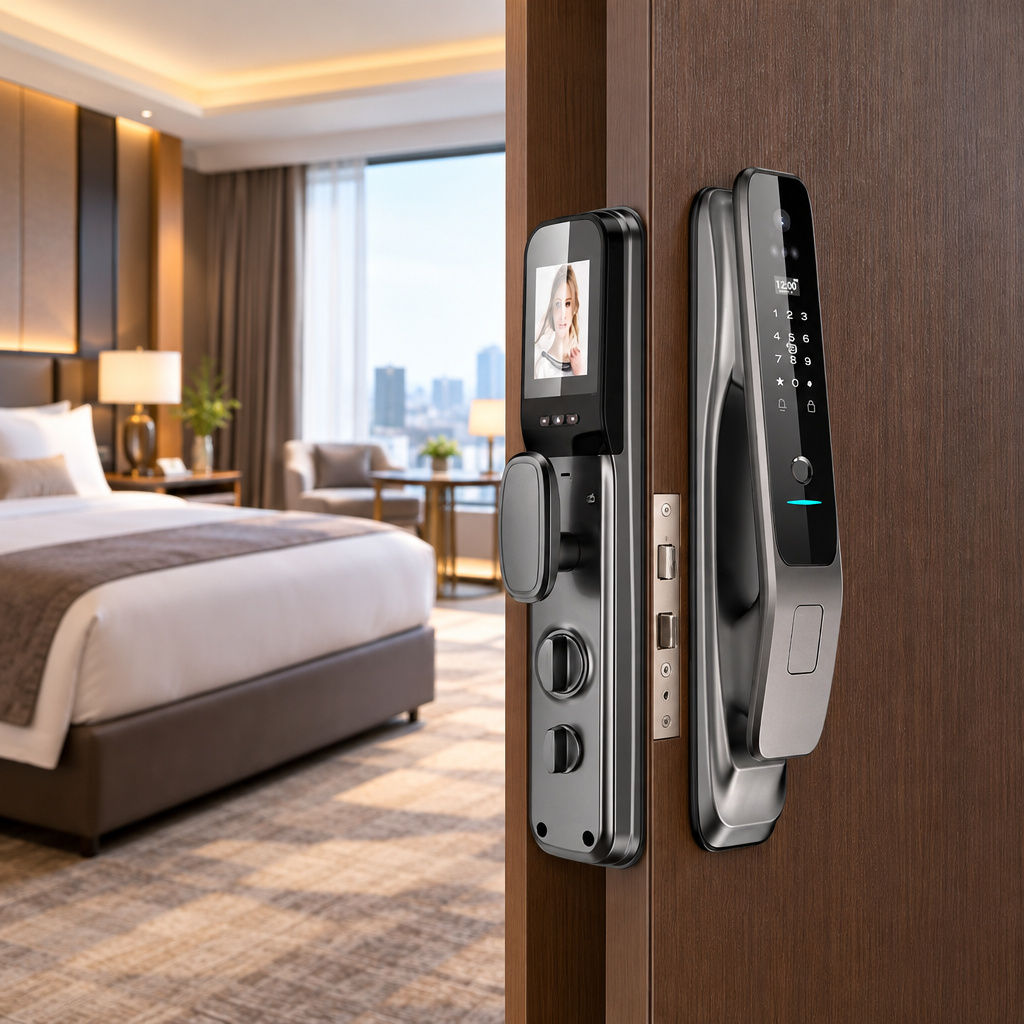
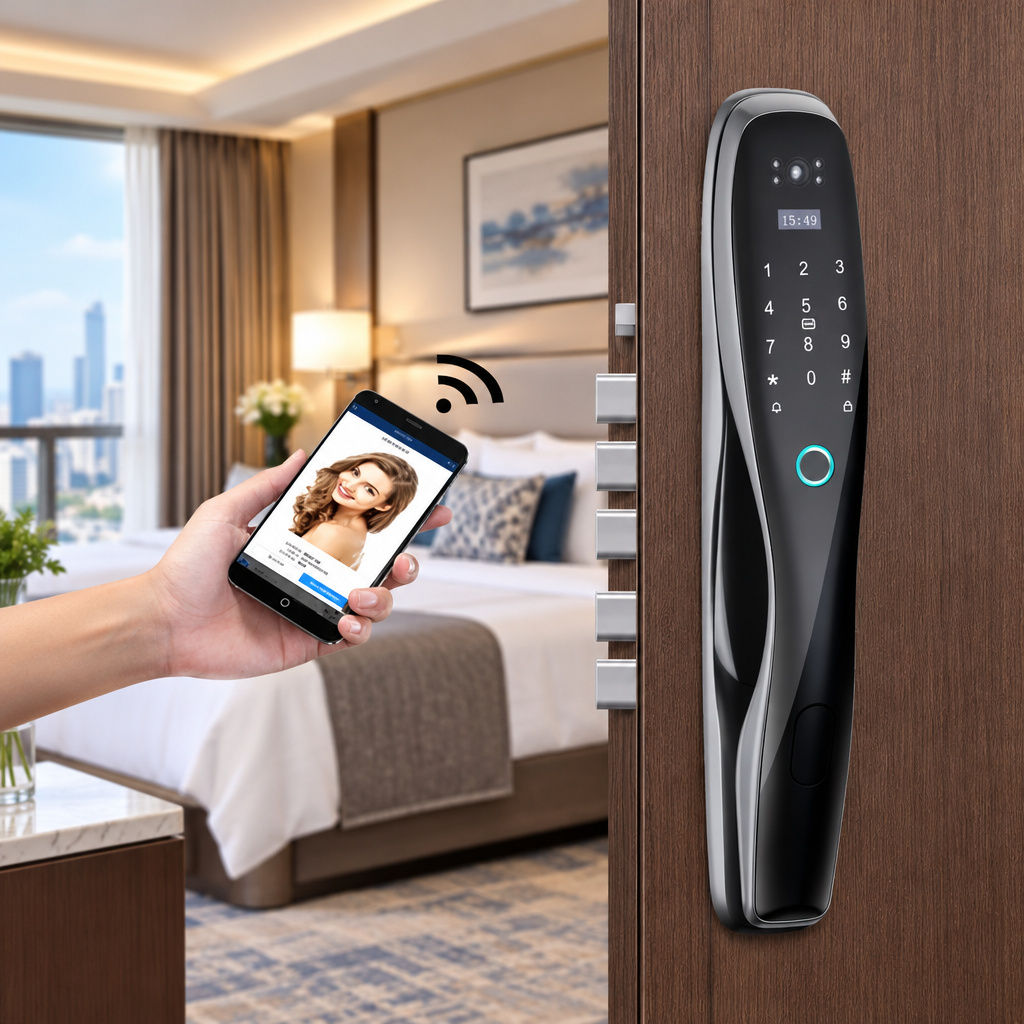
To understand how modern access features perform in hospitality environments, consider the specifications of advanced multi-modal hardware. Developed by SUMMAO, the S958MAX illustrates how biometrics, visual monitoring, and physical locking mechanisms come together in a unified door station.
Manufacturer-Stated Technical Specifications
According to manufacturer technical documentation, the S958MAX features a hardware configuration designed for residential and commercial installations:
- Multi-modal credential support operates via 3D facial recognition, mobile application control through the Tuya smart ecosystem, digital passcode entry, biometric fingerprint scanning, IC cards, physical mechanical keys, and two-way video calling.
- Structural specifications include construction from aluminum alloy, weighing approximately 6 kg per unit, and built to accommodate doors with thicknesses ranging from 40 mm to 110 mm.
- Locking mechanics feature a standard 6068 mortise configuration measuring 24 mm by 240 mm, paired with a manufacturer-designated Grade C lock cylinder.
- Power architecture is powered by a rechargeable 7.4V 5000mAh lithium-ion battery pack, supplemented by an emergency external USB power interface.
- Connectivity and compliance connect via Wi-Fi networks with cloud-based data storage, supported by CE and RoHS certifications alongside a 2-year manufacturer warranty.
Evaluating Advanced Biometrics for Hotel Deployments
A multi-modal unit like the S958MAX may be considered for suites, serviced apartments, or selected commercial doors after testing. Its 3D face-recognition feature can support hands-free entry when recognition succeeds, while card, PIN, fingerprint, app, and key methods provide alternatives. The integrated video camera allows long-term guests or suite occupants to screen visitors directly on the interior display or via their smartphone prior to releasing the latch.
In hospitality contexts, offering 3D face recognition provides a hands-free arrival experience for VIP travelers carrying heavy luggage. Because the unit retains card, passcode, and physical key modes, hotel operators can deploy facial recognition strictly as an optional luxury service while issuing standard IC cards to general guests.
Implementation, Testing, and Operational Best Practices
Rolling out hundreds of door locks requires organized operational discipline. A rushed property-wide installation often results in misaligned strike plates, broken latches, and front-desk chaos on launch day.
Running a Phased Pilot Installation
Never install a new lock model across an entire hotel simultaneously. Begin by fitting five to ten representative rooms located on a single corridor. Select rooms with varying usage patterns, including suites with heavy wooden doors and standard rooms with lighter frames.
Monitor this test block over several weeks of continuous guest traffic. Assess whether guests understand keypad prompts intuitively, check acoustic noise levels when the motorized latch engages at midnight, and measure actual battery discharge under high-frequency cycling before executing full-property procurement.
Front-Desk and Maintenance Team Training
Smooth technology transitions depend on confident staff members. Engineering teams must practice drilling precise mortise pockets, setting spindle clearances, and handling external emergency battery jump-starts until the sequence becomes second nature.
Front-desk agents require structured drills on credential issuance and troubleshooting. When an upset guest arrives reporting an unreadable card, the receptionist must know immediately whether to re-encode the card, check the room's occupancy status in the PMS, or dispatch a technician with a manual override key.
Post-Deployment Monitoring and Metric Tracking
Long-term operational success requires tracking quantifiable maintenance metrics. Keep a centralized log documenting the frequency of false rejections, guest lockout calls, unexpected battery drain, and strike plate misalignments caused by seasonal door warping.
Establishing scheduled maintenance cycles protects hardware longevity. Technicians should inspect door alignment, clean the latch area, and use only the lubricant and maintenance procedure approved in the lock manufacturer's service documentation. Clean biometric and camera surfaces and inspect the emergency override according to the manufacturer's documented maintenance schedule and procedure.
Frequently Asked Questions
What is the primary difference between a commercial hotel lock and a residential smart lock?
Commercial hotel locks are designed around multi-room administrative efficiency, rapid check-out expirations, and centralized software management. Residential smart locks cater to individual homeowners managing a single door via a consumer smartphone app, lacking the high-throughput card encoders, PMS interfaces, and master credential hierarchies required to operate a hospitality business.
Can a hotel smart lock continue operating if the Wi-Fi network goes down?
Some locks can validate previously issued credentials locally during a network outage. On those models, cards and mechanical keys typically keep working, while offline PIN support depends on the manufacturer. Network dropouts usually suspend remote commands and real-time audit streaming. Buyers should confirm the supported credential types and outage behavior for the specific model before purchase.
Does Wi-Fi connectivity mean a lock automatically integrates with our hotel PMS?
No, Wi-Fi serves merely as a wireless communication channel, not a software integration bridge. Native PMS interoperability requires dedicated middleware or documented software interfaces that translate reservation check-in events into lock authorization commands. Hoteliers must confirm specific PMS software compatibility with their lock vendor in writing.
Is facial recognition suitable for all types of hotel properties?
Facial recognition delivers exceptional convenience in boutique hotels, extended-stay serviced apartments, and executive VIP suites where guests value hands-free, personalized entry. However, large convention hotels with thousands of daily transients generally prefer high-frequency RFID cards or mobile digital keys due to simpler guest privacy onboarding and rapid credential distribution.
What measurements must be verified before replacing existing hotel locks?
Technicians must verify door leaf thickness, mortise pocket depth and height, backset distance from the door edge to the cylinder centerline, and the dimensions of the front strike plate. In retrofit projects, installers must also check whether the new exterior and interior escutcheon plates completely conceal existing mounting holes and wiring cutouts.
How are emergency lockouts handled if the lock battery is completely drained?
Authorized staff should use the model's documented mechanical-key override or emergency-power procedure. Confirm whether the property receives master-keyed cylinders and whether any escutcheon cover must be removed.
Final Takeaways on Hotel Access Control
Choosing the right smart door lock for hotel environments demands a balanced approach that weights physical engineering as heavily as digital convenience. A stylish lock is useless if its internal gearbox jams after six months, just as a sturdy lock frustrates guests if its keycard reader fails to register credentials smoothly. Hospitality operators must look beyond surface aesthetics and evaluate mortise profiles, battery resilience, emergency override pathways, and centralized management interfaces.
Deploying advanced multi-modal solutions like the S958MAX illustrates how properties can cater to modern guest expectations by combining contactless entry, video screening, and traditional card access within a single aluminum alloy chassis. When hardware selection aligns with thorough door prep, structured staff training, and rigorous offline fallback procedures, hotel properties achieve the ultimate goal of keyless access: effortless arrivals for guests and dependable security for management. Investing in the appropriate smart door lock for hotel operations ensures your property remains protected and efficient for years to come.
SUBSCRIBE
INQUIRY