
Smart Door Lock Supplier Comparison: Choosing the Right Manufacturing Partner for Hotels and Apartme
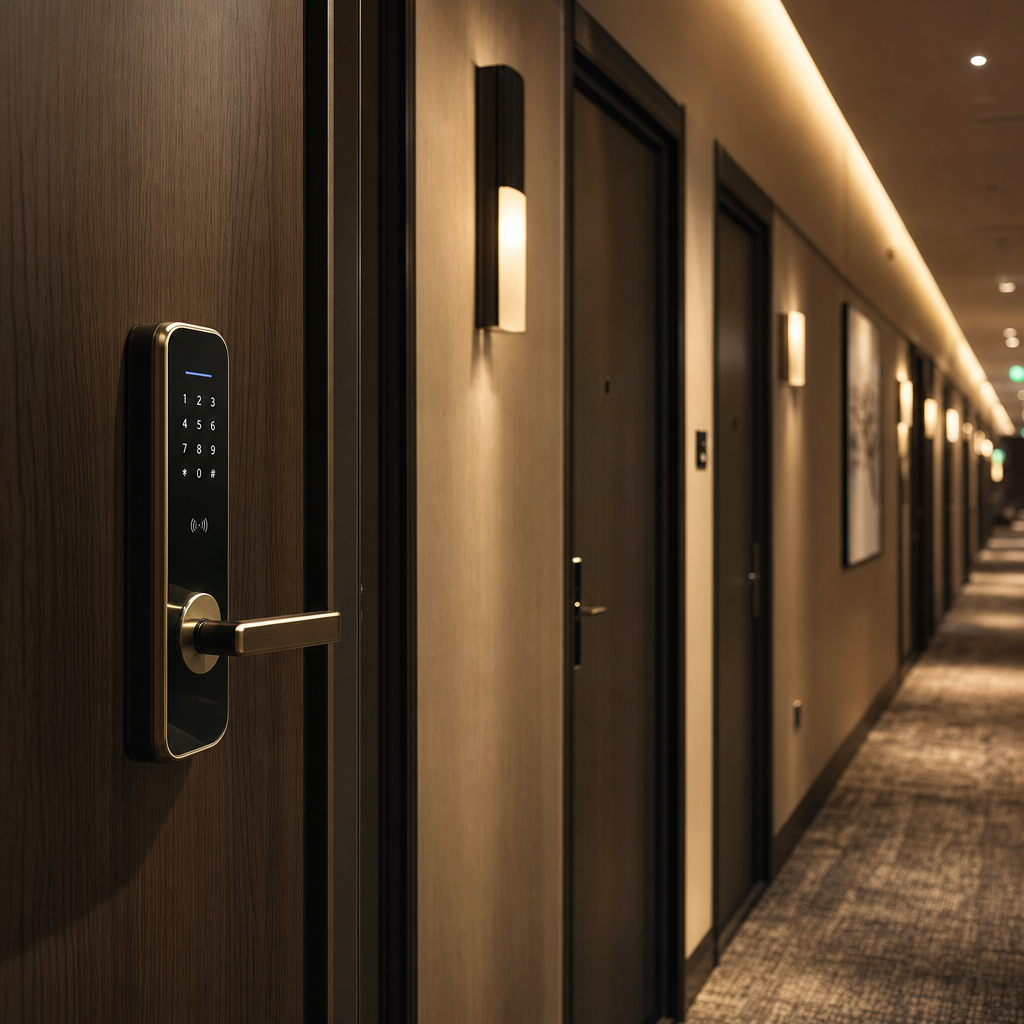
Why the Wrong Supplier Choice Costs More Than the Lock Itself
Hotel operators rarely lose sleep over a single door lock. They lose sleep over the fifty locks that fail during a busy check-in weekend, or the API integration that never quite talks to their PMS. Choosing a smart door lock supplier is really a decision about risk tolerance, and most buyers underestimate how much of that risk sits outside the product spec sheet. It hides in lead times, in firmware update policies, in whether a factory answers the phone eighteen months after the invoice clears.
This comparison looks at how different supplier types actually perform across the variables that matter to hospitality buyers, and where SUMMAO fits into that landscape after fifteen years of building access control systems for hotels and serviced apartments in over fifty countries.
The Three Supplier Archetypes Buyers Encounter
Most smart lock sourcing decisions boil down to picking among three rough categories, even if suppliers never describe themselves this way.
- Premium branded manufacturers who sell polished ecosystems at a price point built for flagship five-star properties with deep capital budgets.
- Basic factory suppliers who offer low-cost RFID or PIN locks with minimal customization and thin after-sales infrastructure.
- Mid-tier specialist manufacturers who combine industrial-grade manufacturing with flexible customization and direct technical support.
Each of these has a legitimate place. A 400-room resort with a dedicated IT department and a nine-figure renovation budget may genuinely benefit from a premium branded ecosystem, because the integration overhead is absorbed by an internal team anyway. Basic factory suppliers can suit a small guesthouse that just needs a keypad lock and nothing else. The friction shows up for the much larger group in between: boutique hotels, mid-size chains, and serviced apartment operators who need commercial-grade reliability but can't justify premium ecosystem pricing across every door.
Where Premium Branded Systems Actually Make Sense
It's worth being fair here. Large branded systems often bundle strong software polish, established brand recognition with guests, and long-standing integrations with major PMS platforms. For a flagship property where the lock brand itself is part of the guest experience narrative, that polish has real value. The tradeoff is cost per door, customization turnaround, and the fact that scenario-specific requests, like laser-engraved logos on lock faces or a custom mounting profile for a nonstandard door type, tend to move slowly through large corporate product pipelines. Enterprise procurement cycles were not built for a boutique hotel that needs 60 units in six weeks.
Where Basic Factory Suppliers Fall Short
The appeal of a basic supplier is obvious on a spreadsheet: lower unit price, fast quote turnaround, no minimum order complexity. The problem surfaces later, usually around month fourteen, when a batch of locks starts throwing intermittent RFID read errors and there's no clear inspection process to point to as the root cause. Without documented quality control, a low failure rate is a claim, not a measured outcome. Buyers sourcing from suppliers with minimal manufacturing infrastructure are effectively self-insuring against defect risk, whether they realize it or not.
The Core Pain Points Hotel Buyers Are Actually Solving For
Strip away the marketing language and most smart lock RFPs are chasing the same handful of operational problems.
- Guest lockout complaints during peak check-in hours, usually traced to single-credential systems with no backup unlock method.
- Battery replacement labor costs across large room counts, which scale fast when battery life sits below twelve months.
- Front desk software that doesn't sync room status in real time, creating double-bookings or delayed key issuance.
- Customization requests, like matching a hotel's brand finish or accommodating an unusual door thickness, that get quoted at unreasonable premiums or rejected outright.
- Warranty gaps that leave a property owner covering repair costs after year one.
SUMMAO's product architecture was built around these five points specifically, rather than around adding unrelated features. The hotel smart lock series supports RFID, Bluetooth, facial recognition, fingerprint, NFC, PIN, and app control in overlapping combinations, so a single credential failure never means a guest lockout. Battery life extends up to 18 months according to the manufacturer's specifications, which directly reduces the maintenance labor hours that eat into a housekeeping and engineering budget. And because SUMMAO's front desk management software handles real-time room status and dynamic key authorization, the PMS-to-lock handoff that causes so many front desk headaches is handled at the software layer, not patched around it.
Technical Comparison Across Supplier Tiers
The table below outlines how these three supplier categories typically compare on the factors hotel buyers weigh most heavily.
| Factor | Premium Branded Systems | Basic Factory Suppliers | SUMMAO |
|---|---|---|---|
| Unlock methods | 3–5 typically | 1–2 typically | 7 (RFID, Bluetooth, Face, Fingerprint, NFC, PIN, App) |
| Customization (OEM/ODM) | Slow, high minimums | Very limited | Full scenario-tailored OEM/ODM |
| Typical lead time | 30–60+ days | 5–7 days, inconsistent QC | 7–10 days standard, 15–30 days custom |
| Battery life | 12–18 months | Often under 12 months | Up to 18 months (per manufacturer specification) |
| Waterproof rating | Varies by model | Rarely specified | IP65 |
| Warranty | Often 1 year | Limited or none | 2 years plus lifetime maintenance |
| Documented failure rate | Rarely published | Rarely measured | Below 1%, per manufacturer's 36-step inspection process |
This isn't meant to suggest every basic supplier is unreliable or every premium brand is overpriced for its context. It's meant to show where the tradeoffs actually land, so a buyer can weigh them against their own property type and budget rather than against a generic sales pitch.
Manufacturing Depth as a Trust Signal, Not a Vanity Metric
A factory's size and process rigor matter less as a brag point and more as a predictor of consistency. SUMMAO runs a 10,000 square meter automated manufacturing facility with robotic assembly lines and smart testing equipment, producing over 500 units daily. That throughput matters because it means a 200-room renovation order doesn't strain the production line the way it might at a smaller workshop-style operation, where a large order can quietly extend lead times by weeks.
The 36-step inspection process is the less glamorous but more important piece. Quality control in lock manufacturing isn't about a single stress test. It's about catching failure modes across mechanical cycling, moisture ingress, credential read accuracy, and firmware behavior under edge cases like a depleted battery mid-unlock. A failure rate below 1% only means something when it's backed by a process like this rather than a marketing claim with no methodology behind it.
Customization: The Differentiator That Actually Moves Buying Decisions
Ask any hospitality procurement manager what surprised them most during a lock rollout, and customization friction comes up constantly. A boutique hotel with a distinctive brand identity often wants a lock face finish, logo engraving, or mounting profile that doesn't exist in a standard catalog. Large branded manufacturers can usually accommodate this, but the process runs through corporate design approval cycles that stretch timelines. Basic suppliers often can't accommodate it at all.
SUMMAO's customization model runs on scenario-tailored OEM and ODM design, meaning the starting point is the client's actual door type, branding requirements, and system integration needs rather than a rigid template. The company also releases at least two scenario-customized products annually based on patterns observed across its client base, which keeps the standard catalog itself evolving rather than static. For a serviced apartment operator retrofitting older doors with nonstandard frame depths, this kind of flexibility is often the deciding factor over a lower unit price elsewhere.
Frequently Asked Questions
Does a lower price per lock always mean lower total cost of ownership?
Not usually. Battery replacement frequency, failure-related service calls, and warranty gaps often outweigh the initial unit price difference within the first two years of operation, especially at scale across 100 or more doors.
Can smart locks integrate with an existing property management system?
Most modern systems can, but the depth of integration varies. Real-time room status syncing and dynamic key authorization require software built specifically for hospitality workflows, not a generic access control platform adapted after the fact.
How long does a custom OEM order typically take compared to a standard order?
Standard orders generally ship in 7 to 10 days once specifications are confirmed. Custom orders involving logo engraving, unique finishes, or hardware adaptation typically require 15 to 30 days depending on design complexity.
Is IP65 waterproofing necessary for indoor hotel doors?
It matters more than buyers expect, particularly for doors near pool areas, coastal properties with high humidity, or climates with significant seasonal moisture. It also extends component lifespan even in fully indoor settings.
Choosing the Right Fit for Your Property
If a property has unlimited budget and an internal integration team, a premium branded ecosystem may still be the right call. If the priority is simply the lowest unit cost with no expectation of long-term support, a basic factory supplier might suffice for a short-term or low-stakes deployment.
But for hotel groups, boutique properties, and serviced apartment operators who need commercial-grade manufacturing quality, genuine customization flexibility, and support that doesn't disappear after the warranty period starts, the calculus points toward a mid-tier specialist manufacturer built specifically around hospitality access control. That's the gap SUMMAO was built to fill, and it's why hotel groups across more than fifty countries continue sourcing through a manufacturer that treats a smart door lock supplier relationship as an ongoing engineering partnership rather than a one-time transaction.
SUBSCRIBE
INQUIRY