
Smart Lock Distributors: A B2B Sourcing and Technical Evaluation Guide
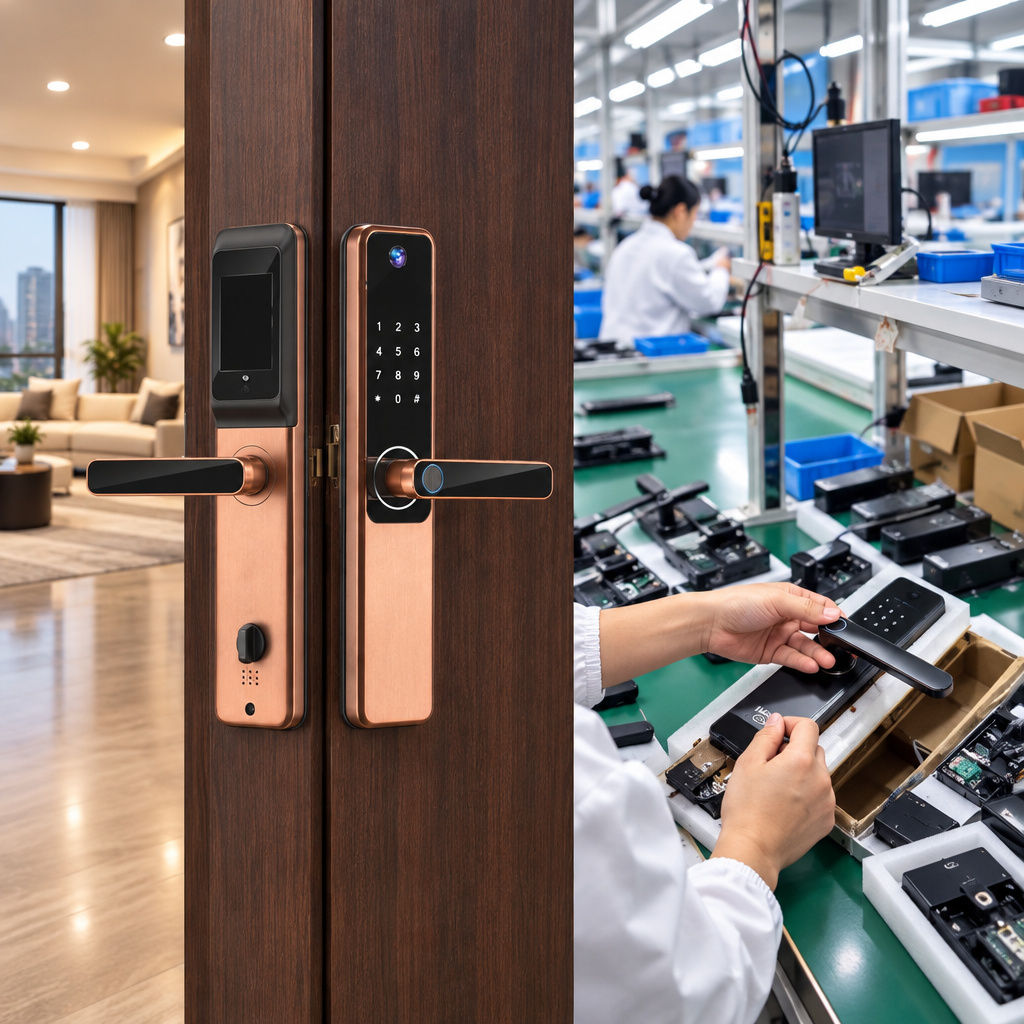
Sourcing commercial access hardware through smart lock distributors requires much more than comparing unit prices on a wholesale catalog. When a regional security dealer or property developer selects wholesale smart lock distributors without auditing their underlying engineering capabilities, minor firmware bugs quickly escalate into building-wide lockouts. A mechanical deadbolt only needs to survive physical torque, whereas an electronic lock operates like a miniature perimeter server attached to a moving door leaf.
Consequently, commercial buyers must evaluate commercial smart lock distributors through both mechanical durability and digital lifecycle management. Whether you are outfitting a multi-family residential tower or expanding a regional security hardware dealership, your supply partner dictates your long-term maintenance margins. This guide examines the supply chain mechanics, biometric and mortise standards, and factory vetting protocols needed to build a resilient distribution partnership.
Understanding the B2B Supply Chain for Smart Lock Distributors
Before signing a bulk purchase agreement, procurement teams need to identify where their prospective supplier sits within the manufacturing ecosystem. Some entities marketing themselves as distributors may be secondary trading intermediaries rather than vertically integrated producers. Understanding this structural distinction protects buyers from inconsistent batch components and orphaned mobile applications, though each supplier's actual capabilities must be verified during due diligence.
Original Factory Direct vs. Regional Wholesale Channels
Different procurement channels serve distinct operational scales. Mismatching your project volume with the wrong supplier tier creates immediate friction. A boutique installer retrofitting ten apartments needs immediate local stock, while a regional wholesaler building a private-label brand requires deep factory customization. The table below outlines the operational trade-offs across the three primary B2B sourcing tiers.
| Sourcing Dimension | Factory-Direct OEM/ODM Partner | Regional Value-Added Distributor | Generic Trading Intermediary |
|---|---|---|---|
| Hardware & PCB Control | Verify internal control over molds, PCBs, and motor calibration | Fixed to parent brand specifications | Verify manufacturing, component, firmware, and app-support arrangements |
| Firmware & App Continuity | Verify SDK/API maintenance and cloud server control | Relies on upstream manufacturer updates | High risk of discontinued app support |
| Customization Depth | Custom logo laser-engraving, housing, and protocol adaptation | Limited to pre-packaged retail SKUs | Basic packaging swaps only |
| Typical Lead Times | Varies by manufacturer and order complexity | 1–3 days from local warehouse inventory | Varies by workshop availability |
| Unit Economics & Margin | Factory-gate pricing ideal for bulk and regional dealers | Includes local warehousing and credit markup | Layered middleman markups reduce dealer margin |
The comparison demonstrates that partnering directly with an original manufacturer offering OEM smart lock distribution can provide wholesalers with strong control over hardware quality and profit margins, though buyers should verify each supplier's actual capabilities. Regional value-added channels remain useful for urgent, small-batch replacements, provided they maintain direct technical escalation paths with the assembly plant.
Why Trading Intermediaries Struggle with Firmware Continuity
In the mechanical hardware trade, once a brass cylinder leaves the foundry, the transaction is effectively finished. Electronic access control reverses this logic because the transaction only begins when the lock connects to a local Wi-Fi router or hospitality server. Trading companies that buy unbranded locks from rotating assembly workshops may lack direct access to source code or printed circuit board schematics for the units they ship.
Consider a common field failure where a smartphone operating system update alters Bluetooth handshake timing or push notification permissions. When evaluating suppliers, ask each one to document who maintains the firmware, mobile app, and cloud service. Confirm what support commitments are contractual rather than assuming patch availability. This due diligence protects smart lock distributors and their commercial clients from being stranded with unresponsive doors.
Core Technical Benchmarks When Vetting Smart Lock Distributors
Once you filter out unverified middlemen, the next step involves auditing the physical and electronic architecture of the lock series itself. Commercial and high-end residential doors experience thousands of high-impact closing cycles alongside harsh humidity and temperature shifts. Evaluating a supplier's catalog against objective engineering benchmarks prevents costly field technician dispatches.
Biometric Precision and Multi-Modal Access Architecture
Modern tenants and facility managers expect effortless entry without sacrificing perimeter security, which has driven the shift toward multi-modal unlocking architectures. Reliable wholesale smart lock distributors now prioritize advanced biometric technologies paired with multiple backup access methods to provide fallback options when one authentication path fails or proves inconvenient for a particular user.
- 3D Facial Recognition: Verifies facial contours in three dimensions. Confirm the specific technology and performance specifications with the manufacturer.
- Fingerprint Scanning: Provides rapid biometric authentication positioned ergonomically on the grip handle. Verify sensor type and recognition speed in the product documentation.
- Remote Video Intercom & App Control: Combines an exterior camera with Wi-Fi connectivity so occupants can visually verify visitors and manage access remotely.
- Temporary PINs: Allows property managers to issue time-bound numeric codes for maintenance crews or short-term guests without physical key handoffs.
- Smart Cards: Provides a fast proximity tap option for users who prefer not to register biometric data or carry smartphones.
- Mechanical Key & Emergency Power Override: Ensures physical entry remains possible during complete building power outages or total battery depletion.
Offering seven distinct unlocking paths within a single chassis allows smart lock distributors to serve diverse buyer personas from a unified inventory SKU. Property managers gain administrative flexibility, while end users choose the interaction method that fits their daily routine.
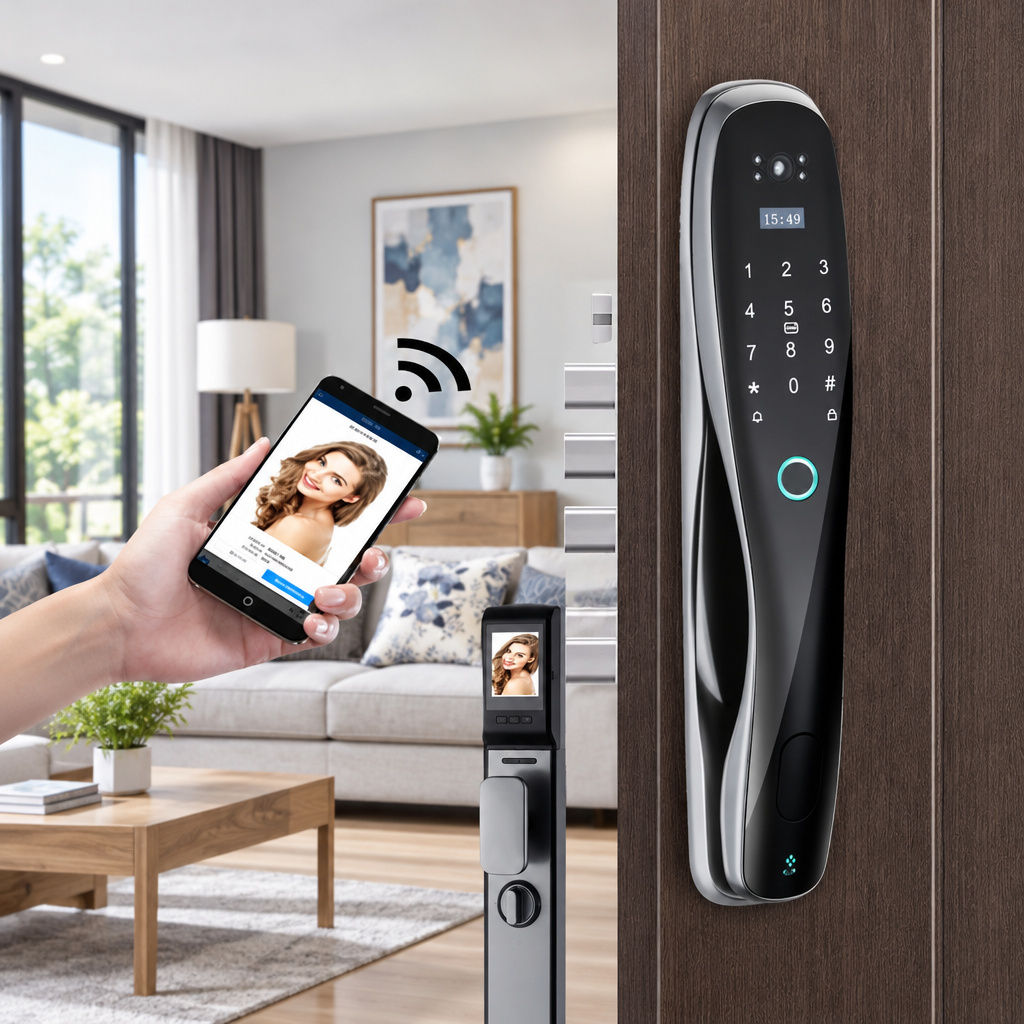
Mechanical Integrity: Lock Cylinders and 6068 Mortise Standards
Sophisticated biometrics mean very little if an intruder can bypass the door using a crowbar or a basic lockpick set. Beneath the sleek exterior panels, the structural backbone of a commercial smart lock rests on its mortise body, housing alloy, and mechanical backup cylinder. Using aluminum alloy for the front and rear escutcheons provides a balance of strength and weight.
Experienced smart lock distributors standardize their inventory around the 6068 mortise footprint, typically sized at 6068×24×240mm. In common 6068 mortise-lock terminology, 60mm is the backset to the handle spindle center, and 68mm is the distance between the spindle and cylinder centers. This standardized geometry accommodates door thicknesses ranging from 40mm to 110mm. Confirm the existing door preparation, lock-body dimensions, and door type before ordering to ensure proper fit.
Inside that mortise, the physical backup cylinder provides mechanical security. The specification lists a Grade C cylinder; verify the applicable standard and test evidence before comparing its security with other markets' ratings. Verify the cylinder grade and confirm compatibility with your regional security requirements during procurement.
Power Management and Emergency Redundancy Protocols
Power architecture represents one of the most frequent pain points for property operators transitioning from basic RFID locks to video-enabled smart locks. The manufacturer reports that some models can achieve up to 18-month battery life, though battery life varies with technology and usage patterns. However, driving an active Wi-Fi radio, 3D facial recognition array, and interior LCD screen demands a far higher current density.
To support these power-hungry modules, video locks utilize rechargeable lithium-ion battery packs. The S958MAX lists a 7.4V 5000mAh rechargeable lithium-ion battery and an emergency USB power port; confirm their operation, battery alerts, and limitations in the product manual to understand available backup entry methods and maintenance requirements.
Evaluating Flagship Hardware: The S958MAX Technical Case Study
Abstract engineering rules become clearer when applied to a concrete production model. When commercial buyers and regional smart lock distributors evaluate flagship inventory for high-end residential and office projects, they look for complete hardware-software convergence. The 3D Face Recognition Camera Smart Door Lock (Model S958MAX) illustrates how structural durability, biometric speed, and cloud intercom functions coexist inside a single commercial-grade unit.
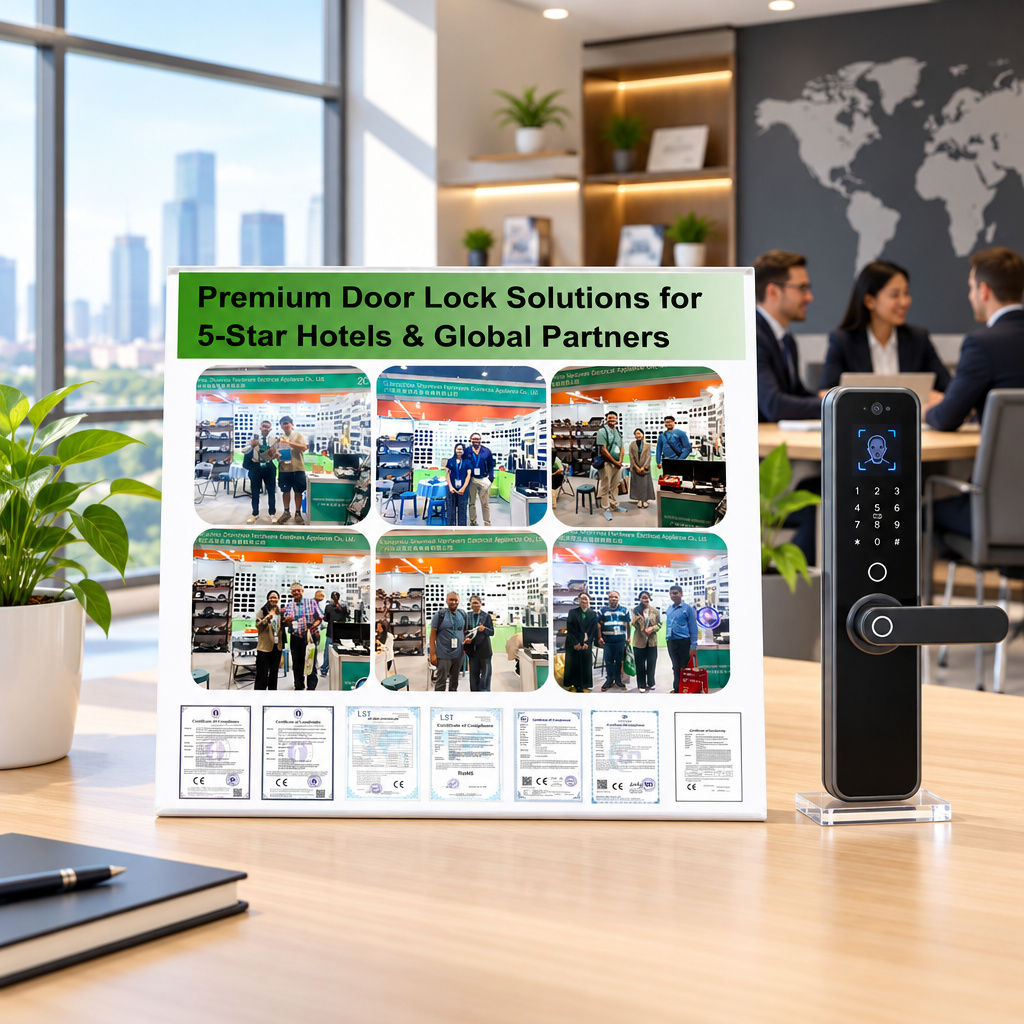
Hardware Specifications and Structural Design
Evaluating a technical spec sheet allows procurement engineers to verify compatibility with regional door standards before ordering sample units. According to the product documentation for the S958MAX, the unit integrates seven unlocking methods into a 6kg aluminum alloy body. The table below details the core technical parameters of this model.
| Technical Parameter | S958MAX Specification | Operational Value for Distributors & Installers |
|---|---|---|
| Model Number | S958MAX | Standardized SKU for residential and commercial catalogs |
| Housing Material | Aluminum alloy (6kg per unit) | Aluminum alloy construction |
| Unlocking Methods | 3D Face, Tuya App, Password, Fingerprint, Card, Key, Video calling | Covers all user demographics and emergency backup needs |
| Lock Cylinder Grade | Grade C | Verify applicable standard and security rating |
| Compatible Door Thickness | 40–110mm | Confirm door preparation and lock-body dimensions before ordering |
| Standard Mortise | 6068×24×240mm | Check compatibility with existing door frame preparation |
| Power Supply | 7.4V 5000mAh rechargeable Lithium-ion + Emergency USB port | Rechargeable battery with external jump-start safety |
| Network & Data Storage | Wi-Fi connectivity with Cloud storage | Direct router connection without requiring extra ZigBee hubs |
| Compliance & Warranty | CE, RoHS certified; 2-Year Warranty | Verify CE/RoHS declarations and destination-market requirements |
For smart lock distributors, stocking a single model that spans 40mm to 110mm door thicknesses reduces warehouse SKU complexity while covering many residential and commercial door frames.
Cloud Ecosystem Integration and Real-Time Video Intercom
Hardware strength solves the physical security equation, while the onboard camera and cloud ecosystem solve daily visitor management. Traditional deadbolts force occupants to walk to the door and peer through a tiny optical peephole, which is impractical in multi-story villas or busy executive offices. The S958MAX includes a built-in front camera for video calling and visitor monitoring.
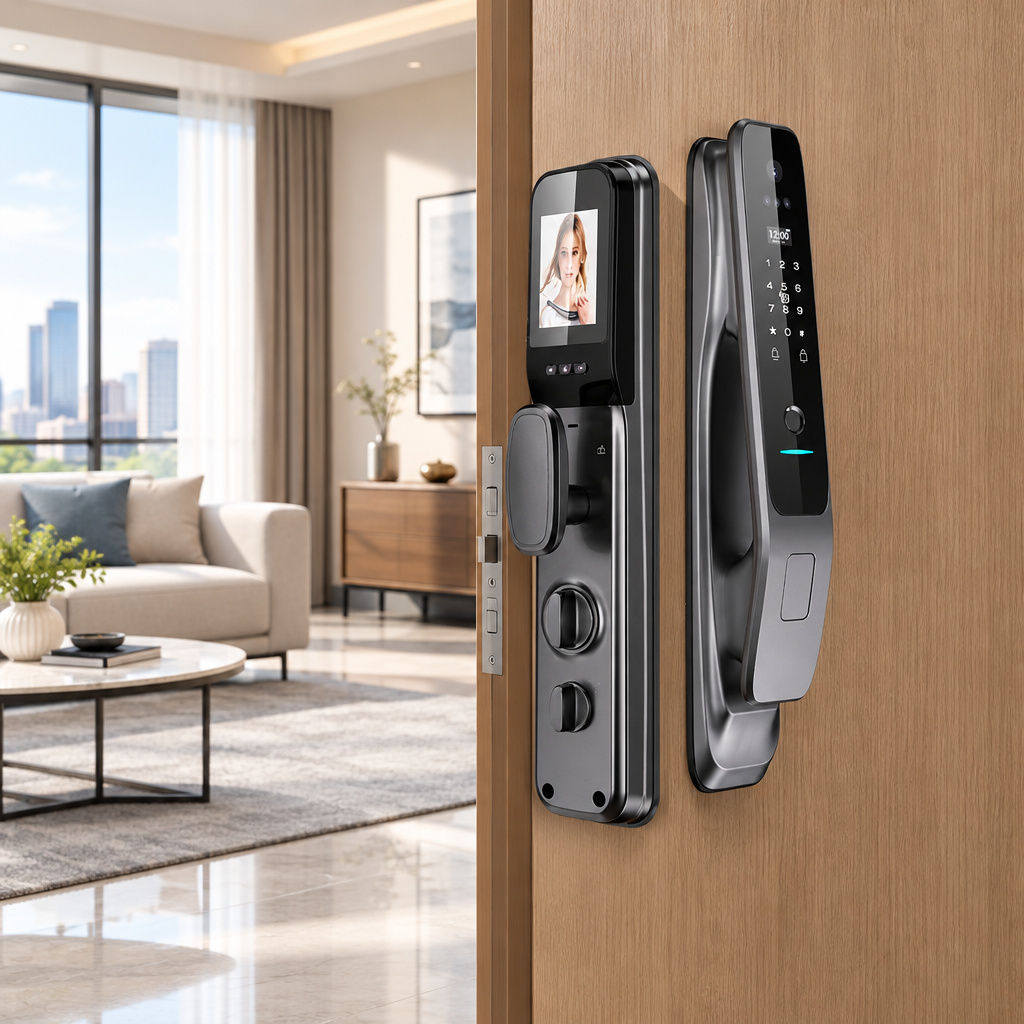
When a visitor arrives, the lock initiates a real-time video call over Wi-Fi to the owner's smartphone via the Tuya smart app. Whether the property owner is in an upstairs bedroom or traveling overseas, they can see the visitor through the video feed. The model uses the Tuya ecosystem, though buyers should verify app and cloud dependencies, remote-unlock behavior during video calls, and long-term support commitments with the supplier before committing to large deployments.
The product information indicates that administrators can generate temporary passwords remotely. Verify the specific password controls, integration capabilities, and access-log functionality in the S958MAX platform documentation before making procurement decisions.
Matching Hardware Capabilities to Deployment Scenarios
A common mistake among new smart lock distributors is pitching the exact same hardware SKU to every vertical market. An automatic 3D facial recognition video lock excels in specific environments, while multi-room hospitality properties often require a different system architecture. Guiding your B2B clients toward the right scenario match builds deep consultative trust.
For luxury residential apartments, private villas, and commercial office entrances, the S958MAX hits the ideal operational sweet spot. Homeowners and office managers value hands-free 3D facial unlocking when carrying groceries or files, and they rely heavily on the Tuya video intercom to screen couriers and clients. The 6068 mortise and 40–110mm door compatibility make it straightforward to install on custom architectural entry doors when the door preparation matches.
In contrast, large-scale hotels operating hundreds of guest rooms typically prioritize centralized front-desk software over individual Wi-Fi video intercoms. For these hospitality projects, experienced suppliers pair specialized hotel RFID and Bluetooth locks with Guest Room Management Systems (GRMS), interactive electronic doorplates, and ZigBee smart switches. Offering both standalone cloud biometric locks like the S958MAX and integrated hotel GRMS ecosystems allows distributors to capture residential, commercial, and hospitality tenders alike.
Step-by-Step Procurement Workflow for Partnering with Smart Lock Distributors
Transitioning from technical evaluation to a signed distribution or bulk supply contract requires a structured vetting workflow. Relying solely on digital brochures or lowest-bid quotes exposes buyers to delayed shipments and high field defect rates. Follow this five-step procurement sequence to qualify wholesale smart lock distributors and factory partners.
- Define Target Verticals and Protocol Requirements: Map out whether your primary customers need standalone Wi-Fi video locks (such as Tuya-enabled residential units) or centralized hotel access systems linked with front-desk software and room energy controls.
- Order Bench-Test Samples for Destructive and Functional Auditing: Test physical sample units on actual 40–110mm door rigs to verify 3D facial recognition speed, 6068 mortise alignment, lock cylinder smoothness, and battery endurance.
- Audit Factory Production Capacity and Inspection Protocols: Verify that the supplier operates automated assembly lines and multi-stage quality testing capable of delivering consistent batches.
- Validate International Regulatory Certifications: Identify and verify the applicable product, radio, battery-shipping, and import requirements for your specific destination.
- Contractually Lock In Lead Times, OEM Customization, and Warranty SLAs: Finalize laser-engraved branding proofs, spare parts ratios, production schedules, and a minimum 2-year hardware warranty backed by 24/7 technical support.
Auditing Manufacturing Capacity and Quality Control Systems
When regional dealers scale their operations, their biggest bottleneck is rarely sales demand; it is factory fulfillment reliability. To see what mature production capacity looks like in practice, consider SUMMAO, a smart lock and hotel automation manufacturer with 15 years of industry experience supporting over 5,000 hotels and apartments across more than 50 countries. Operating a 10,000 m² automated manufacturing facility equipped with robotic assembly and smart testing equipment, for us, maintaining a daily output capacity exceeding 500 units is what keeps distributor supply chains moving smoothly.
Speed without rigorous quality control, however, only accelerates defect distribution. The manufacturer reports 36 inspection processes and a failure rate below 1%; buyers should request the supporting scope and records to verify that these standards apply consistently to their specific product series and production batches. Predictable lead times are equally vital for inventory cash flow management. The manufacturer reports shipping regular catalog products within 7 to 10 days and customized OEM/ODM orders requiring tailored firmware or housing modifications within 15 to 30 days; buyers should confirm timing for their specific order, volume, and customization requirements.
Verifying International Compliance and Regional Certifications
Buyers should identify and verify the applicable product, radio, battery-shipping, and import requirements for their specific destination. Professional smart lock distributors always verify compliance documentation before wiring an initial deposit.
For European distribution, locks must carry a valid CE declaration of conformity with applicable EU requirements and meet RoHS restrictions on specified hazardous substances in electrical and electronic equipment. Deployments in the United States require buyers to verify the applicable FCC equipment-authorization procedure for the device; depending on the rules, this may be Certification or Supplier's Declaration of Conformity. Buyers targeting Canada should verify the applicable Canadian radio-equipment certification separately. Additionally, sourcing from a facility with ISO9001 quality management and ISO14001 environmental management certifications provides evidence of management-system discipline; buyers should verify how these credentials support product quality and confirm destination-market product requirements independently.
Structuring OEM/ODM Customization and After-Sales SLAs
Competing purely as a box-mover of generic hardware leaves regional dealers vulnerable to price undercutting by online retailers. Partnering with an engineering-driven factory allows wholesale smart lock distributors to build protected brand equity through OEM and ODM customization. Even at moderate volumes, suppliers can execute custom logo laser-engraving on the aluminum alloy panel and customize voice prompts or packaging.
For larger regional distributors and hospitality integrators, deeper ODM capabilities unlock scenario-tailored hardware and software adaptations. A factory that releases at least two scenario-customized products annually can adapt mortise interfaces or API protocols to match specific regional architectural standards; buyers should verify how the supplier supports biometrics, IoT, and cloud management technologies when evaluating customization capabilities.
Finally, every commercial supply agreement must be anchored by a clear after-sales Service Level Agreement. Look for a comprehensive 2-year product warranty paired with lifetime maintenance support and 24/7 technical troubleshooting. When your upstream partner provides turnkey one-stop matching across door locks, smart switches, and room control hardware with round-the-clock engineering backup, your dealership can bid on major commercial tenders with complete confidence.
Frequently Asked Questions (FAQs)
What is the typical lead time for wholesale orders from smart lock distributors?
Lead times depend on whether you are ordering standard catalog models or customized OEM hardware. One manufacturer reports shipping regular stock models within 7 to 10 days and customized orders involving custom logo laser-engraving, specialized packaging, or firmware adaptations within 15 to 30 days. Confirm specific lead times with your supplier based on order volume and complexity.
How does a 6068 mortise lock body benefit regional smart lock distributors?
In common 6068 mortise-lock terminology, 60mm is the backset to the handle spindle center, and 68mm is the distance between the spindle and cylinder centers. A 6068×24×240mm mortise footprint provides a widely compatible mechanical chassis for heavy-duty doors. When combined with 40–110mm door thickness compatibility, this standardization allows distributors to cover residential villas, apartments, and commercial offices. However, always confirm the existing door preparation and lock-body dimensions before ordering to ensure proper fit.
Can video biometric locks like the S958MAX operate if the building Wi-Fi disconnects?
The S958MAX specifications list multiple access methods including 3D face recognition, fingerprint scanning, user PIN codes, RFID cards, and a mechanical backup key. However, the product documentation does not explicitly confirm whether credentials are stored and verified locally or continue working without internet. Verify offline credential behavior with the supplier before deployment to ensure continuous access during network outages.
What warranty and technical support should B2B buyers demand from smart lock distributors?
Commercial buyers and regional dealers should require a minimum 2-year hardware warranty backed by lifetime maintenance availability and 24/7 technical support. Additionally, request detailed quality-control documentation, including inspection processes and field failure rates with supporting scope and records, to verify that these standards apply consistently to your specific product series and production batches.
Conclusion: Building a Resilient Access Control Distribution Strategy
Selecting the right partner among global smart lock distributors ultimately determines whether your access control projects generate recurring referrals or costly maintenance headaches. By prioritizing suppliers that demonstrate control over their biometric algorithms, 6068 mortise machining, and cloud app ecosystems—and verifying these capabilities during procurement—B2B buyers insulate themselves from the supply chain failures common to generic trading intermediaries. Whether deploying flagship residential units like the S958MAX 3D face recognition video lock or scaling turnkey hotel automation systems, grounding your procurement in verified certifications, documented quality control, and contractual 24/7 technical support sets the foundation for long-term commercial growth with reliable wholesale smart lock distributors.
SUBSCRIBE
INQUIRY