
Smart Padlock Deployment: Hardware Failure Points, Security Specs, and Real Costs
Facilities management teams lose hundreds of hours tracking brass keys, replacing cut shackles, and auditing physical lock boxes. A heavy-duty smart padlock eliminates physical key handoffs completely, replacing them with auditable digital access tokens. Operations managers switch to electronic perimeter locking because lost physical keys invalidate insurance coverage across remote utility sites and storage yards.
Mechanical master keys can be duplicated at standard hardware kiosks in minutes, leaving zero digital trail. In contrast, a commercial smart padlock binds permissions to authenticated smartphones or encrypted RFID fobs. When an external contractor leaves your job site, access terminates immediately via software without rekeying expenses.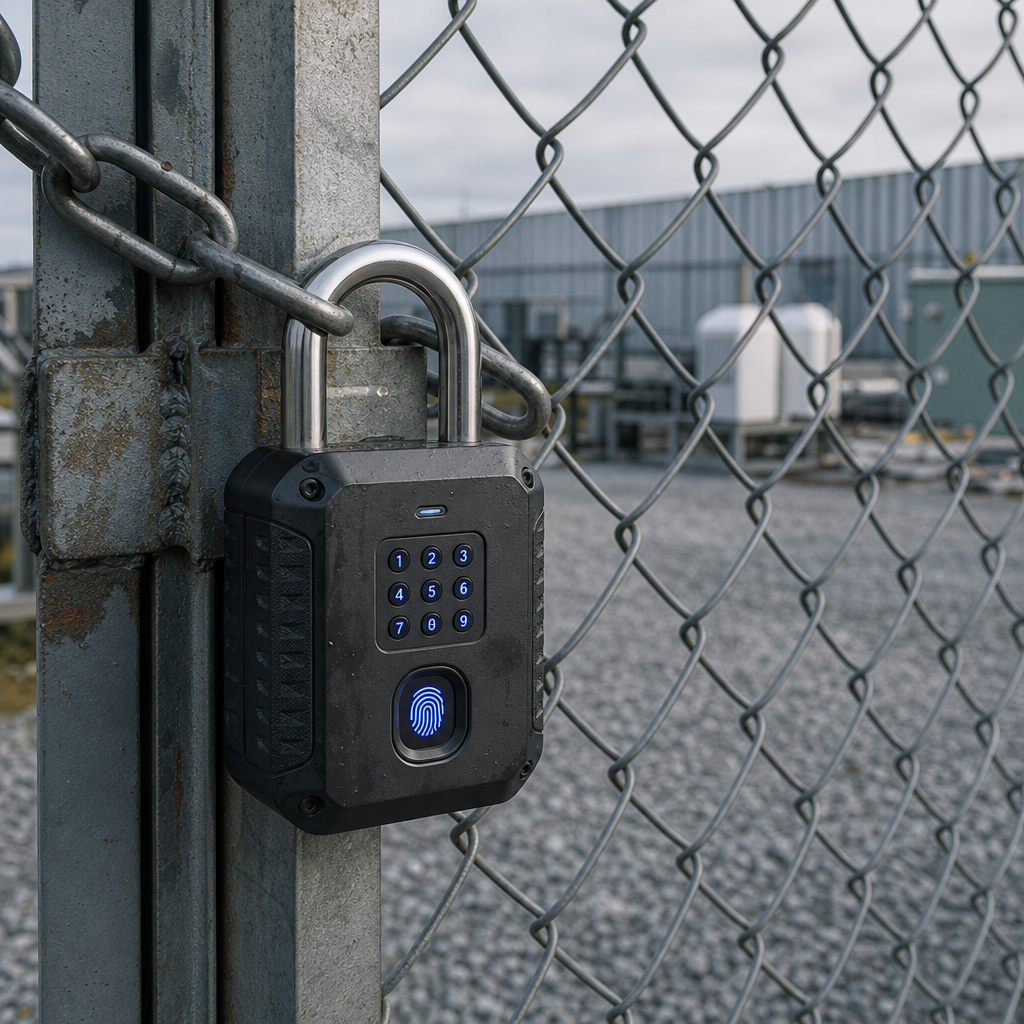
How Smart Padlocks Prevent Credential Duplication
Modern electronic padlocks rely on two core verification channels: capacitive biometric sensors and encrypted local wireless communication. Biometric modules read sub-epidermal ridge patterns rather than surface optics, preventing bypass attempts via silicone mockups. Cryptographic handshakes run through AES-128 or AES-256 protocols, blocking replay attacks from nearby radio-frequency sniffers.
Access permissions travel from cloud databases down to the locking mechanism via local gateway relays or authorized mobile applications. When technicians tap an assigned credential against the chassis, the lock records timestamp, user identity, and power reserve levels. This event logging eliminates disputes over who entered a remote perimeter during an equipment failure.
How Offline Authentication Operates Without Cellular Coverage
Field installations often sit in utility easements or underground vaults without reliable mobile internet connectivity. A dependable smart padlock does not require an active network connection to grant authorized worker access. Instead, the central platform generates time-based digital keys or cryptographic offline authorization codes synced to the internal lock clock.
The technician's mobile device exchanges encrypted authorization tokens directly over Bluetooth Low Energy protocols. Once the internal microcontroller verifies the digital cryptographic signature against its synchronized clock, the motor unlocks the latch. The lock stores all audit entries locally on non-volatile flash memory until a device reconnects to network coverage.
What Happens When an Electronic Padlock Battery Dies in the Field?
Dead batteries represent the primary fear for remote substation operators and perimeter security teams. Most industrial units draw minimal quiescent current, allowing a single lithium cell to deliver roughly 12 to 18 months of service life under standard operating cycles. Lockout situations occur almost exclusively when teams ignore automated low-battery alerts sent to the dashboard.
Quality hardware solves this failure mode via external emergency power terminals integrated into the base. Technicians press a standard 9V battery or a portable USB-C power pack against external contact pins, instantly energizing the logic board for authentication. The mechanical core never unlatches from voltage alone; external current simply powers the reader to process authorized credentials.
Commercial versus Consumer Smart Padlocks
Specifying security hardware requires balancing physical tensile strength against electronic endurance. The table below outlines standard performance thresholds for industrial infrastructure compared to light consumer hardware.
| Performance Metric | Consumer Smart Padlock | Heavy-Duty Industrial Smart Padlock |
|---|---|---|
| Shackle Material | Hardened carbon steel | Boron carbide alloy or 304/316 stainless |
| Ingress Protection | IP54 (Splash-resistant) | IP65 to IP67 (Dust-tight, high-pressure spray) |
| Operating Temperature | -10°C to 50°C | -30°C to 65°C |
| Tensile Pull Resistance | Up to 1,500 kg force | 3,000 to 5,000 kg force |
| Operational Battery Life | 6 months (~1,000 cycles) | 12–18 months (~3,000 cycles) |
| Emergency Power Interface | Micro-USB port | Sealed external contacts or jump-start terminals |
Selecting die-cast zinc alloy bodies might lower upfront expenditures, but harsh outdoor environments demand boron carbide shackles. Boron carbide resists manual hydraulic bolt cutters, while electroplated coatings protect the latch mechanism against electrolytic corrosion caused by coastal salt air and seasonal freeze-thaw cycles.
How Much Does Commercial Smart Padlock Adoption Cost?
A consumer-grade fingerprint padlock sells for roughly $30 to $50, but these entry-level units lack weatherproof seals and enterprise software integration. Heavy-duty commercial models typically range from $120 to $280 per unit, depending on cellular connectivity, shackle thickness, and certifications like CE or FCC.
Software licensing adds an ongoing overhead that procurement departments must calculate during initial hardware evaluations. Enterprise cloud platforms charge between $2 and $5 per lock monthly for continuous audit logs, automated API webhooks, and centralized permission dispatching. For remote utilities, avoiding a single emergency locksmith dispatch easily offsets an entire year of administrative platform fees.
Selecting the Right Hardware for Severe Outdoor Environments
Environmental contamination degrades budget electronic locking hardware much faster than brute physical attacks. Dust intrusion jams latching solenoids, while moisture ingress causes dielectric breakdown across unsealed circuit boards. Reliable industrial enclosures feature conformal-coated motherboards, dual-sealed silicone gaskets, and spring-loaded keyway covers that preserve internal components against rain, mud, and airborne particulate.
Manufacturing quality directly dictates field longevity under extreme daily operational pressures. For us, maintaining a field failure rate below 1% across 10,000-square-meter automated production facilities requires 36 strict inspection stages, including salt spray testing and robotic drop simulations. Hardware built to verified ISO9001 and IP65 standards reliably withstands mechanical shock on transport fleet gates and perimeter utility corridors.
Choosing the proper smart padlock hinges on balancing physical shackle tensile capacity with internal firmware reliability. A well-engineered commercial smart padlock eliminates key management nightmares, enforces verifiable audit logs across distributed field teams, and secures critical assets without leaving operators stranded in adverse conditions.
SUBSCRIBE
INQUIRY