
The Anatomy of Modern Access: What Is a Smart Door Lock?
When traditional brass keys give way to digital credentials, a fundamental question arises for property managers and homeowners alike: what is a smart door lock? The answer extends far beyond a simple electronic keypad attached to a door. It represents a fundamental shift in how we manage, monitor, and secure physical spaces.
The mechanical pin-tumbler design dominated access control for over a century. Physical keys require precise alignment of internal pins to rotate the cylinder. This analog system presents inherent vulnerabilities regarding duplication and physical wear. Property managers face significant operational friction when keys are lost or stolen, often necessitating complete hardware replacement.
Digital entry systems replace physical possession with cryptographic proof. A modern intelligent lock acts as an edge-computing node within a broader network. It authenticates identity, engages a mechanical actuator to permit entry, and logs the event in real-time. The transition from mechanical to digital transforms static barriers into dynamic security endpoints.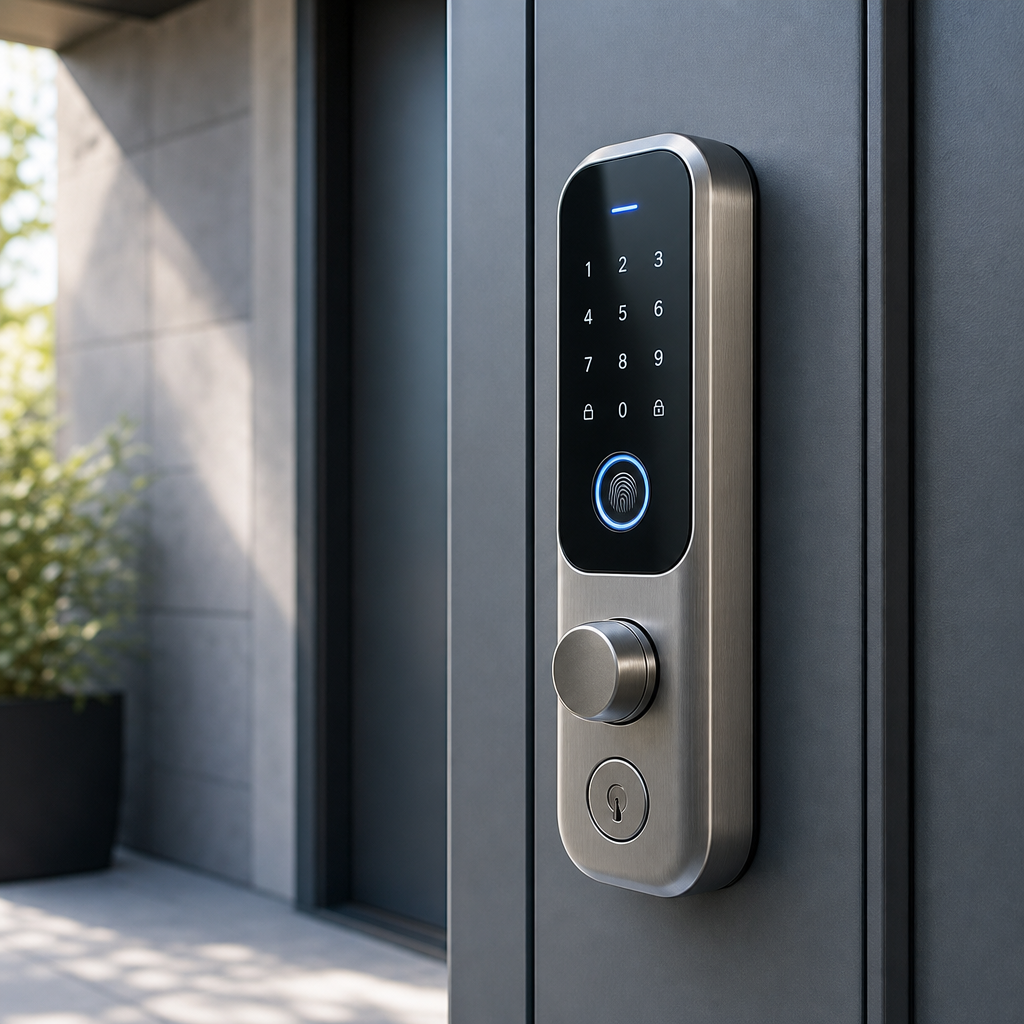
Electromechanical Actuation and Mortise Design
The core of any electronic lock relies on the seamless integration of digital logic and physical force. Unlike a traditional deadbolt where the user's hand provides the rotational energy, an electronic lock relies on a micro-motor. This motor drives a series of gears that ultimately retract the locking mechanism.
A critical engineering component within commercial-grade locks is the clutch mechanism. When the door is locked, the exterior handle remains physically disconnected from the internal mortise. Turning the handle yields no resistance and transfers no force to the internal latch. This specific design prevents brute-force attacks where intruders attempt to break the lock by standing on or striking the handle.
Once the system validates a credential, the micro-motor engages the clutch. This action mechanically links the exterior handle to the latch retraction assembly. The user then turns the handle, retracting the deadlatch and opening the door. After a few seconds, the clutch disengages automatically, returning the door to a secure state.
High-quality mortise configurations often include multiple locking points. A standard hospitality or commercial lock features a deadlatch and an anti-friction latch. This dual-latch system prevents "loiding," a common attack where a thin piece of plastic is slipped between the door and the frame to depress the latch.
Authentication Modalities in Access Control
How does a door determine who is authorized to enter? The evolution of access control has fragmented into several distinct authentication modalities. Each method balances user convenience against security requirements and hardware costs.
- Biometric Mapping: This method relies on unique human physiological traits. High-end systems utilize 3D structured light for facial recognition, projecting infrared dots to map depth and prevent spoofing with photographs. Fingerprint modules have shifted from optical scanners to capacitive sensors, reading the electrical current of living tissue beneath the epidermal layer.
- Radio Frequency Identification (RFID): Widely deployed in commercial and hospitality settings, RFID utilizes electromagnetic fields to automatically identify and track tags. Modern encrypted smart cards operate on high-frequency bands, typically 13.56 MHz. These cards execute a cryptographic handshake with the lock reader, ensuring the data cannot be easily cloned.
- Mobile Credentials: Utilizing Bluetooth Low Energy (BLE) or Near Field Communication (NFC), mobile access transforms smartphones into digital keys. Administrators can issue, modify, or revoke access rights over the air. The smartphone communicates securely with the lock, often requiring biometric authentication on the device itself before transmitting the digital payload.
- Time-Bound PIN Codes: Numeric keypads remain a reliable fallback. Advanced algorithms allow systems to generate time-sensitive PINs without the lock being connected to the internet. The lock and the server share a synchronized cryptographic formula, allowing offline validation of temporary codes for guests or maintenance staff.
Network Protocols and Infrastructure Integration
A standalone lock offers localized security, but networked locks provide systemic control. Choosing the right communication protocol dictates power consumption, latency, and integration capabilities. There is no single perfect protocol; rather, selections are made based on the specific architectural environment.
Wi-Fi provides direct cloud connectivity without intermediary hubs. The trade-off is significant power consumption. Wi-Fi radios require more energy to maintain network connections, which can rapidly drain standard alkaline batteries. This protocol is generally reserved for environments where real-time remote access is prioritized over battery longevity.
Mesh networking protocols offer a distinct advantage for large-scale deployments. These low-power radio frequencies allow devices to communicate with one another, extending the network's reach around physical obstacles.
| Protocol Standard | Network Topology | Power Efficiency | Typical Application Scenario |
|---|---|---|---|
| Wi-Fi (802.11) | Star | Low | Single-family homes requiring direct remote access. |
| Bluetooth (BLE) | Point-to-Point | High | Mobile credentialing and close-range configuration. |
| Zigbee | Mesh | Very High | High-density hospitality and commercial automation. |
| Z-Wave | Mesh | Very High | Dedicated smart home automation ecosystems. |
In large commercial buildings, a central gateway connects to the building's main network. This gateway translates cloud commands into low-power radio signals, routing them through the mesh network to the specific door. This architecture ensures high responsiveness while preserving the battery life of hundreds of individual endpoints.
Orchestrating the Hospitality Experience
When facility operators ask what is a smart door lock in the context of commercial deployment, the answer shifts toward data management and environmental automation. The lock is no longer isolated hardware; it is the triggering mechanism for a comprehensive building management ecosystem.
For us, operating a large-scale manufacturing facility dedicated to access solutions, the focus extends beyond the door itself. Engineering systems for thousands of global hospitality venues requires integrating locks with Guest Room Management Systems (GRMS). This holistic approach connects access events directly to energy-saving protocols and front desk operations.
When a guest uses an authorized mobile key or RFID card, the door lock transmits an entry event to the local network. This signal instantly communicates with the room's central control unit. The system then automatically engages the designated "welcome scene," activating interior lighting, adjusting the HVAC to a comfortable setpoint, and opening motorized curtains.
Electronic doorplates function as interactive extensions of the lock. These external panels display room numbers while indicating "Do Not Disturb" or "Make Up Room" statuses. The integration of these doorplates with the lock and the room's Zigbee smart switches creates a seamless data loop. Housekeeping staff can monitor room status in real-time through the front desk management software.
Dynamic authorization restructures traditional hospitality workflows. Guests can bypass the front desk entirely, receiving digital keys directly on their smartphones upon online check-in. If a guest extends their stay, administrators update the credential expiration time remotely. The system usage analytics provide operators with actionable insights into foot traffic and space utilization.
Security Architecture and Threat Mitigation
Replacing physical keys with digital systems introduces new threat vectors. Cybersecurity must parallel physical robustness to create a truly secure endpoint. The industry standard for data transmission relies on AES-128 or AES-256 encryption. This cryptographic standard ensures that intercepted signals cannot be deciphered or reused in replay attacks.
Hardware design must account for physical tampering. High-security locks incorporate anti-tamper sensors within the escutcheon. If an intruder attempts to pry the lock casing away from the door, the sensor triggers a localized high-decibel alarm. Simultaneously, the system pushes an alert notification through the network gateway to security personnel.
Redundancy is critical for critical access points. Despite advanced digital features, commercial-grade hardware maintains concealed physical keyways. These mechanical overrides utilize high-security cylinder profiles that resist picking and drilling. The keyway is typically hidden beneath a magnetic faceplate, preserving the aesthetic design while ensuring emergency access during catastrophic network failures.
Power Management and Environmental Resilience
Battery anxiety is a primary concern for operators transitioning to electronic access. How does the system handle power depletion? Modern microprocessors utilize ultra-low quiescent current. The lock remains in a deep sleep state, consuming microamps of power, until a capacitive touch or radio signal wakes the authentication module.
This aggressive power management enables an operational battery life of up to 18 months on standard alkaline cells. The system constantly monitors voltage drop. When battery capacity falls below a critical threshold, the lock initiates local auditory warnings and sends low-battery telemetry data to the management dashboard.
In the event of complete power failure, users are never permanently locked out. External hardware features emergency power terminals. By applying a standard 9V battery or a USB-C power bank to the exterior contact points, the user temporarily powers the logic board. This provides just enough energy to authenticate a credential and actuate the motor for a single entry.
Environmental resilience dictates where hardware can be deployed. Exterior doors face extreme temperature fluctuations, driving rain, and airborne particulates. The IP65 waterproof rating signifies that the hardware is entirely dust-tight and protected against low-pressure water jets from any direction. Internal electronic components are further protected by conformal coating, preventing condensation from short-circuiting the logic board.
Quality assurance in manufacturing requires extensive mechanical testing. A standard commercial lock undergoes rigorous cycle testing, often exceeding hundreds of thousands of actuation sequences. Strict inspection processes ensure that the clutch mechanism, the biometric sensor, and the radio antennas maintain a failure rate well below one percent under continuous heavy usage.
Evaluating Access Control for Specific Environments
Selecting the appropriate hardware requires analyzing the specific architectural constraints of the facility. Door thickness and frame material dictate the type of mortise that can be installed. Heavy wooden doors require different backset measurements and strike plates compared to narrow-stile aluminum glass doors.
Fire safety regulations heavily influence lock selection in commercial and multi-family residential buildings. Hardware installed on fire-rated doors must undergo specialized metallurgical testing. The internal components cannot melt or deform in ways that would trap occupants during a high-heat emergency. Egress codes mandate that turning the interior handle must simultaneously retract all deadbolts and latches, allowing rapid evacuation.
Retrofitting older buildings presents unique challenges. Often, existing network infrastructure cannot support hundreds of new Wi-Fi connected devices. In these scenarios, deploying a dedicated Zigbee mesh network allows for comprehensive connectivity without overburdening the primary enterprise network.
Aesthetic integration matters significantly in luxury hospitality and high-end residential developments. The access hardware must match the architectural design language. This requirement drives demand for extensive OEM/ODM customization capabilities, allowing architects to specify custom finishes, handle geometries, and specific logo laser-engraving that aligns with the property's branding.
Anticipating the Next Phase of Entrance Automation
The landscape of access control continues to evolve toward frictionless entry. Edge computing represents a significant shift in biometric processing. By moving the machine learning algorithms directly onto the lock's local processor, facial recognition occurs in milliseconds without requiring cloud round-trips. This reduces latency and addresses severe privacy concerns regarding cloud-stored biometric data.
Ultra-Wideband (UWB) technology is poised to replace standard Bluetooth proximity detection. UWB measures the time of flight of radio signals, calculating the exact distance and trajectory of the approaching user. This spatial awareness ensures the lock actuates precisely as the authorized user reaches for the handle, eliminating the awkward pause associated with older proximity sensors.
System interoperability is actively reshaping the market. Unified smart home and building automation standards allow disparate devices from different manufacturers to communicate natively. A lock will seamlessly inform a third-party alarm system to disarm, or signal a proprietary elevator system to call a cab to the ground floor the moment the user steps through the front door.
Understanding what is a smart door lock requires looking past the physical hardware on the door. It represents the boundary between physical security and digital identity. By integrating advanced cryptography, low-power mesh networking, and robust mechanical engineering, modern access control systems eliminate the friction of physical keys while vastly expanding our ability to monitor and automate our environments.
SUBSCRIBE
INQUIRY