
Understanding What is the Best Smart Lock for Front Door Security
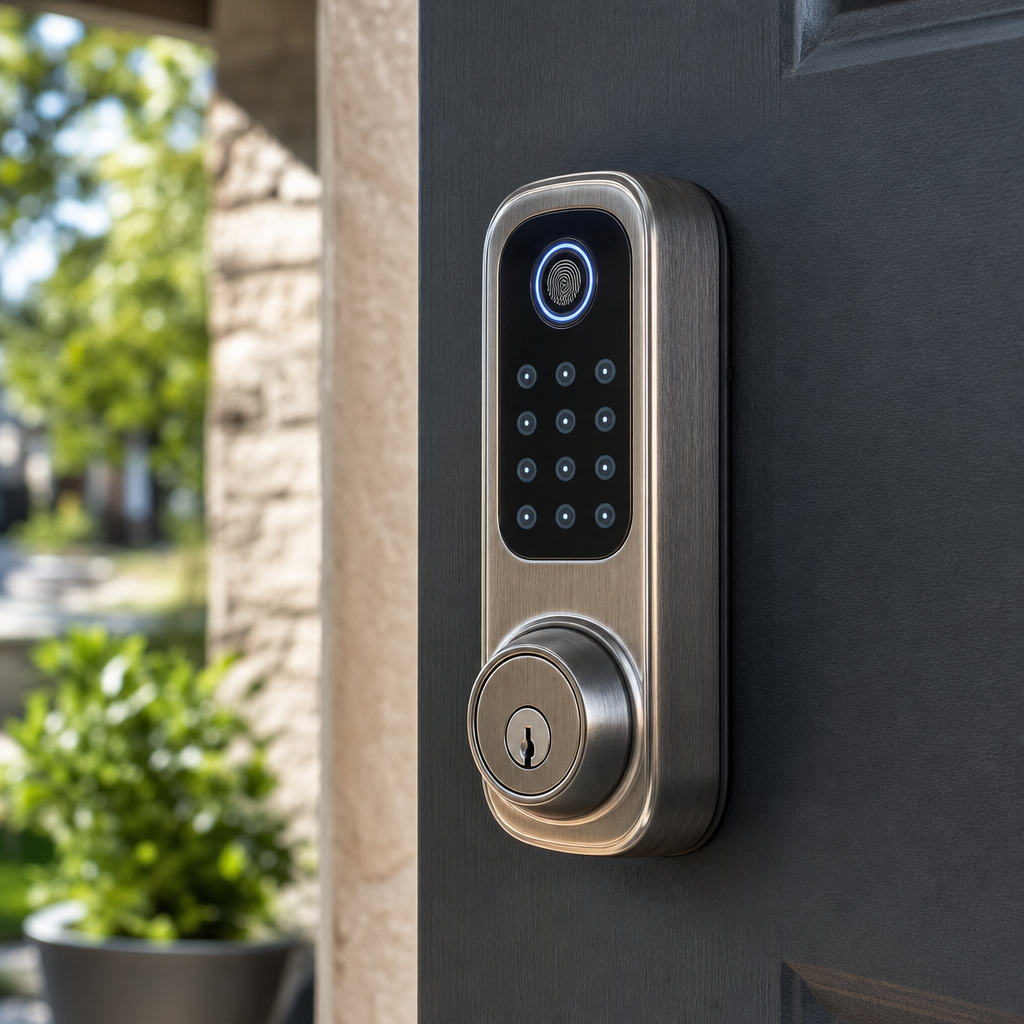
Property owners frequently ask what is the best smart lock for front door protection when upgrading their homes. This question stems from a fundamental shift in how we manage physical access today. Mechanical keys no longer meet the demands of modern households. We require dynamic, trackable control over our entryways.
The transition from physical keys to digital credentials represents a significant leap in domestic security. Pin tumbler mechanisms have remained largely unchanged for over a century. They carry inherent vulnerabilities regarding key duplication and physical manipulation. Electronic access control systems fundamentally alter this threat model.
Evaluating these devices requires looking past cosmetic designs and marketing claims. Consumers must understand the underlying communication protocols, biometric sensor capabilities, and mechanical durability. An informed decision balances daily convenience with rigorous intrusion resistance.
The Evolution of Residential Access Control
Mechanical locks operate on a simple binary principle. If the physical key matches the internal pins, the cylinder turns. This system lacks any temporal awareness or audit capabilities. You cannot restrict a physical key to work only on Tuesday afternoons.
Early electronic access systems appeared primarily in commercial and hospitality environments. These relied on magnetic stripes or basic RFID cards. They solved the key duplication problem but required carrying a separate physical token.
Modern residential systems integrate computing power directly into the door hardware. They utilize edge processing to verify credentials locally within milliseconds. This evolution shifts the door from a passive barrier to an active security appliance.
For us, developing intelligent access control over the past decade and a half has revealed a clear pattern. The hardware must integrate seamlessly with broader management platforms, linking physical access to lighting and HVAC protocols, a standard practice we apply across high-end commercial and residential setups.
Core Communication Protocols Explained
The method a lock uses to communicate dictates its battery life and remote capabilities. Homeowners must align the protocol with their existing network infrastructure. No single protocol dominates the market completely.
Bluetooth Low Energy
Bluetooth operates as a point-to-point connection between the lock and a smartphone. It consumes minimal power, allowing standard alkaline batteries to last for months. The primary limitation is range.
Users must be physically near the door to operate it or manage settings. Remote access requires an active bridge plugged into a nearby wall outlet. This bridge translates the Bluetooth signal into a standard Wi-Fi connection.
Direct Wi-Fi Integration
Locks with built-in Wi-Fi connect directly to the home router. This architecture eliminates the need for peripheral hubs or bridges. Users gain immediate remote access, real-time notifications, and seamless firmware updates.
Power consumption remains a distinct engineering hurdle for direct Wi-Fi. The protocol requires significant energy to maintain a continuous network handshake. Manufacturers often mitigate this by putting the Wi-Fi chip to sleep, waking it only during active state changes.
Zigbee and Z-Wave Networks
These protocols operate on a mesh network topology. Devices communicate with one another, extending the overall range and stability of the system. They require a centralized smart home hub to function properly.
Zigbee and Z-Wave excel in complex automation environments. They allow the lock to trigger cascading events, such as disarming an alarm when the door opens. Their low frequency operation easily penetrates solid walls and heavy doors.
Addressing Traditional Deadbolt Vulnerabilities
Physical keys present a massive chain-of-custody problem. Homeowners rarely know exactly how many copies of their house key exist. Previous owners, contractors, or dog walkers may still possess unauthorized duplicates.
Rekeying a mechanical lock requires a locksmith and physical alteration of the cylinder pins. Digital systems solve this by treating access as a software permission. Revoking a compromised credential takes merely seconds via a smartphone application.
Physical attacks like lock bumping exploit the physics of traditional pin tumblers. By inserting a specially cut bump key and striking it, intruders can force the pins above the shear line. Keyless digital locks remove the physical keyway entirely, neutralizing this specific attack vector.
Classification of Front Door Hardware
Understanding hardware classifications is vital when determining what is the best smart lock for front door installation. Not all doors support all types of hardware configurations. The physical structure of your door dictates your options.
Full Deadbolt Replacements
This category requires completely removing the existing exterior and interior hardware. The new device includes the motorized bolt, exterior keypad, and internal thumb turn. It provides a cohesive aesthetic and unified mechanical operation.
These units offer the highest level of physical security if built to proper specifications. They often feature hardened steel anti-drill plates protecting the internal motor. Installation usually requires nothing more than a standard screwdriver.
Interior Retrofit Models
Retrofit models replace only the interior thumb turn of the existing lock. The exterior keyway and the actual deadbolt mechanism remain untouched. The digital motor simply grips and turns the existing tailpiece.
Renters heavily favor retrofit designs. Property managers can still use their original master keys from the outside. The tenant gains digital control without violating lease agreements regarding hardware modifications.
Mortise Lock Integration
Mortise assemblies house the locking mechanisms within a pocket cut into the door's edge. They are structurally robust and common in Europe, Asia, and high-end commercial doors. Upgrading a mortise lock requires highly specific hardware matching.
These systems often combine a deadbolt and a latch bolt into a single cassette. Mortise smart systems frequently include integrated handles or levers. Installation may require specialized carpentry tools to adjust the door pocket.
Biometric Sensor Technologies
Fingerprint recognition offers the most frictionless entry experience. The user simply touches the sensor, and the door unlocks almost instantly. However, the underlying technology reading the print varies drastically in accuracy.
Optical sensors take a high-contrast photograph of the fingerprint. They are inexpensive but struggle with dry fingers or direct sunlight. More concerningly, they can sometimes be bypassed using high-resolution printed images.
Capacitive sensors measure the electrical current differential across the ridges and valleys of human skin. This underlying physics prevents spoofing via basic silicone molds or photographs. They map the exact dermal structure, ensuring a living finger is present.
Balancing the False Acceptance Rate against the False Rejection Rate requires precise algorithmic tuning. A hyper-secure lock might reject the homeowner if their finger is slightly wet from rain. A loose algorithm might accidentally accept a similar, unauthorized fingerprint.
Power Management and Contingencies
Electronic access relies entirely on sustained electrical power. A dead battery can theoretically lock a homeowner out of their property. Engineers design multiple redundancy layers to prevent this exact scenario.
The primary power source usually consists of four standard AA alkaline batteries. Some modern designs utilize proprietary rechargeable lithium-ion packs. System algorithms monitor voltage drops carefully, warning users weeks before a critical failure occurs.
Cold weather introduces severe battery performance issues. Extreme freezing temperatures cause alkaline battery voltage to sag dramatically. This voltage drop can prevent the internal motor from generating enough torque to retract a heavy bolt.
Emergency Access Methods
Most full-replacement models retain a concealed physical keyhole as a mechanical override. This cylinder sits hidden beneath a magnetic plate or at the bottom of the device. It provides a purely mechanical backup bypassing the electronics completely.
Keyless models without physical cylinders employ emergency power terminals. Users can press a standard 9-volt battery against two contact points on the exterior chassis. This provides just enough juice to power the keypad and authorize a single entry.
Modern iterations use USB-C ports for emergency jump-starts. Connecting a portable power bank energizes the internal motherboard. These external ports transfer data, acting solely as a temporary power bridge.
Evaluating Material Integrity and Weather Resistance
The exterior portion of the lock faces harsh environmental realities. Sun exposure degrades cheap plastics, while rain and humidity threaten exposed circuit boards. The chassis material dictates the device's lifespan.
Zinc alloy provides a dense, heavy housing capable of resisting blunt force trauma. Aluminum offers excellent corrosion resistance but lacks the sheer density of zinc. Premium models utilize stainless steel components for critical internal load-bearing mechanisms.
Environmental protection is quantified using Ingress Protection ratings. An IP65 rating indicates the enclosure is completely dust-tight and protected against projected water from any direction. Devices lacking clear IP ratings will likely fail during severe seasonal storms.
Condensation presents a hidden danger to internal microprocessors. Wide temperature swings between the heated interior and freezing exterior create moisture inside the housing. Manufacturers conformal-coat the circuit boards to prevent this moisture from causing electrical shorts.
Matching Lock Types to Daily Usage Scenarios
Selecting the appropriate system requires analyzing your specific household traffic patterns. A family of five utilizes a door very differently than a single occupant. The hardware must adapt to human behavior, not the other way around.
High-Traffic Family Homes
Children frequently lose physical keys and struggle to memorize complex PIN codes. Biometric access eliminates both pain points entirely. A child simply uses their thumb to enter after school.
Parents benefit from push notifications verifying when specific individuals arrive home. The system logs the exact time the door opened and which credential was used. This provides immense peace of mind without requiring active monitoring.
Rental Properties and Guest Access
Short-term rental operators face constant access turnover. Physical key handoffs require complex logistics or easily compromised lockboxes. Digital platforms allow hosts to generate time-bound entry codes remotely.
These temporary codes activate at check-in and automatically expire at checkout. The host never needs to travel to the property to manage access. If a guest loses their phone, a backup PIN code ensures they are never stranded.
Accessibility and Mobility Impairments
Individuals with arthritis or limited hand dexterity often struggle with small metal keys and stiff deadbolts. Auto-unlock features utilize geofencing to detect the user's approaching smartphone. The motorized bolt retracts automatically before they even reach for the handle.
Integration with voice assistants provides another layer of accessible control. Users can command their smart speaker to secure the perimeter from bed. This eliminates the need to physically walk to the door to verify its status.
Data Privacy and Cryptographic Security
The digitization of physical security naturally raises concerns regarding digital vulnerabilities. If a door connects to the internet, users worry it might be susceptible to remote hacking. Robust cryptographic standards mitigate these digital threats.
Communication between the smartphone and the lock utilizes asymmetric encryption. They exchange public and private cryptographic keys during the initial pairing process. Even if a bad actor intercepts the Bluetooth signal, they capture only encrypted gibberish.
Biometric data privacy demands local storage architectures. High-quality systems never upload your fingerprint or facial geometry to a remote server. The mathematical template of your biometric data remains stored securely on a localized cryptographic chip within the lock itself.
Cloud servers manage the permissions, not the credential data. When you delete a user from your app, the cloud instructs the lock to erase that specific localized token. This decentralized approach ensures a compromised cloud server cannot yield physical access to your home.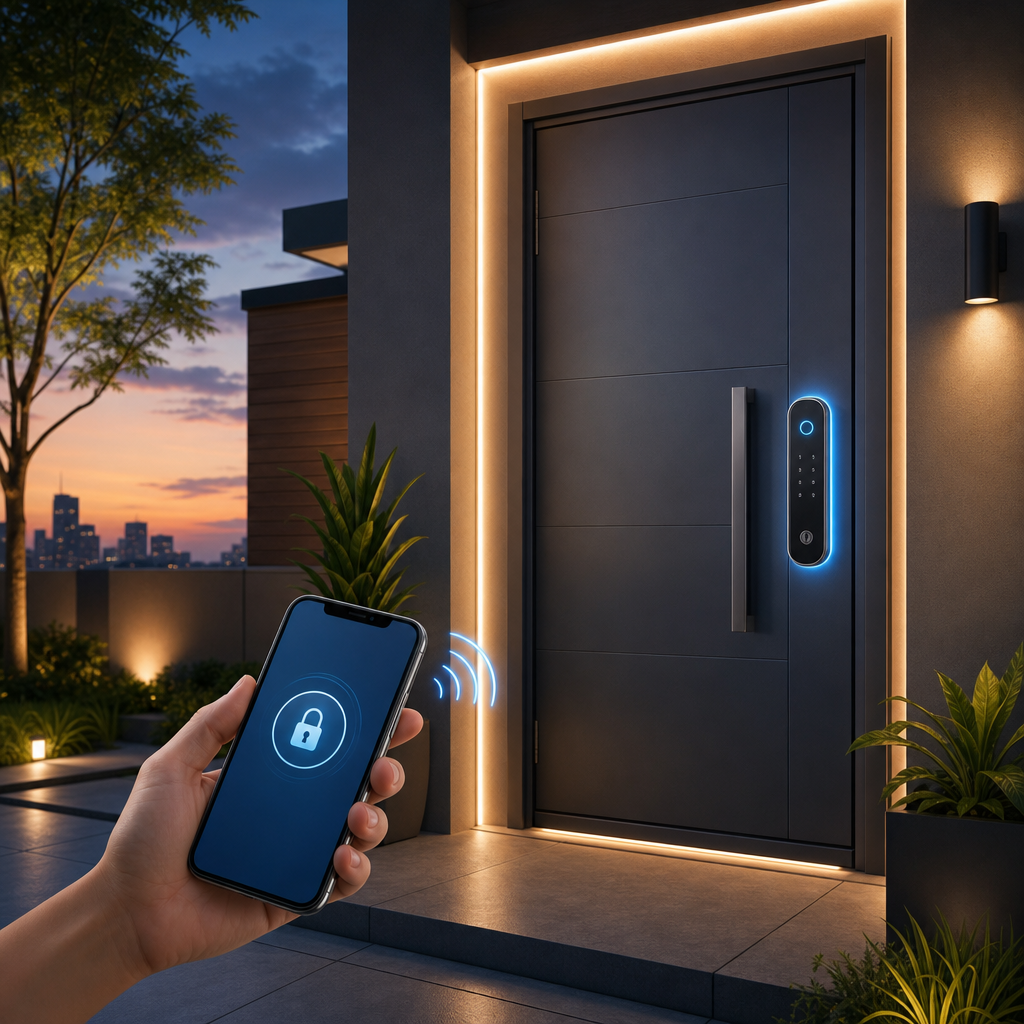
Future Trends in Home Access Management
The landscape of entryway hardware continues to evolve rapidly. We are moving away from active interaction toward passive, frictionless authentication. The goal is a door that intuitively understands who is standing in front of it.
Matter Protocol Integration
The smart home industry suffers from extreme fragmentation. Devices from different manufacturers often refuse to communicate. The Matter protocol, running over Thread networks, aims to unify this ecosystem.
Locks adopting this standard will communicate natively with any major smart home ecosystem simultaneously. Users will not need to worry about compatibility when switching from one smartphone operating system to another. The network operates locally, reducing latency and increasing reliability.
Ultra-Wideband Proximity
Current auto-unlock features rely on Bluetooth geofencing, which lacks precise spatial awareness. The door might unlock while you are simply walking past it inside the house. Ultra-wideband technology solves this spatial inaccuracy.
This technology calculates the time of flight of radio waves to measure distance with centimeter precision. The lock will know exactly what side of the door you are on and your precise distance from the threshold. It will only actuate when you are actively moving toward the exterior handle.
Final Considerations for Securing Your Primary Entrance
Navigating the complex specifications of modern entry systems requires careful analysis of your daily habits. You must balance the physical strength of the chassis with the digital intelligence of the software. A beautiful application cannot compensate for a weak mechanical bolt.
Prioritize devices offering multiple modalities for entry. Redundancy ensures you are never locked out due to a single point of failure. A combination of biometrics, secure PIN codes, and smartphone access covers almost all practical scenarios.
Assess the environmental conditions your entryway faces year-round. Ensure the hardware carries verified weather resistance ratings suitable for your specific climate. Pay close attention to the operating temperature thresholds of the battery compartment.
Ultimately, determining what is the best smart lock for front door protection comes down to finding friction-free security. The hardware should disappear into the background of your daily routine. It should offer rigid defense against intruders while welcoming authorized users with effortless precision.
SUBSCRIBE
INQUIRY